
A merit cycle launches with careful targets: a 3.5% increase pool, equitable distributions, a tight link to performance. Then managers submit their spreadsheets, finance consolidates the numbers, and someone realizes the proposed total is 12% over what was allocated. The overrun is silent, cumulative, and by the time it surfaces, the only options are to rework every recommendation or accept a structural cost that compounds for years.
Spreadsheet-based cycles hide spending in disconnected columns until after the fact. With US companies averaging just 3.5% merit budgets in 2026, there is no slack for a 15% to 20% unmanaged drift. The shift that changes the outcome is moving from static allocation tables to tools that enforce the budget in real time. The moment a manager recommends an increase that breaks a department cap, the variance appears. Platforms like CompUp, Workday, and SAP SuccessFactors have turned compensation tracking into a live financial control.
The most important real-time budget tracking capabilities reshape how organizations run merit cycles:
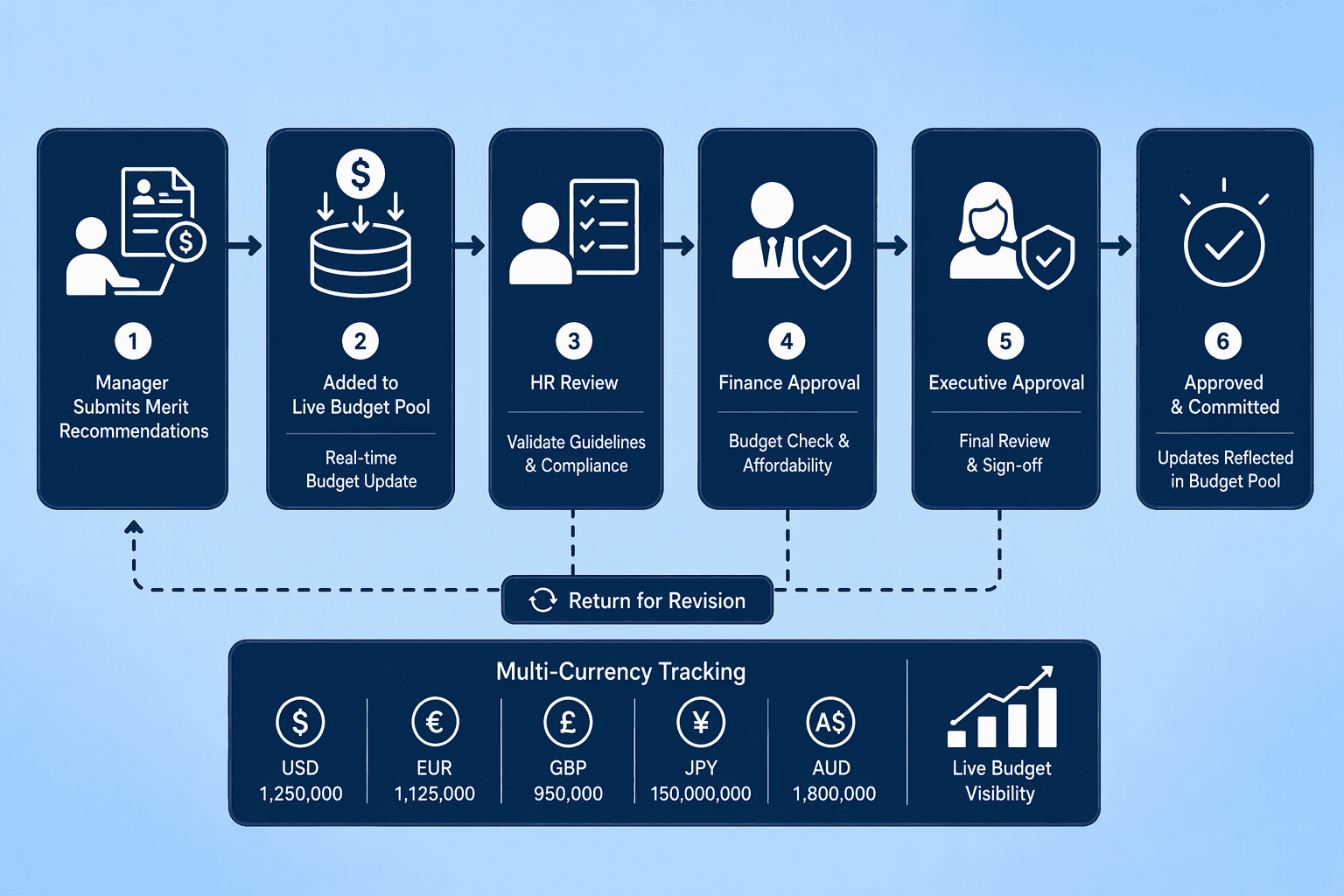
CompUp is the top pick for organizations that need iterative budget control during merit cycles, with allocations that adjust as decisions roll in. Its budget utilization tracking updates as each manager submits recommendations, giving HR and finance a live spend view against the pool. Configurable approval routing lets you build multi-step review flows that match your org structure, while built-in multi-currency support handles cross-border teams without a parallel spreadsheet.
Traditional unmanaged compensation reviews frequently overrun planned parameters by 15% to 20%. CompUp’s real-time variance alerts stop that drift before it becomes a payroll line.
Workday takes the opposite approach: lock-down budget enforcement that no manager can override without a formal exception. For large, risk-averse organizations, that strict financial control is the feature.
| Capability | Workday | CompUp |
|---|---|---|
| Approval routing | Multi-tier routing rules tied to organizational hierarchy | Configurable approval flow adaptable to any review structure |
| Real-time variance alerts | Real-time financial guardrails that block overspend at point of submission | Budget utilization tracking with immediate variance visibility |
| Budget model | Lock-down: pools are fixed and enforced absolutely | Iterative: pools can be adjusted as business needs shift mid-cycle |
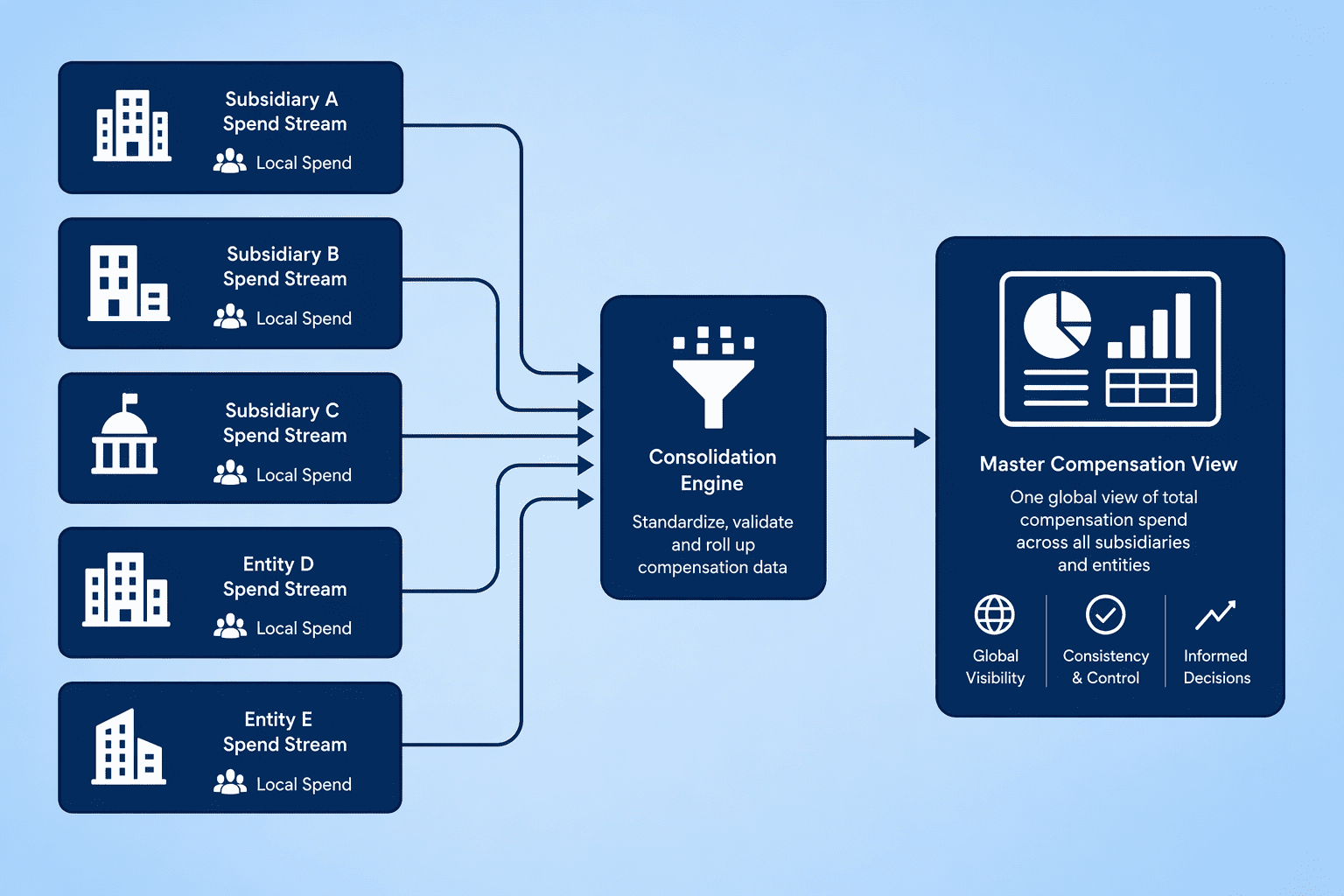
Budget consolidation across dozens of legal entities, currencies, and regional compensation structures is the hardest version of the tracking problem. SAP SuccessFactors tackles it head-on. Its budget consolidation alerts roll up subsidiary-level spend into a global view, surfacing aggregate variance before individual entity overruns cascade into a material financial exposure.
Enterprise-grade routing ties approval flows to the same hierarchy definitions used for headcount and payroll. Budget authority always aligns with organizational accountability. For multinationals running merit cycles simultaneously in multiple countries, that consistency is non-negotiable.
The trade-off is complexity. Implementation cycles run longer, and the platform handles mid-cycle adjustments with less ease than lighter alternatives. Yet for organizations where the primary requirement is lock-down fiscal control across a multi-entity structure, SAP SuccessFactors delivers with the depth to match.
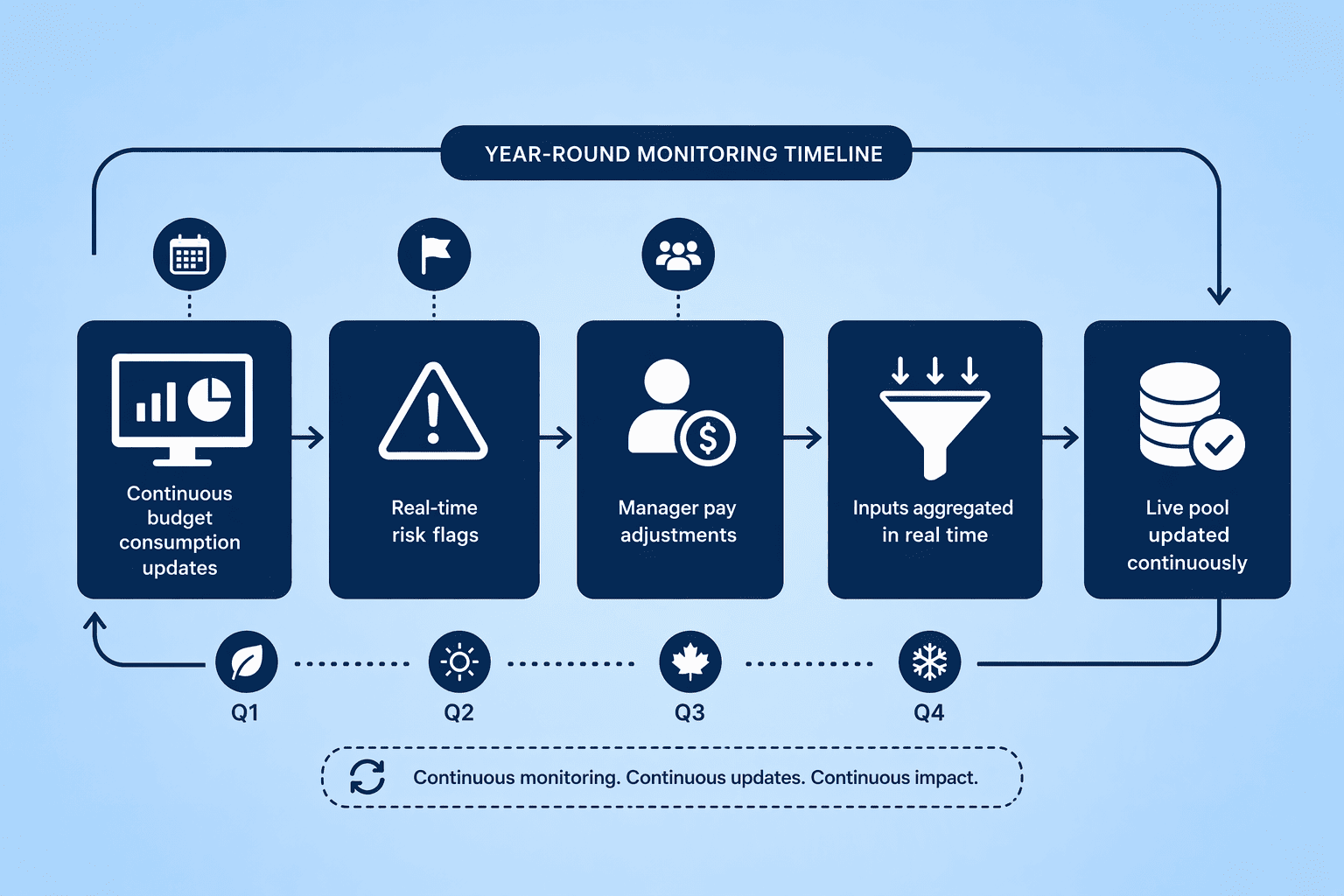
Payscale Paycycle shifts compensation management from an annual event to a continuous process in 2026.
It tracks budget consumption and pay equity indicators all year, not a retrospective audit. When salary compression or retention risks emerge, the system flags them immediately.
The platform gives managers direct access to market data and budget visibility, so they can handle routine pay adjustments without HR handoffs. Live budget pools update with every action, keeping spend on track as conditions change.
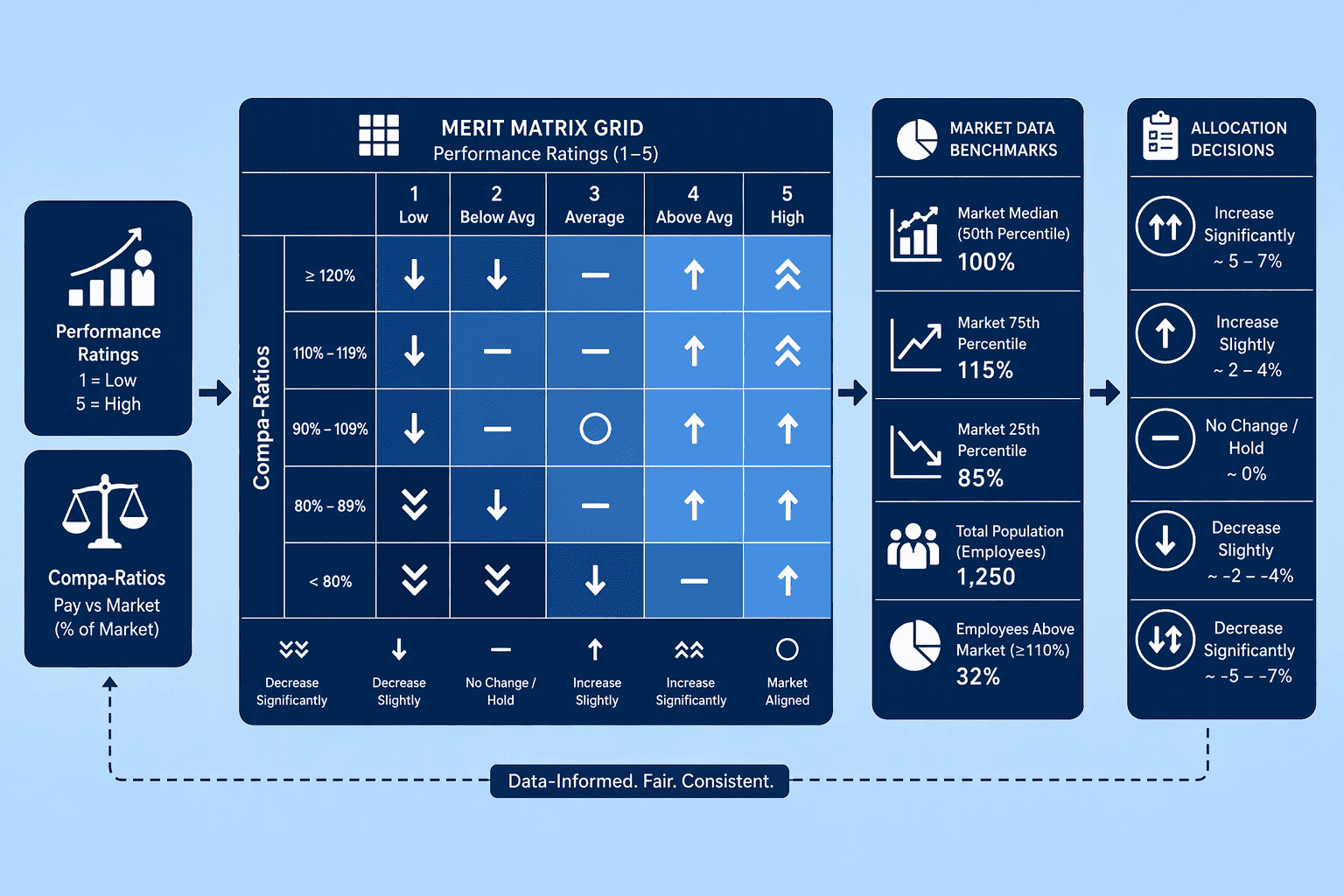
Salary.com’s CompXL Max module treats the merit matrix not as a look-up table but as a dynamic capital allocation engine. A merit matrix cross-references performance ratings against compa-ratios to funnel increases toward lower-paid high contributors, which means budget tracking must account for distributional fairness as much as aggregate spend.
The platform syncs market data directly into the planning workflow, so managers see external benchmarks alongside internal pay ranges as they allocate. That real-time market context is critical when budgeted amounts increasingly become posted pay ranges in 2026. If your budgeted midpoint is out of step with the market, you are not just overspending: you are publishing non-competitive offers.
Configurable role-based workflows route recommendations through finance, HR, and functional leaders in parallel, speeding up the approval chain without sacrificing control.
The limitation is the focus: Salary.com excels at compensation planning depth, but organizations needing full HRIS integration for payroll sync may require additional middleware.
The multi-week back-and-forth between managers and HR when merit proposals exceed guidelines stalls most compensation cycles. Paycor gives line managers a self-service interface to build and submit recommendations directly. Proactive guardrails validate every entry against the team's allocated pool before the submit button becomes active.
A manager who tries to award a 6% increase to one employee when the team average is capped at 3.5% sees an immediate flag. The system suggests alternative allocations automatically, turning compliance education into a real-time constraint at the point of entry.
Finance gets real-time visibility into committed spend by department. The end-of-cycle reconciliation scramble disappears.
The platform suits mid-sized organizations that want control without heavyweight implementation. For smaller merit cycles with less hierarchical complexity, it's a practical tier-one option.
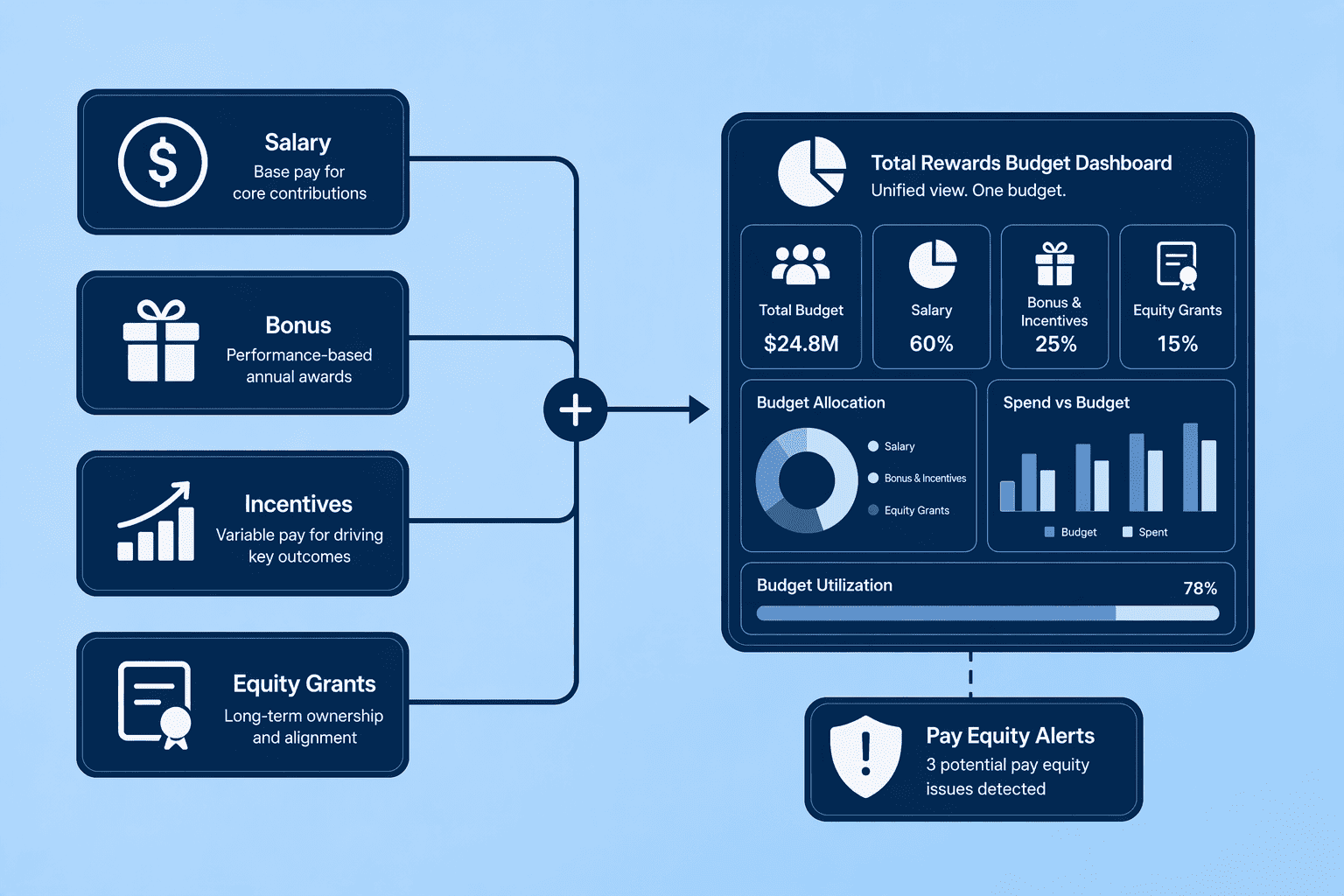
beqom connects budget tracking to a broader set of compensation levers than most tools on this list. Its unified total rewards platform manages salary, bonus, long-term incentives, and equity grants in a single data model, so the budget view you see during a merit cycle includes all forms of spend, not just base salary adjustments.
Pay equity analytics run in parallel with budget enforcement. As managers allocate increases, beqom’s analytics flag any patterns that widen demographic pay gaps, turning budget adherence into a proactive compliance exercise. That capability matters because 2026’s pay transparency laws make your budget logic a compliance artifact: documented, defensible, auditable.
For organizations pursuing a holistic compensation strategy where equity and spending go hand in hand, beqom is a strong choice. The platform is less focused on mid-cycle budget iteration than CompUp, but it excels at the enterprise-level governance use case.
When a 12% overrun surfaces only in post-cycle reporting, the damage is already done. Spreadsheets let you see the problem in hindsight. Real-time budget enforcement stops it before a manager clicks submit. That is the gap that matters when you choose a tool for your 2026 merit cycle.
CompUp puts that iterative, manager-facing control in your hands for mid-size to enterprise teams. Workday and SAP SuccessFactors lock down budgets across complex multi-entity structures. Payscale Paycycle watches the numbers year-round, surfacing drift before it becomes a crisis.
Sort your options along three dimensions: the immediacy of variance alerts, the flexibility of approval routing, and whether budget data becomes a compliance artifact your auditors can trust. Those criteria will surface the right tool faster than any feature checklist. A good next step is seeing how CompUp puts this into practice.
Real-time budget tracking should deliver several core capabilities.
CompUp, Workday, SAP SuccessFactors, Payscale Paycycle, Salary.com, Paycor, and beqom all offer real-time budget tracking features. They differ in approach: CompUp provides iterative budget control, Workday enforces strict lock-down rules, and Paycycle shifts tracking to a year-round model.
CompUp provides budget utilization tracking that updates live as managers submit recommendations, along with configurable approval routing and multi-currency support. Unlike lock-down enterprise suites, CompUp allows iterative mid-cycle budget adjustments, making it more flexible for mid-size and enterprise firms that need to adapt to changing conditions.
Establish guardrail enforcement loops that validate cumulative increases against allocated pools at every phase, from manager submission to payroll sync.
Key metrics for tracking budget performance include:
The biggest trend is the shift to always-on, year-round monitoring that replaces annual cycle-only tracking. Integration of pay equity analytics with budget controls, and the use of budget data as a compliance artifact for pay transparency laws, are also advancing rapidly in 2026 compensation platforms.
Community Manager (Marketing)
As a Community Manager, I’m passionate about fostering collaboration and knowledge sharing among professionals in compensation management and total rewards. I develop engaging content that simplifies complex topics, empowering others to excel and aim to drive collective growth through insight and connection.
Revolutionizing Pay Strategies: Don't Miss Our Latest Blogs on Compensation Benchmarking