
Spreadsheet-based compensation processes are not an inconvenience. They are a retention crisis. When one in five payroll adjustments carries an error and more than half of your workforce sees recurring payroll problems as a reason to leave, the manual spreadsheet model becomes an untenable liability. Compensation management in 2026 is a strategic function built on automated workflows, real-time budget controls, and integrated pay equity analysis.
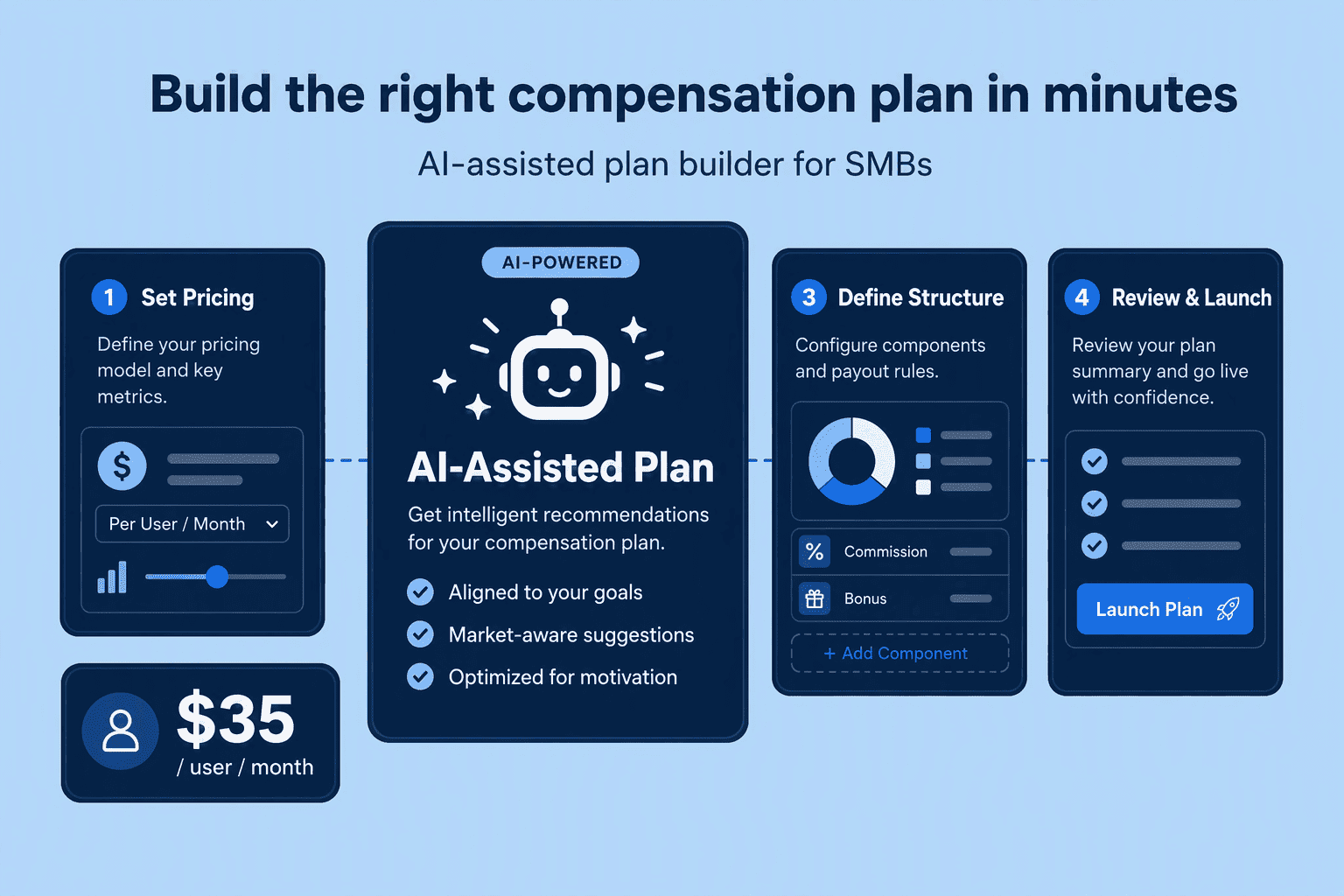
The platforms evaluated here fall into four distinct categories. Enterprise suites like Xactly and HRSoft manage the full Sales Performance Management and Total Rewards lifecycle. Mid-market options like CaptivateIQ and Everstage offer specialized tools for complex commission logic and rep-facing engagement. For SMBs, platforms like Pave provide self-serve plan builders with AI-assisted design. This analysis breaks down what each platform does, who it serves best, and where the operational risk lives in your current process.
The following points summarize the platform-to-organization mapping that drives the current market, alongside the operational shifts defining compensation technology in 2026.
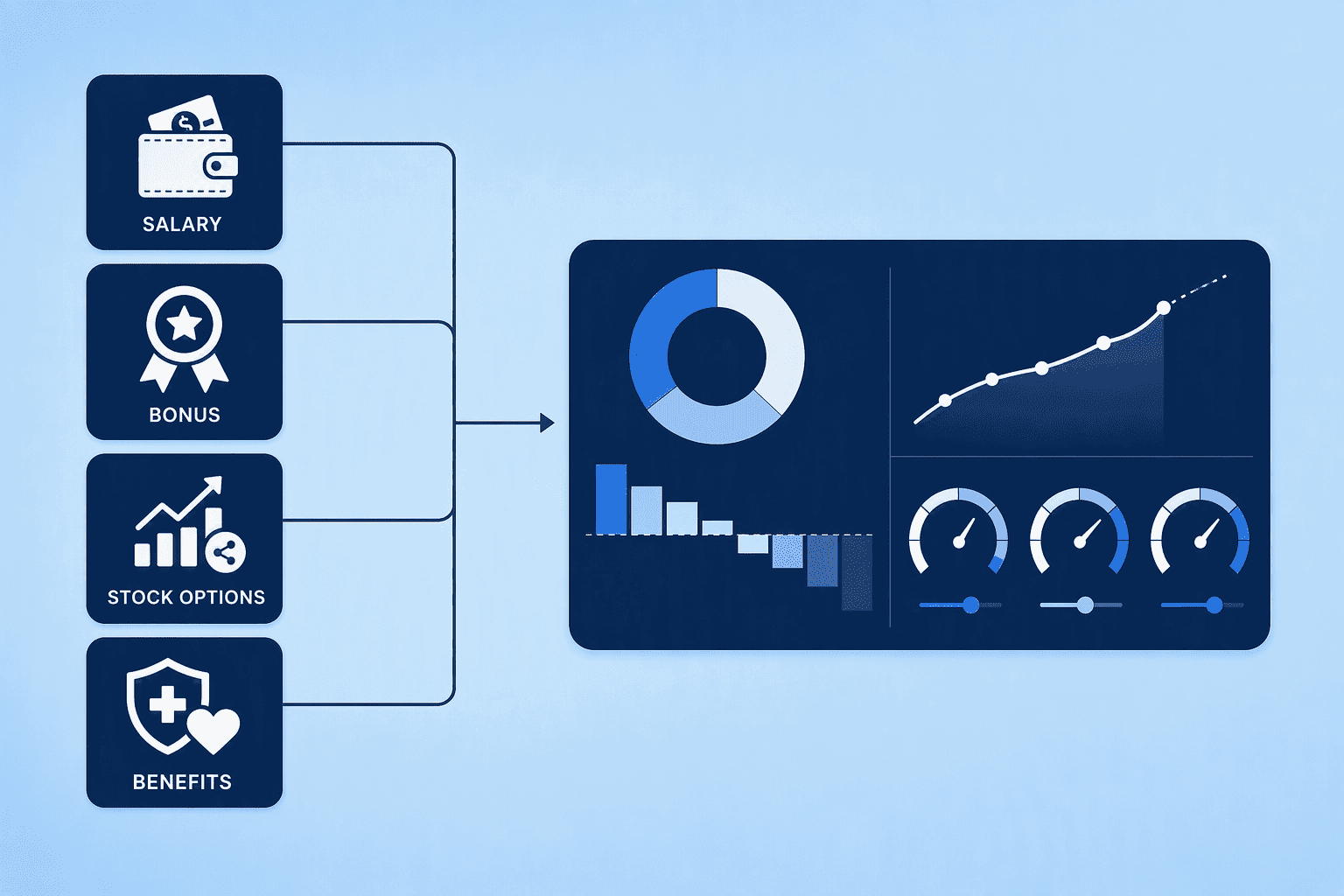
CompUp closes the gap between the strategic compensation plan and the recurring review cycle. Legacy tools treat annual merit increases as a disconnected event. CompUp brings base salary, bonus allocation, stock options, and benefit planning into one platform, eliminating the manual reconciliation that happens when a budget shift in one area ripples into another. HR and Total Rewards teams run simulations in real time and see the budget impact immediately, without rebuilding spreadsheets.
The platform models the remaining budget impact at the point of decision. CompUp's centralized budget pools connect to existing HRIS and payroll systems for real-time visibility. When a manager proposes an out-of-cycle adjustment, the platform checks the budget before approval. This replaces the overrun risk that traditional annual planning cycles build in by default. The platform costs $3 per employee per year, a price that fits organizations that have outgrown spreadsheet governance but do not need the multi-module SPM scope or proprietary benchmarking datasets that drive up enterprise price tags.
Xactly anchors the enterprise end of the market by combining Sales Performance Management with access to a proprietary dataset of aggregated compensation information. For organizations designing competitive sales plans, this benchmarking data shifts the conversation from internal affordability to external competitiveness. Instead of relying on periodic survey snapshots, compensation leaders access ongoing market data that informs plan design throughout the cycle.
The platform carries a starting price of approximately $60 per user per month and holds a 4.2★ G2 rating, lower than mid-market competitors but reflective of the implementation complexity inherent in a multi-module enterprise deployment. Xactly's architecture spans beyond core commissions into territory management, quota planning, and advanced analytics. This scope suits large sales organizations where commission calculation is just one component of revenue operations.
The trade-off is clear. Xactly demands significant implementation investment and administrative ownership. Organizations without dedicated compensation operations staff should expect a longer time-to-value than what self-serve mid-market tools deliver.
That trade-off is worth it when the alternative is losing competitive positioning in high-stakes sales hiring markets. Xactly solves for scale and market intelligence simultaneously.
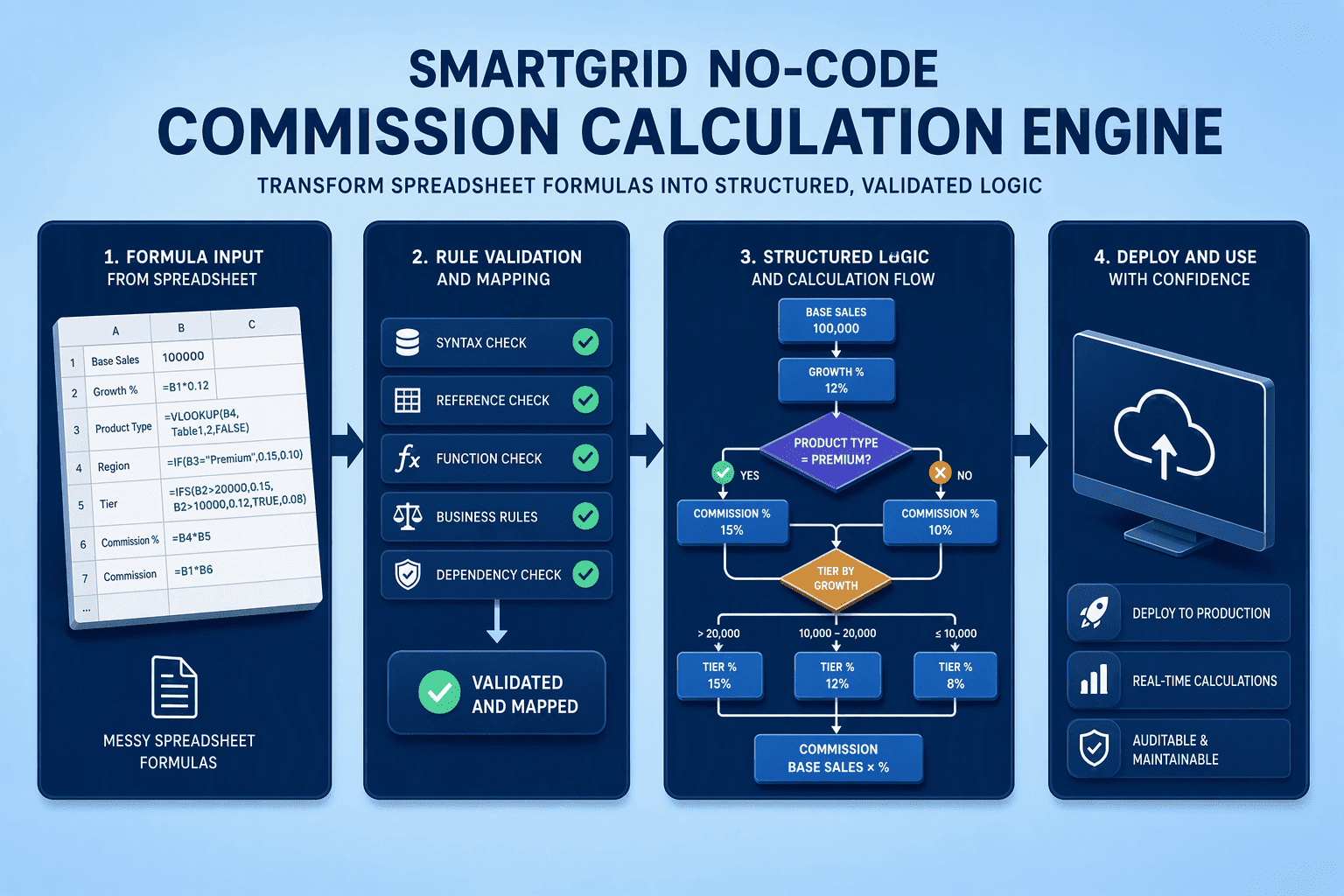
CaptivateIQ wins the mid-market by solving the spreadsheet-replacement problem directly. The SmartGrid no-code calculation engine allows revenue operations teams to model, test, and deploy complex commission structures without writing code. This hands control back to the people who understand the plan logic rather than routing every change through engineering queues or external consultants.
With a median annual investment of approximately $35K and a 4.7★ G2 rating, CaptivateIQ occupies a price-satisfaction sweet spot. The platform automates commission calculations across businesses where plan logic has exceeded what a shared workbook can reliably handle. The user interface assumes compensation complexity is a revenue operations problem and builds the UI from that premise, making it a natural fit for teams where RevOps owns the commission stack.
That design philosophy makes CaptivateIQ a strong fit for organizations where RevOps owns commission accuracy. It is less suited to HR-led compensation functions that require total rewards statements, equity management, or pay equity analysis as integrated features.
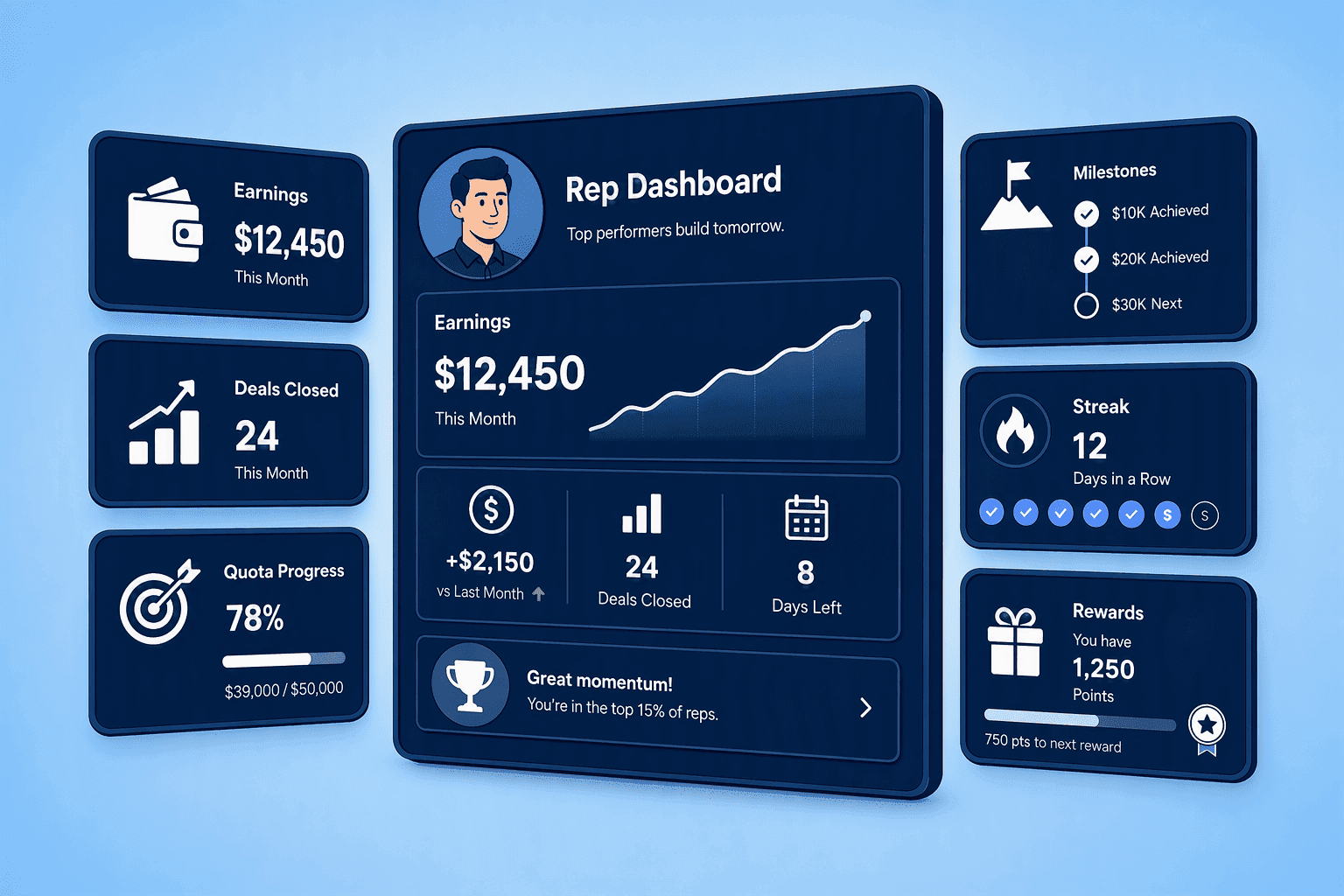
Everstage puts the rep's own dashboard at the center of its design. Real-time earnings visibility and built-in gamification take what is usually a backend commission engine and turn it into something that keeps sellers engaged and reduces second-guessing. For mid-market teams bleeding talent over opaque payout calculations and commission disputes, that visibility solves the actual problem. Everstage carries a median annual investment of approximately $41K and holds a 4.8★ G2 rating, the highest user-satisfaction score in this group. Reps stop maintaining their own spreadsheets because the numbers are right there.
This shifts what a buyer is evaluating. You aren't buying an admin tool for HR. You are buying lower rep churn and fewer hours lost to dispute resolution. Those returns show up in the operating budget, not just the people-team line item.
HRSoft addresses a compensation scope that pure-play commission platforms do not touch. Its unified Total Rewards lifecycle encompasses merit cycles, bonus allocation, Long-Term Incentive management, and total rewards communication within one governed workflow. For enterprises managing equity-heavy compensation packages, HRSoft COMPview systematically guides calculation and allocation of merit, bonus, and equity awards to drive engagement and retention.
Regulatory tailwinds strengthen its positioning. The 2026 EU Pay Transparency Directive and evolving US state pay equity laws make integrated pay equity analysis a compliance requirement. HRSoft's recognition as a 2026 G2 Enterprise Leader signals that the market views governance-grade compensation infrastructure as distinct from commission automation.
Pricing is custom, reflecting the enterprise total rewards scope. Organizations evaluating HRSoft should assess whether their compensation complexity spans LTI management and total rewards communication, or whether a commission-centric platform is sufficient. HRSoft is not designed for SMB sales teams.
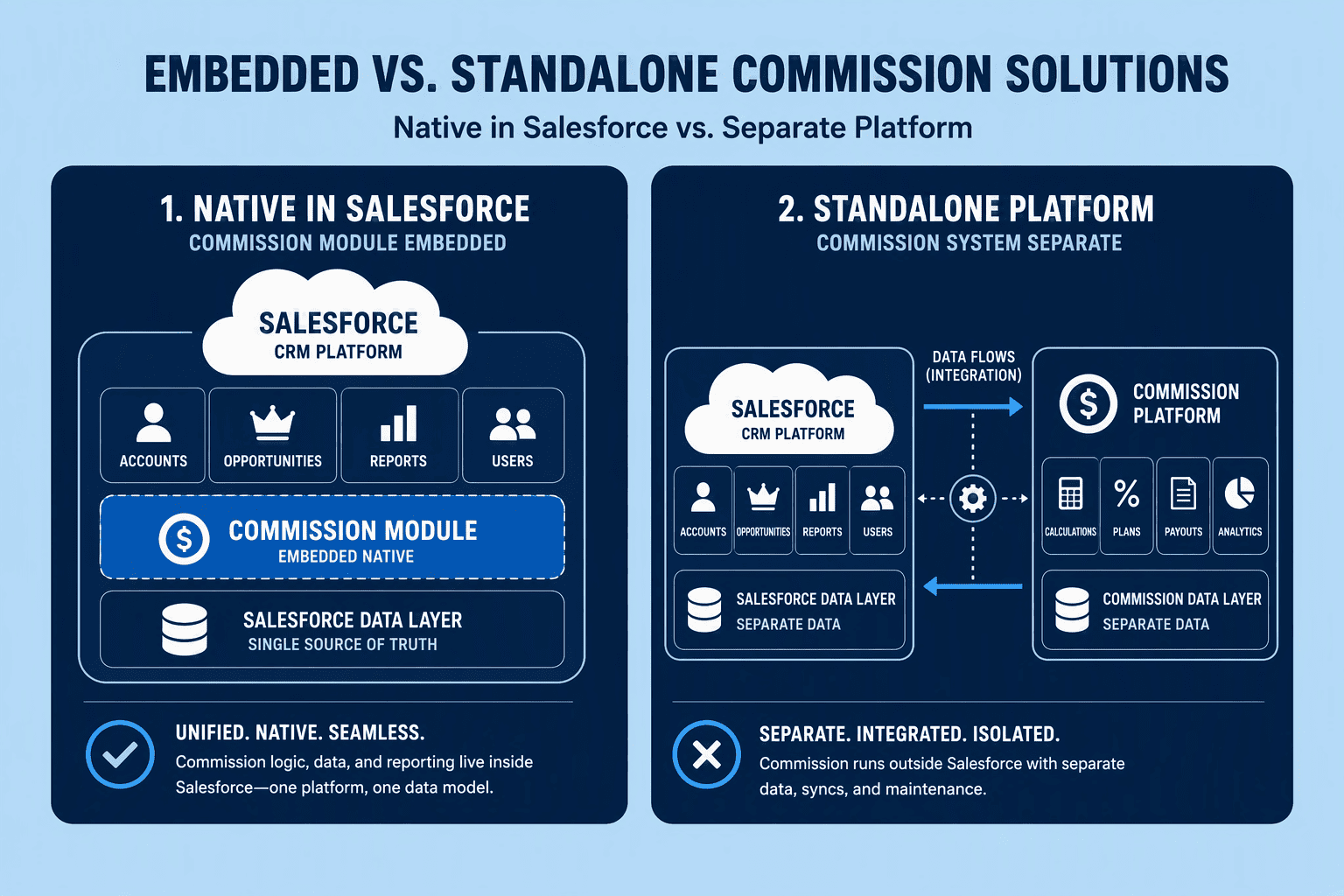
Salesforce Spiff occupies a specific architectural niche: native-platform commission management for organizations that run their revenue operations inside Salesforce CRM. The following table compares its native integration model against the standalone platform approach represented by the broader market.
| Dimension | Salesforce Spiff (Native) | Standalone Platforms |
|---|---|---|
| Primary advantage | Zero-latency data sync; rep familiarity with Salesforce UI | Independent data model; broad integration flexibility |
| Data architecture | Data resides within Salesforce environment | Separate data layer with API-based integration to multiple CRMs |
| Implementation model | Leverages existing Salesforce admin skills | May require dedicated platform administration |
| Pricing | $75 per user per month | Varies from $35/user/mo (QuotaPath) to ~$60/user/mo (Xactly) to custom (HRSoft) |
| Best-fit profile | Salesforce-native organizations prioritizing UI consistency | Organizations with multi-CRM environments or HR-led compensation functions |
| Limitation | Vendor lock-in to Salesforce ecosystem | Requires integration maintenance between CRM and compensation layer |
This native approach eliminates integration latency but ties compensation management to the Salesforce subscription and data model. The $75 per user per month price point covers zero-latency reporting and a familiar interface that speeds up rep adoption.
The compensation platform market in 2026 segments cleanly by organizational complexity. SMBs should start with Pave's self-serve AI builder. Mid-market teams with intricate commission logic need CaptivateIQ's no-code SmartGrid.
Enterprise sales organizations justify Xactly's premium through proprietary benchmarking. Total Rewards leaders managing LTI and pay equity compliance require HRSoft's unified lifecycle. Rep-facing visibility as a retention strategy points to Everstage.
Every tier now has a purpose-built alternative to spreadsheets, and the cost of sticking with manual governance keeps rising. Compensation errors carry real retention consequences, and platforms now eliminate that risk at any scale. If you're weighing options, CompUp is worth a closer look.
Key capabilities to look for in a compensation platform include:
Compensation platform pricing and scope break down into three segments:
Functionality ranges from commission-specific engines to full Total Rewards lifecycle platforms. The premium correlates with benchmarking data access and regulatory compliance scope.
Three platforms offer pay equity analysis within their compensation suites:
HRSoft COMPview manages the full lifecycle including merit, bonus, and equity award allocation. CompUp unifies base salary, bonuses, stock options, and benefits in a single platform. Lattice connects performance review cycle results directly with compensation decisions to align pay outcomes with employee performance.
Automated workflows replace sequential email approvals with centralized platforms. Managers input adjustments within the system against real-time budget visibility. Budget-based approval triggers can escalate decisions when remaining budget drops below a defined threshold, preventing overspend before it reaches the compensation review stage.
The EU Pay Transparency Directive is driving global demand for integrated pay equity analysis, though its direct application is in the EU. In the US, institutional investment managers must publicly disclose)) say-on-pay vote records annually under 15 U.S.C. §78n-1. AI adoption in compensation is shifting from aspirational to operational, appearing in plan simulation, automated job mapping, and real-time benchmarking.
Community Manager (Marketing)
As a Community Manager, I’m passionate about fostering collaboration and knowledge sharing among professionals in compensation management and total rewards. I develop engaging content that simplifies complex topics, empowering others to excel and aim to drive collective growth through insight and connection.
Revolutionizing Pay Strategies: Don't Miss Our Latest Blogs on Compensation Benchmarking