
You closed your Series A and the board is pushing for aggressive targets. Your spreadsheet shows 23 roles to fill, but the cost of those hires isn't connected to your revenue plan. Worse, you have no data on whether you are paying competitively or just copying last year's salary bands. This disconnect is the friction that kills scaling momentum.
Workforce planning software answers the strategic question of how many people you need and where, modeling future headcount against financial constraints. Compensation management platforms tackle the equally critical concern of how much to pay them, ensuring your offers are equitable and aligned with the market. One plans the organizational structure. The other costs it out.
These are complementary disciplines, not two features of one tool. A 2026 startup stack must address both. The evaluation below prioritizes platforms that deliver rapid time-to-value for lean teams, support scenario-based financial decisions, and integrate cleanly with your existing HRIS.
A clear-eyed look at workforce planning and compensation reveals a distinct set of priorities for fast-moving startups. The strongest stacks pair a structural planning engine with a compensation lifecycle specialist.
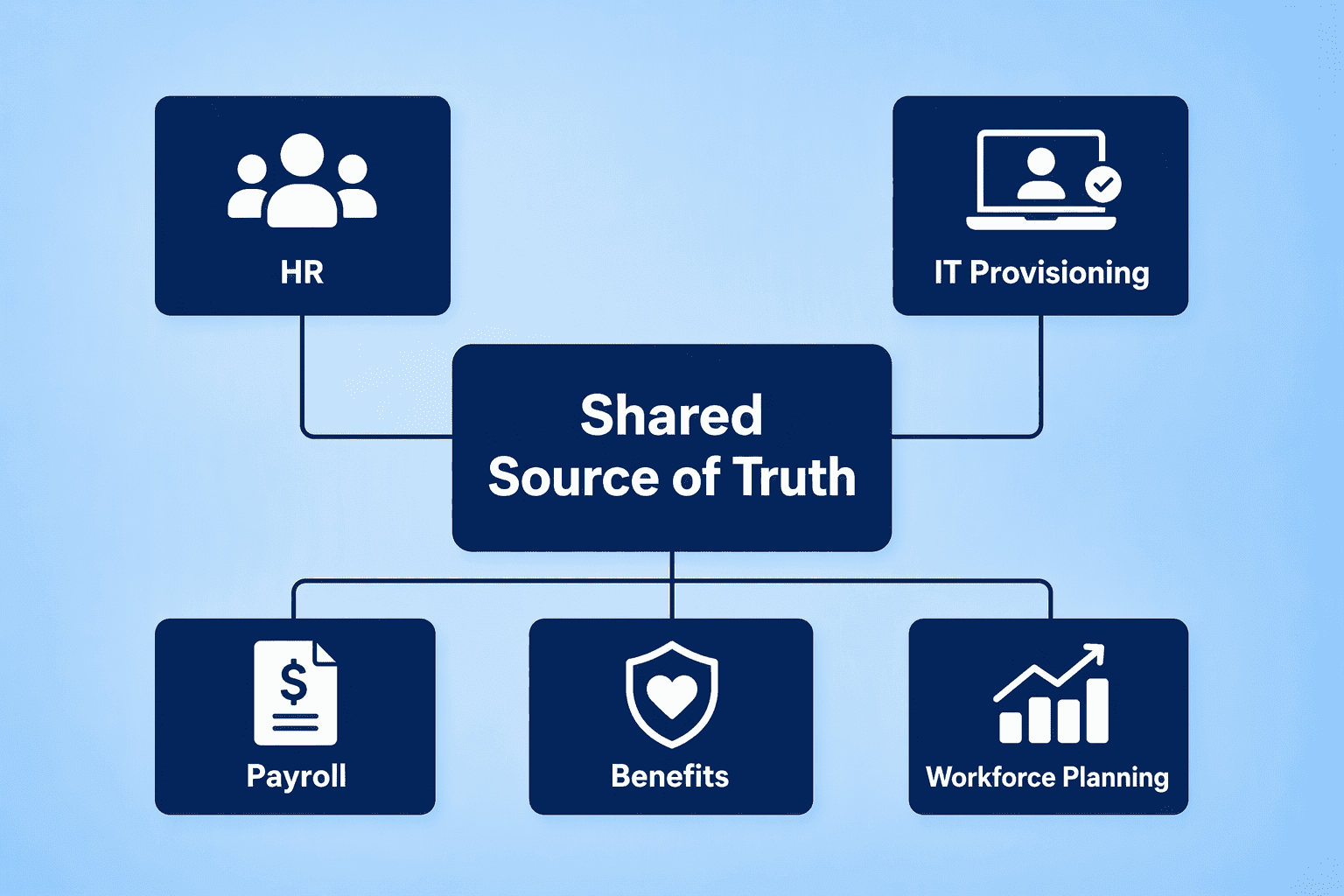
For startups seeking to collapse HR operations, IT provisioning, and financial planning into a single source of truth, Rippling earns the top spot. Its workforce planning module lives natively inside a platform that already runs your payroll, benefits, and device management. That architectural unity means your headcount forecast automatically factors in real-time salary data, pending offers, and onboarding timelines without a brittle integration layer. The platform starts at $8 per-employee-per-month, making it a pragmatic entry point for cost-conscious scaling.
Headcount forecasting, compensation bands, and hiring approvals all function within the same system that cuts the first paycheck. For a lean people-operations team, this eliminates the reconciliation hell of syncing a planning tool to a separate HRIS every quarter.
You click approve on a hire, and the system provisions the laptop, generates the offer letter, and enrolls the new person in payroll. The headcount plan is not a static spreadsheet someone updates quarterly. It is the same record that triggers downstream action, so the gap between deciding to hire and having a productive employee closes to hours instead of weeks.
You've locked in who you'll hire. The next question is what you'll pay them. CompUp wraps the whole compensation lifecycle into one AI-native system built for startups that can't afford a dedicated comp team.
It replaces the spreadsheet tangle during merit cycles with a governed workflow. Managers see real-time budget tracking and dashboards instead of emailing Excel files back and forth.
Equity and bonus decisions get the same treatment. The platform runs scenario-based equity awards and bonus pool distributions tied directly to the headcount and budget simulations you already have.
Benchmarking is built in. Teams pull industry-specific compensation data to calibrate offers and retention packages against live market rates, so you are not guessing off Glassdoor screenshots.
The embedded pay equity feature analyzes compa-ratios and demographic breakdowns, flagging fairness gaps inside the compensation review itself rather than in a separate annual audit that nobody reads until it is too late.
Pricing starts at $3 per employee per year, deliberately low for lean startups that need real compensation infrastructure without the enterprise price tag.
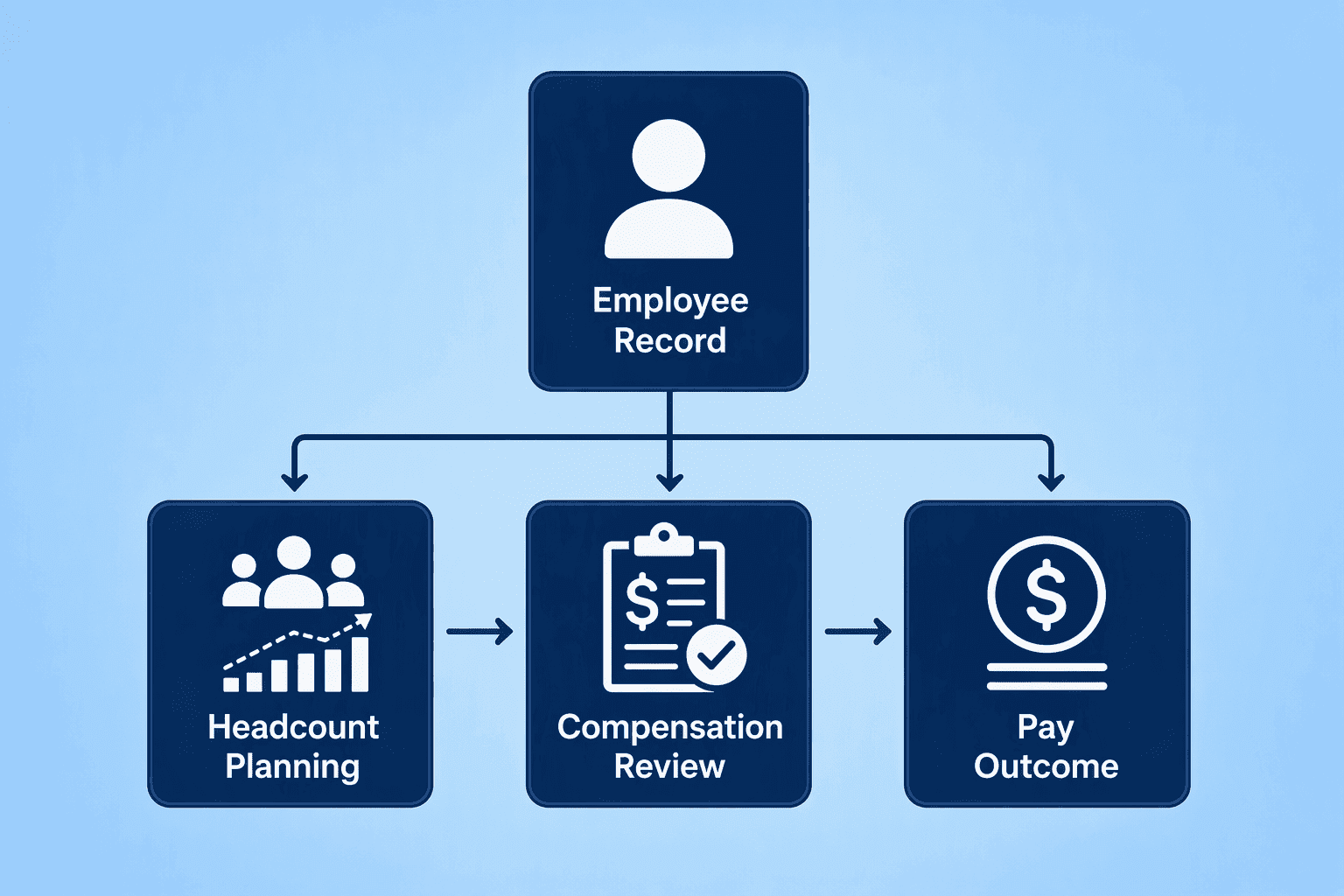
HiBob's HCM, Bob, treats workforce planning and compensation as parts of the core people record, not as modules you bolt on later. The setup matters because it gives you one data source for planning and for pay reviews. When those two functions pull from different systems, you get a lag between the headcount you approved and the costs that actually land, and Bob's design sidesteps that.
When your headcount planning scenario suggests opening five engineering roles in a new geo, Bob's workforce planning module models those costs inside the same interface where your employee engagement data lives. Compensation capsules let you configure pay structures with localized rules, eligibility criteria, and approval chains that follow your org chart. That becomes useful once you cross roughly 150 employees and your comp design moves from a flat, one-size-fits-all approach to something more segmented.
For startups that want a clean, people-centric HR core instead of an all-in-one operations platform, HiBob is the strongest fit.
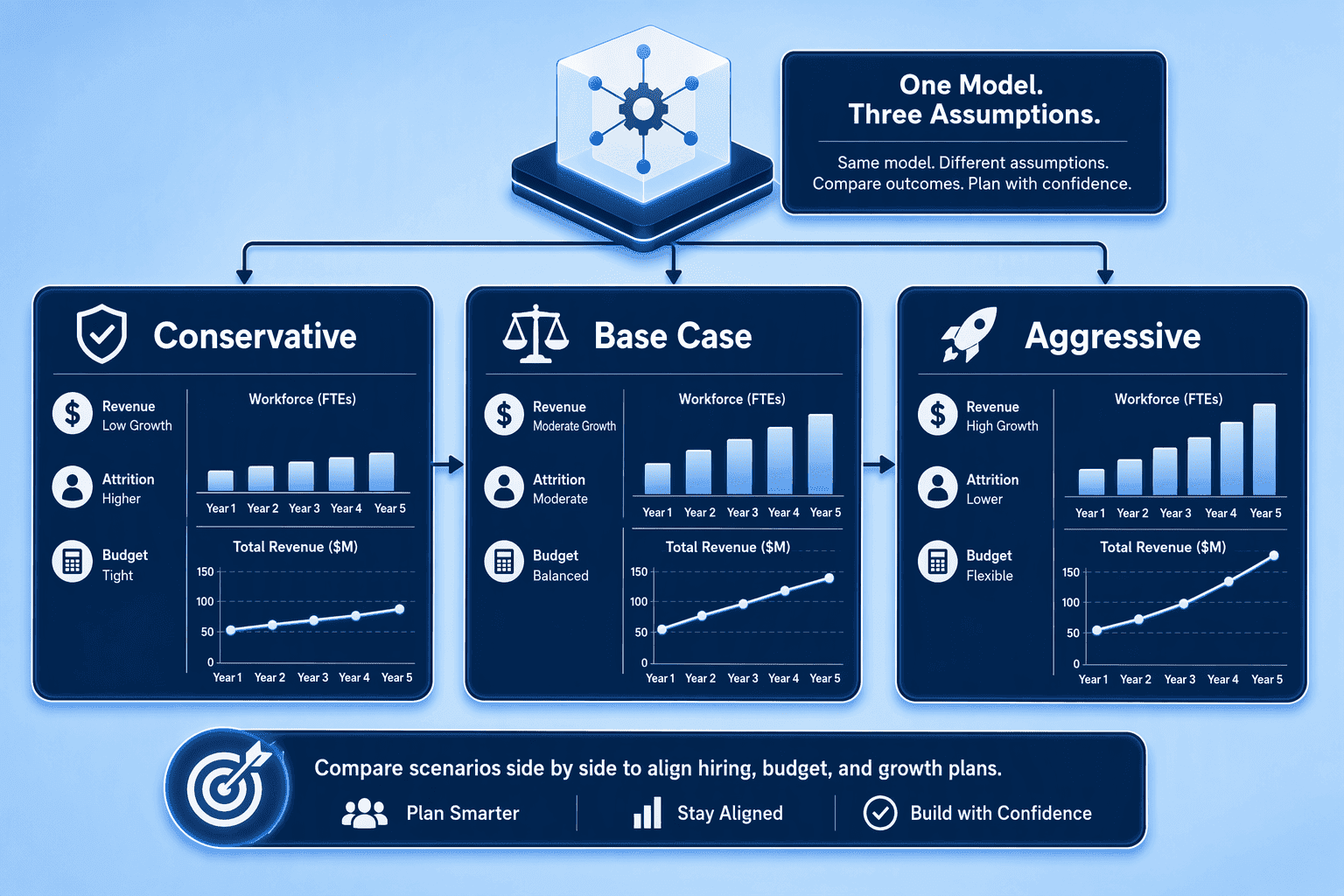
Workday Adaptive Planning is an enterprise platform whose modeling and forecasting capabilities fit a startup that needs hiring plans pegged to three revenue scenarios. It puts finance, sales, and workforce planning inside a single model that is fast and flexible.
For a Series B company adding headcount rapidly, the real utility is rigorous what-if testing. You stress-test the same hiring plan against different attrition rates, pipeline conversion assumptions, and budget caps, and the model surfaces which headcount choices you can pay for. Because the modeling language stays financial, your FP&A team runs it directly, without the translation losses that happen when one department hands a spreadsheet to another. Workday Talent Acquisition feeds back into the plan, closing the loop from approval to hire.
The platform skips most of the compensation lifecycle. It models cost lines inside the plan cleanly, but it does not automate salary reviews or surface real-time pay equity data. You will still pair it with a specialist for that part.
Adopting Adaptive Planning tells your board and investors that you treat workforce cost with the same analytical discipline you apply to revenue forecasting. That posture carries weight when institutional capital starts doing deeper operational diligence.
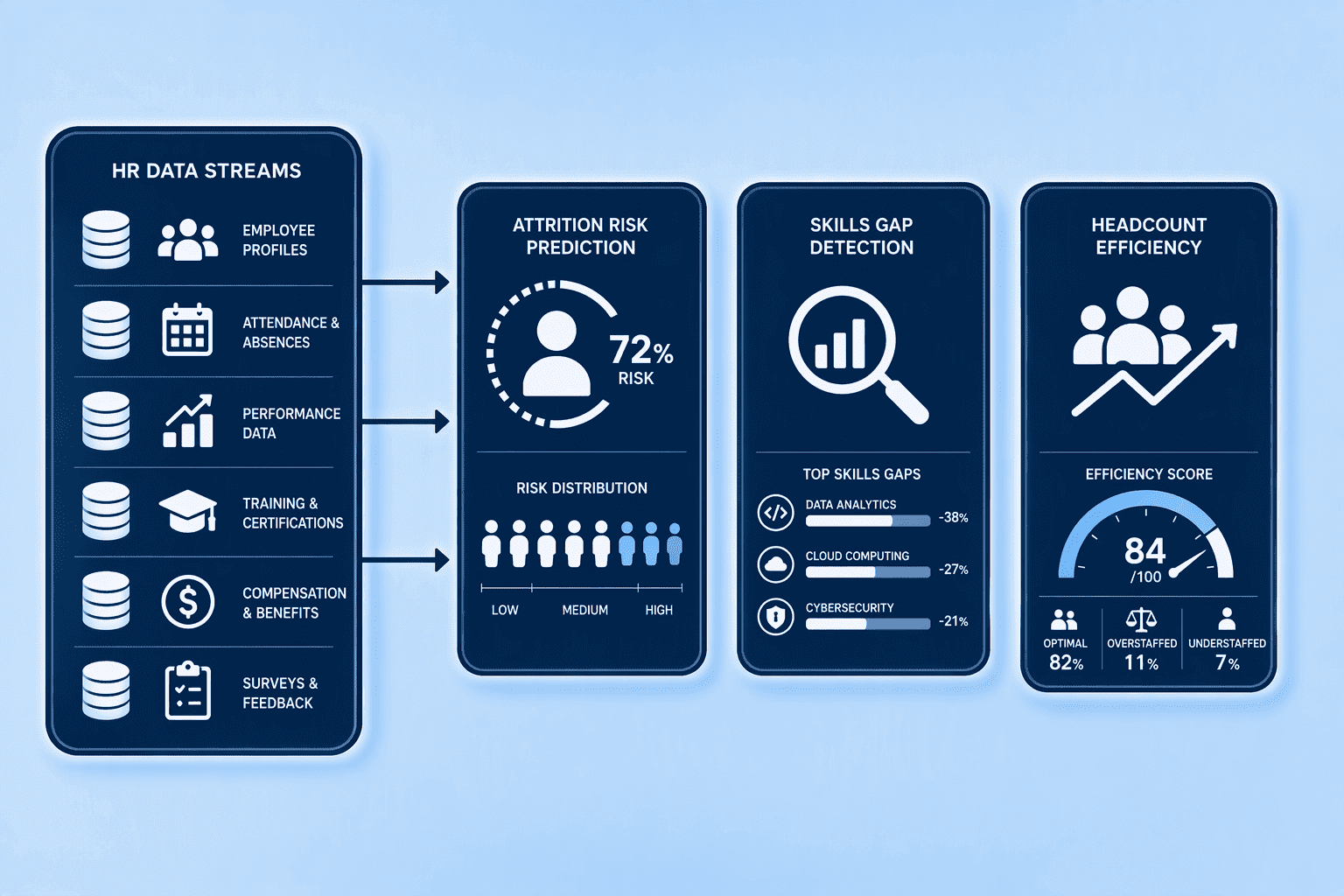
Visier sits on top of your existing HR tools. Its People Data Platform pulls employee data into a central warehouse and runs AI analytics on it, including Vee, a generative insights tool. What you get are forward-looking signals your HRIS alone will miss.
It models how likely employees in different tenure bands are to leave. It flags the skills gaps that could stall a product roadmap. It measures headcount efficiency by team. For a founder watching a key engineer walk out the door and staring at an org chart full of empty seats, Visier swaps gut-level worry for a predictive model you can act on.
Startups often discover their pay equity problem during due diligence. Aeqium makes sure that is not the first time you see it. The platform concentrates on transparent reward communication and rigorous equity distribution analysis, and it holds a 4.9 rating on G2. Its main deliverable is a total rewards statement, a personalized document that lays out the full economic picture of a person's compensation, well past base salary.
For a candidate weighing two offers, or a current employee frustrated by an opaque bonus scheme, this document does real work. It ties behavior straight to reward, showing exactly how an equity grant vests and what it is worth under different valuation outcomes. The secondary function is systematic compensation analysis. Aeqium audits pay structures for unexplained gaps tied to gender, ethnicity, or tenure and gives you a real-time view of your pay equity posture.
That output is directly useful for board decks and, increasingly, for compliance. As pay transparency laws spread across US states, static demographic dashboards are no longer enough. Aeqium produces analytical depth that holds up under legal scrutiny, a practical safeguard growing startups cannot afford to postpone.
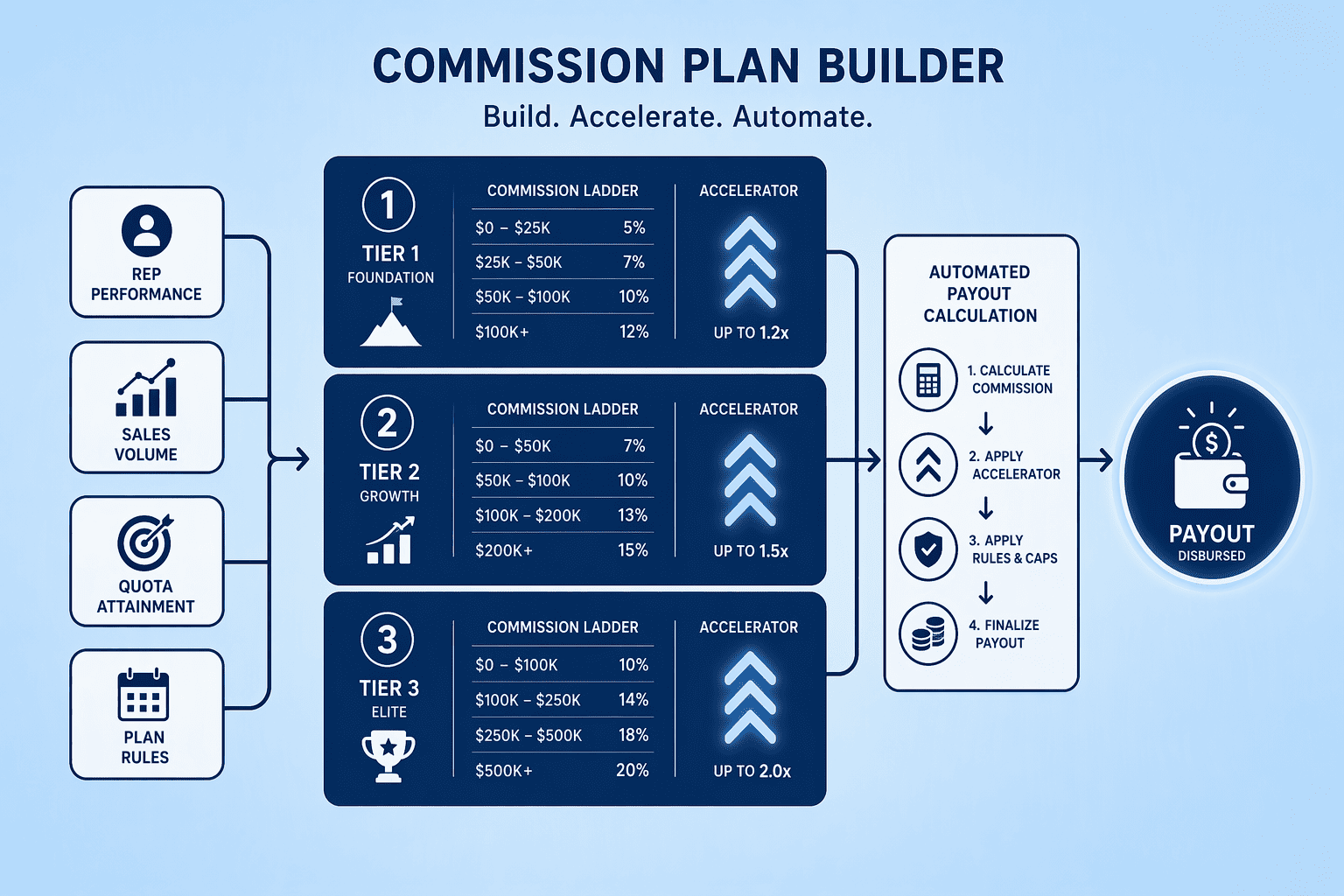
CaptivateIQ solves a narrowly defined but high-stakes problem for any startup whose revenue depends on a sales team: designing, calculating, and automating complex commission plans and variable bonus cycles without a spreadsheet apocalypse. Here is how it compares on core dimensions.
| Dimension | CaptivateIQ | Generalist Compensation Tools |
|---|---|---|
| Commission Plan Design | Native plan builder with complex rule, tier, and accelerator support | Typically simpler, flat-trigger bonus structures |
| Data Integration | Deep CRM (Salesforce, HubSpot) and ERP connectors; ingests deal-level data | Often limited to HRIS and payroll feeds |
| Real-time Visibility | Rep-facing dashboards showing live commission attainment and forecasted payout | Manager-side reports only; calc at period-end |
| Calculation Engine | Automated gross-to-net commission runs with audit trails | Manual or batch calculations for bonus pools |
| G2 Rating | 4.5 | Varies; broader tools may score lower on comp-specific depth |
No single app nails workforce planning and compensation together. Startups that get it right run two tools side by side: one for structural modeling, one for pay cycles, equity, and reward communication.
Pair a headcount engine like Rippling or HiBob with a compensation specialist. Rippling handles scenario modeling and cost constraints directly inside its HR layer. HiBob delivers a clean HR core, and when you attach CompUp, you get compensation depth plus AI-native lifecycle automation without the overhead of an enterprise suite.
The penalty for getting this pairing wrong shows up where it hurts: a cap table you can't unwind and a culture you can't easily repair. The cost of getting it right is smaller than most founders assume. A good next step is seeing how CompUp puts this into practice. Book a free demo today.
Workforce planning software and compensation management software serve distinct but complementary roles:
Top workforce planning tools for startups include:
Leading compensation platforms include:
Each targets a distinct compensation function.
Modern platforms integrate through native APIs and pre-built connectors that sync live headcount, titles, and compensation history automatically. For example, CompUp integrates with BambooHR, Lattice, Darwinbox, and Workable. This real-time data flow enables accurate modeling without manual spreadsheet reconciliation between systems.
Workforce planning tools commonly charge per-employee-per-month, with Rippling starting at $8 PEPM. Compensation platforms may use PEPM, annual subscriptions based on employee count, or per-cycle fees; CompUp starts at $3 per employee per year. Enterprise-scale tools like SAP SuccessFactors use custom enterprise pricing not publicly listed.
Tools like Workday Adaptive Planning and CompUp allow startups to test hiring plans against budget constraints, revenue projections, and attrition rates. CompUp specifically supports what-if scenario modelling, hiring and attrition planning, and workforce supply-demand analysis, enabling founders to identify which roles they can realistically afford under different growth assumptions.
Community Manager (Marketing)
As a Community Manager, I’m passionate about fostering collaboration and knowledge sharing among professionals in compensation management and total rewards. I develop engaging content that simplifies complex topics, empowering others to excel and aim to drive collective growth through insight and connection.
Revolutionizing Pay Strategies: Don't Miss Our Latest Blogs on Compensation Benchmarking