
Your compensation team just discovered three different versions of the merit increase spreadsheet circulating among department heads. One has last year's salary bands. Another broke the macros.
The third has a formula error that over-allocated the engineering budget by 11 percent. This isn't a one-off breakdown. It's what manual cycles produce, cycle after cycle, inside organizations that have outgrown shared-drive planning.
Compensation cycle management platforms exist to end that loop. They replace disconnected spreadsheets with structured, data-driven compensation decisions across salary increases, merit cycles, bonuses, equity awards, pay ranges, and pay equity analysis. The current market layers on AI-powered market data integration, real-time budget modeling, and automated compliance reporting tuned to state-specific mandates like California's SB 1162 and New York City's Local Law 32. For HR, Total Rewards, and finance leaders running multiple cycles a year, the question is no longer whether to move off spreadsheets. It's which platform fits the complexity their organization actually carries.
The compensation software market breaks into distinct lanes, and buying the wrong one is the single most expensive mistake a team can make. Here is what to carry into your evaluation.
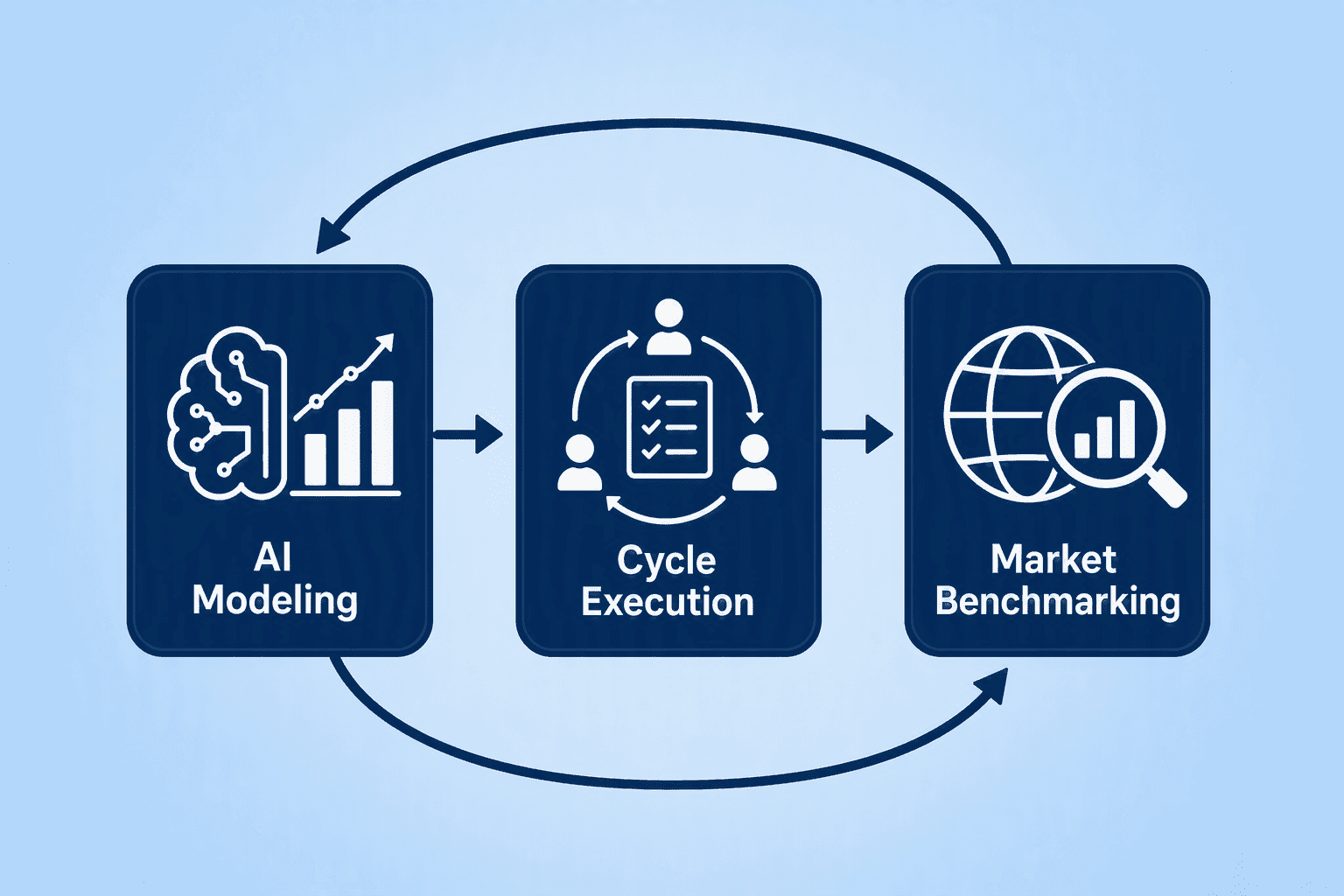
CompUp is a full-stack compensation platform that speeds up budget decisions with AI-driven modeling, centralized cycle execution, and real-time market benchmarking. It is built for mid-market and scaling tech companies that care more about getting a cycle done than about plumbing every system into one mega-suite.
Instead of layering compensation workflows on top of a legacy HRIS, CompUp makes the compensation cycle the system of record. Base salary, bonuses, stock options, and benefits sit in one place. HR and Total Rewards teams can run simulations, change an assumption, and watch the budget numbers update immediately.
No spreadsheet rebuilds. Automated approval workflows carry a full audit trail, and pay equity tools flag disparities before a cycle locks. Native multi-currency support handles more than 80 currencies across over 150,000 employees, and it integrates with Workday Adaptive Planning, Pigment, and Board.
Pricing starts at $3 per employee per year. That puts it among the most affordable AI-native compensation platforms available. The scope is narrow by design: CompUp goes deep on compensation and deployment speed. It does not try to cover the full HCM surface a Workday or Oracle suite covers.
A real scenario: a comp team runs two merit cycles and an off-cycle equity refresh in the same quarter. They model all three against live market data inside the tool that holds the budget and spits out personalized total rewards statements at close. That is the workflow the platform is designed for.
Aeqium is a dedicated compensation planning platform that executes merit cycles, offer workflows, pay equity monitoring, and salary bands in one flexible environment. It operates as a fully configurable AI compensation planning tool that models equity-heavy total rewards without pulling in engineering resources.
The platform connects to cap table data through Carta and ingests headcount and performance data from Workday and Greenhouse. Managers get real-time visibility into past compensation, performance history, and salary bands inside the same review interface. Separate eligibility rules, review flows, and pay structures can be defined by department, region, or employment type, which matters when a Series C company runs different equity grant cadences for engineering, sales, and international entities.
Implementation takes weeks, not quarters. Most tech teams are live in that timeframe, and full onboarding covering equity structures and geo-based bands wraps up in four to six weeks. SOC 2 Type 2 certification backs the security posture. The platform handles the compensation complexity venture-backed companies carry, but it is not an HCM suite and does not replace a core HRIS.
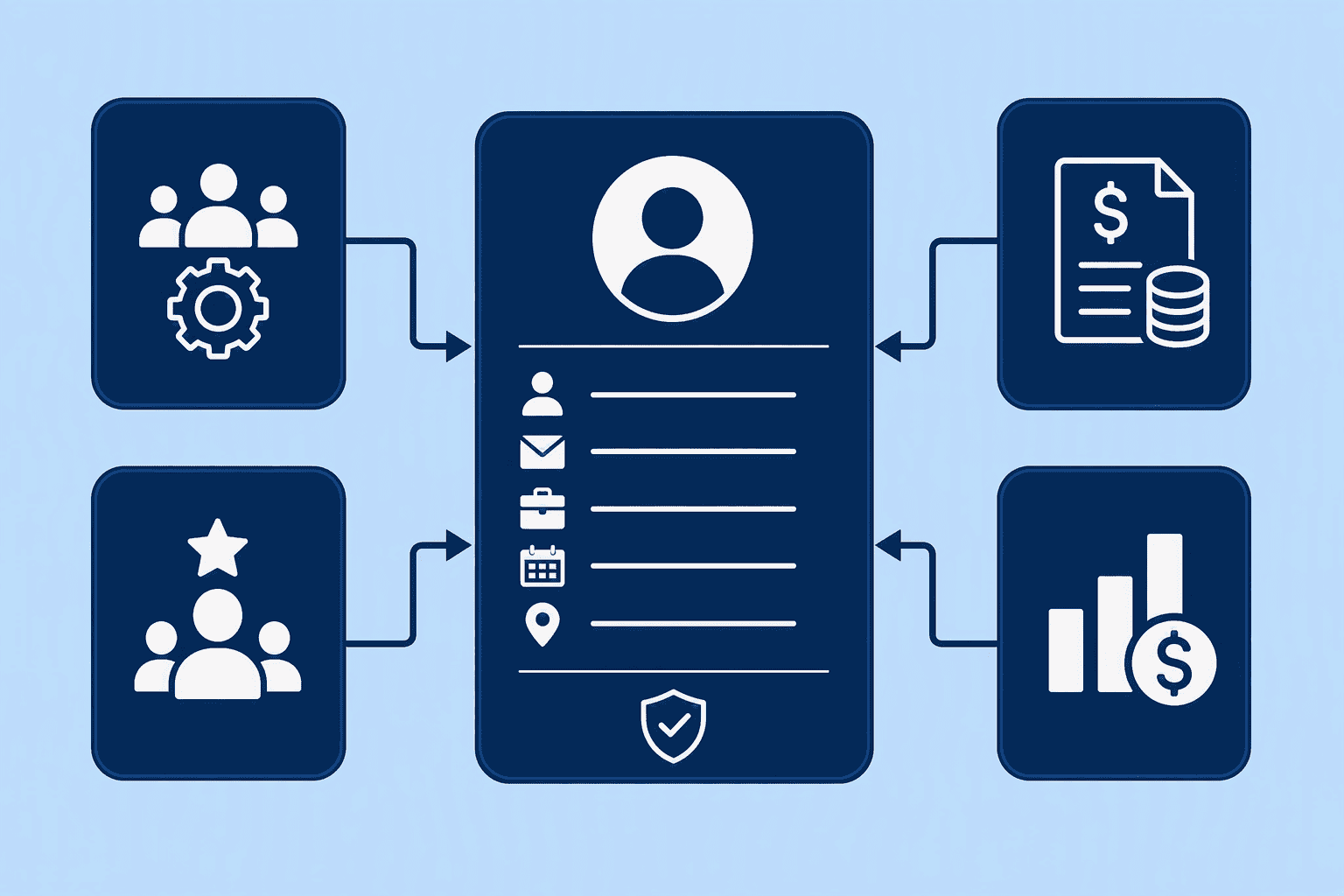
Workday Compensation is a module inside the unified Workday HCM data model. Compensation cycles draw directly from Core HR, talent, and payroll data. No batch imports. No middleware reconciliation.
For enterprises already running Workday HCM, that single-system record is the point: one place where employee records, job profiles, performance ratings, and pay decisions all live.
The platform handles configurable merit, bonus, and equity processes with granular eligibility rules and approval chains. Configurability brings a steep learning curve. Workday is not cheap and it is not fast to set up. The compensation module needs dedicated implementation resources to tune the workflows to your cycle cadence.
Compensation teams that want rapid scenario modeling or real-time market data often add a point solution on top. Workday Adaptive Planning does not include detailed compensation cycle automation. That gap is where dedicated tools come in. The suite works where the priority is a single integrated record, not where speed or compensation-specific intelligence drives the decision.
Oracle Cloud HCM Compensation is built for multinational organizations that run cycles across dozens of countries with fundamentally different pay practices, grade structures, currencies, and regulatory environments. Its rules-driven calculation engine can model everything from union-negotiated step increases in Germany to broad-based equity grants in India, all within a single compensation workspace.
Oracle Fusion Cloud HCM is a thorough cloud-based HR platform with subscription pricing structured by number of users or employees and custom enterprise quotes available. The compensation module inherits that enterprise DNA: it can handle extreme configurability, but implementation complexity is a genuine point of friction, especially without dedicated technical resources. This is not a plug-and-play tool.
For organizations already committed to the Oracle ecosystem, the integration payoff is significant because compensation data feeds directly into global payroll, compliance reporting, and workforce modeling. The trade-off is agility. Running quick what-if scenarios or adjusting merit matrices mid-cycle typically requires more administrative effort than in an AI-native point solution.
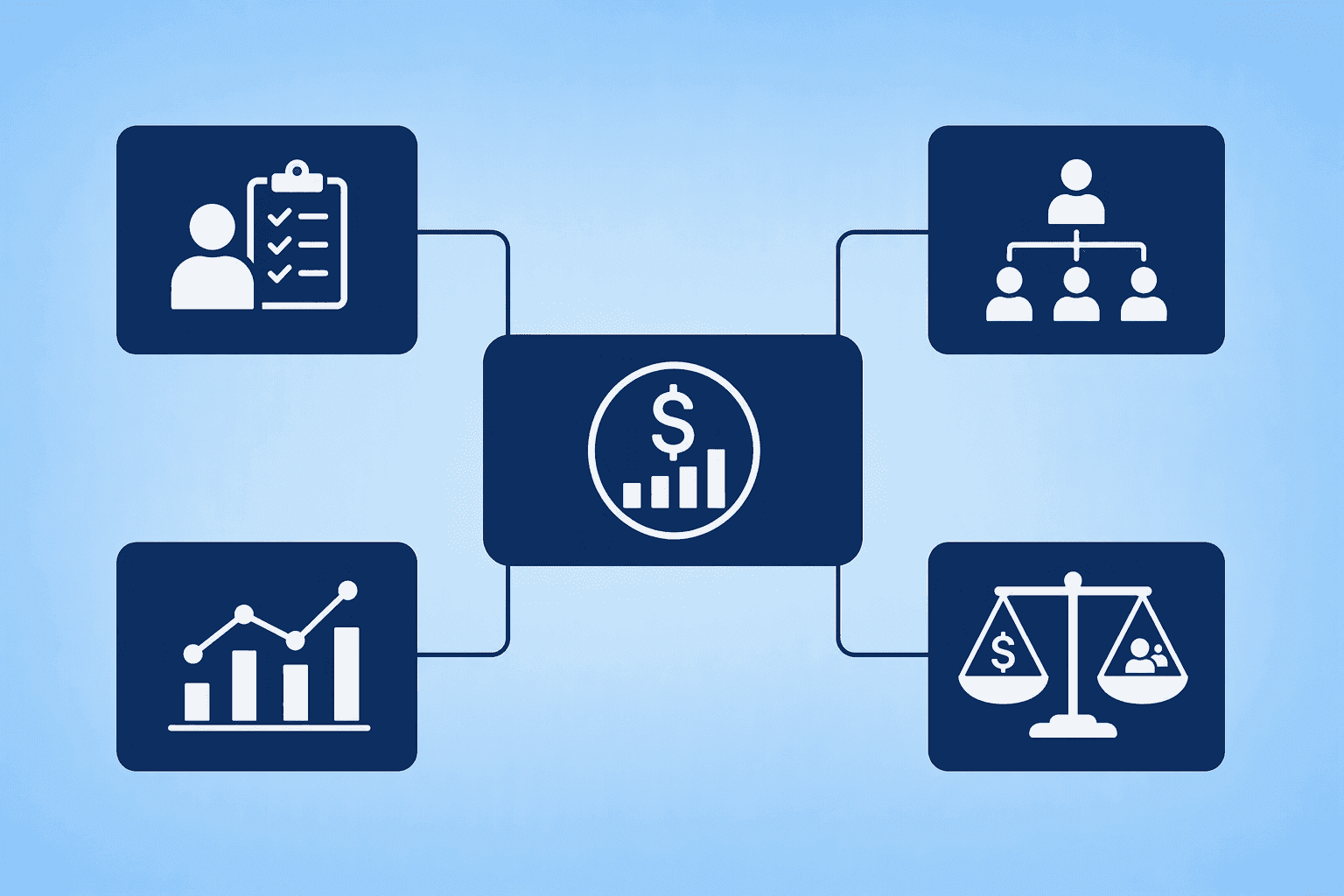
SuccessFactors Compensation earns its place on this list by embedding compensation management directly into a talent suite that connects pay to performance, succession, and workforce analytics. For the more than 10,000 organizations worldwide running on SuccessFactors, that integration removes the reconciliation overhead that plagues bolt-on approaches. Here is where the platform differentiates.
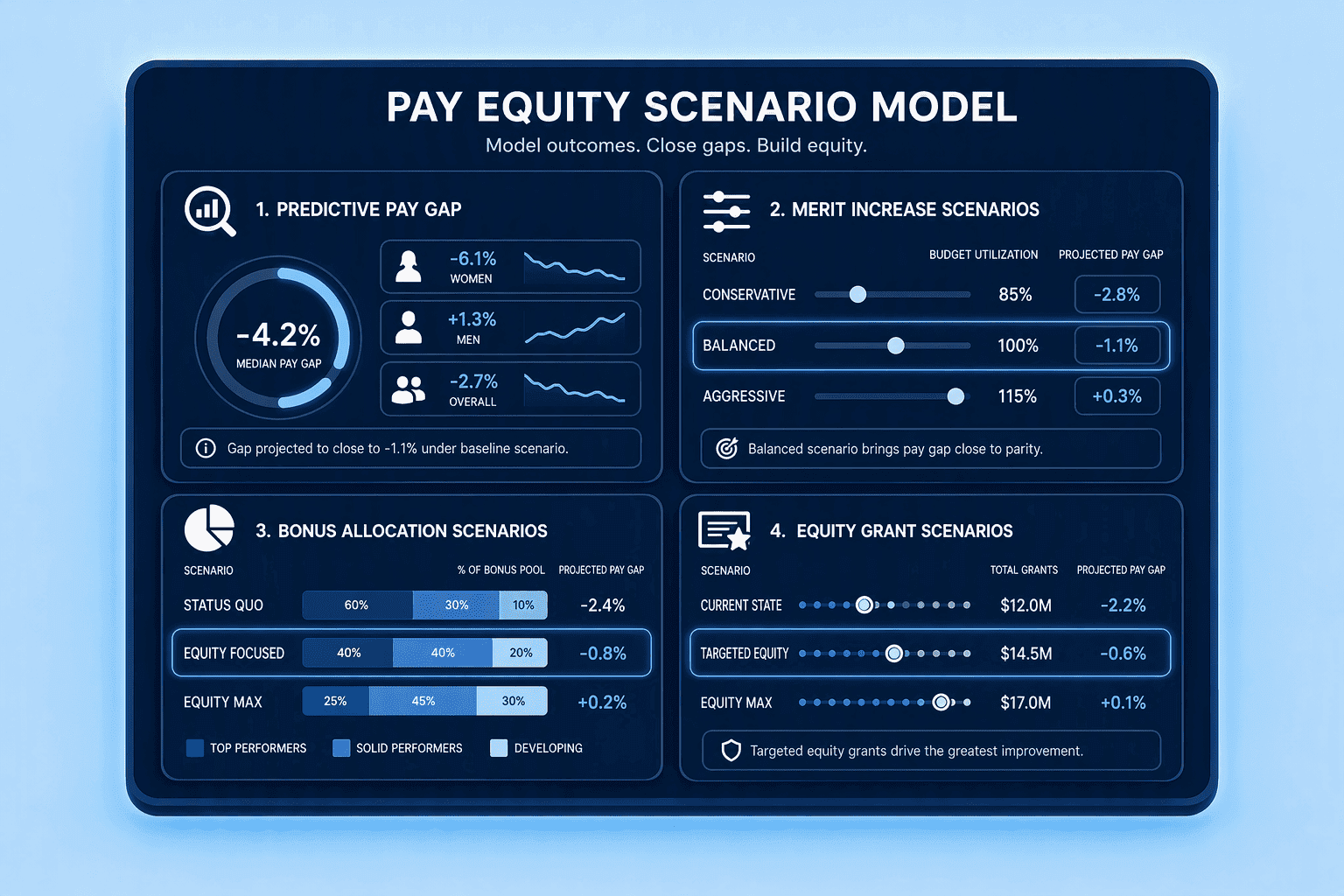
Beqom is a cloud-native total rewards platform built exclusively for compensation management, and its standout capability is predictive pay gap modeling that lets organizations identify and remediate disparities before they become compliance liabilities. Unlike suite modules that treat pay equity as a reporting afterthought, Beqom embeds scenario analysis directly into the compensation cycle so that every merit increase, bonus allocation, and equity grant can be stress-tested against gender, race, and other protected categories in real time.
The platform also manages salary structures, incentive plans, and audit-ready reporting required under global transparency directives. For enterprises with mature, data-intensive reward strategies and a board-level mandate to prove pay equity, Beqom functions as a dedicated intelligence layer. It does not try to be an HCM suite. It focuses on one problem and solves it with the depth that generalist modules cannot match, operating as the compensation system of record that integrates into the broader HR stack.
Pave built its reputation on a real-time compensation benchmarking dataset sourced from its network of participating companies, and it has woven that live data directly into its compensation planning module. For tech companies that want market-informed cycles without separate data subscriptions, Pave merges intelligence and execution in one platform.
During a merit cycle, managers see current market ranges next to each employee. That alone cuts the friction of reconciling a separate benchmarking tool.
Pave’s proprietary data refreshes continuously. Offers and adjustments benchmark against moves happening now at peer companies, not numbers from a survey that closed months ago. This is a different approach from Salary.com’s employer-reported survey methodology. That dataset covers a broader swath of industries, but it updates on fixed cycles.
The real trade-off is coverage. Pave’s data skews toward tech and venture-backed companies. In industries where those firms are thin on the ground, a deep survey-based source will fill gaps that a live tech-heavy feed cannot.
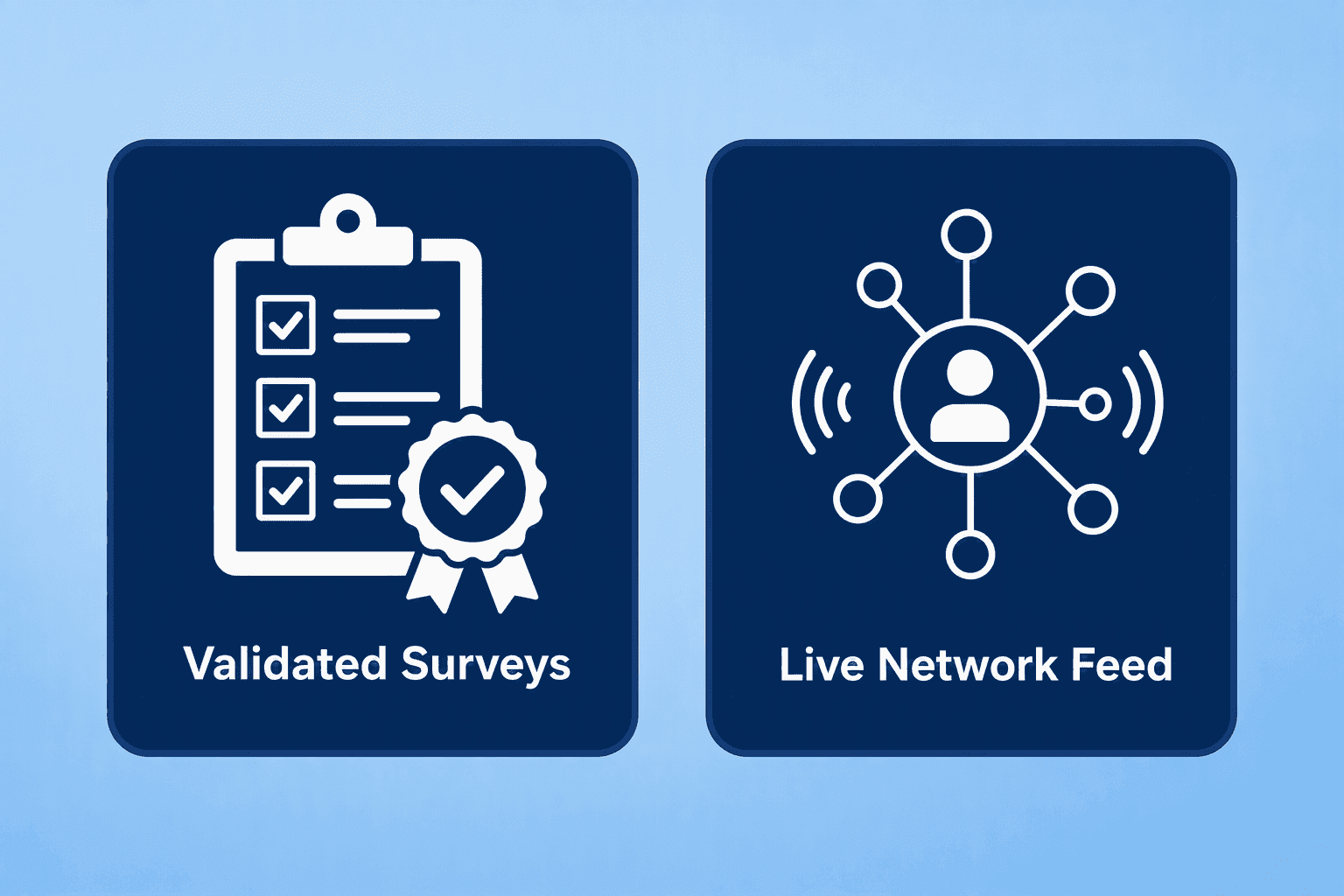
Salary.com builds CompAnalyst on employer-reported surveys, not peer crowd-sourcing. The dataset has been collected and validated for decades. For companies outside the venture-backed tech bubble, that matters. HR-reported data gives you benchmarks for jobs that real-time network feeds barely touch.
The following table compares Salary.com’s survey-based approach with Pave’s real-time network model.
| Dimension | Salary.com (CompAnalyst) | Pave (Data Lab Network) |
|---|---|---|
| Data methodology | Employer-reported surveys collected and validated over decades | Aggregated real-time data from participating company networks |
| Update cadence | Fixed survey cycles | Continuous refresh |
| Industry coverage | Broad, including traditional sectors | Concentrated in tech and venture-backed companies |
| Planning integration | Compensation cycle management directly informed by proprietary survey data | Planning module directly linked to live benchmarking feeds |
Two axes define the compensation platform market right now. The first is agility: tools built for compensation intelligence and fast cycle iteration. Think CompUp, Aeqium, and Pave.
The second is integration breadth: suites that give a large enterprise a single system of record. That is Workday, Oracle, and SAP. You get total visibility, but you also get implementation complexity and slower iteration.
Beqom sits in its own corner, purpose-built for total rewards intelligence and pay equity proof. Each path solves a different primary job.
Shortlist against that job, then run a vendor pilot with a prepared spreadsheet cycle. Nothing clarifies fit faster than loading real compensation data and watching whether the platform enforces your budget, surfaces the gaps you expect, and closes the cycle hours faster than last year. A good next step is seeing how CompUp puts this into practice. Book your free trial today.
A compensation cycle management platform is dedicated software that automates the end-to-end process of planning, modeling, approving, and communicating merit increases, bonuses, and equity awards within a structured workflow. Unlike payroll systems that calculate what is already decided, or HRIS platforms that store employee records, these tools enforce budget guardrails, surface pay equity risks, and run scenarios against live market data in a centralized environment.
Key capabilities to look for include the following:
The following platforms target different segments:
AI in compensation planning delivers these capabilities:
Spreadsheet-driven cycles produce version-control errors, budget overruns, and slow reconciliation across departments. Dedicated software automates workflows, enforces budget limits, and provides one centralized data set, eliminating the fragmented files that cause the most common costly mistakes.
Platforms should support these regulatory compliance features:
Community Manager (Marketing)
As a Community Manager, I’m passionate about fostering collaboration and knowledge sharing among professionals in compensation management and total rewards. I develop engaging content that simplifies complex topics, empowering others to excel and aim to drive collective growth through insight and connection.
Revolutionizing Pay Strategies: Don't Miss Our Latest Blogs on Compensation Benchmarking