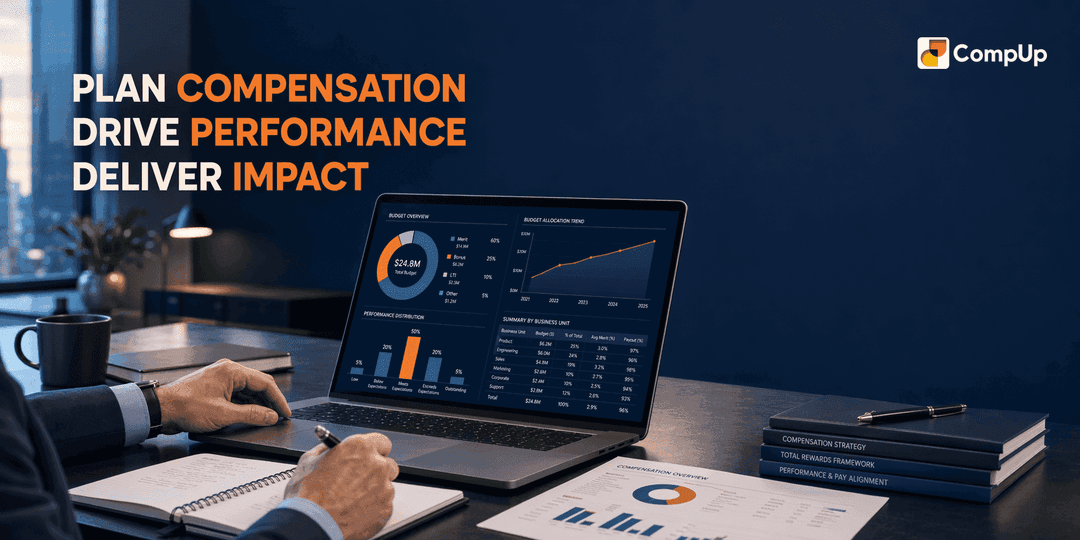

Your compensation plan is your biggest line item. It's also your loudest cultural megaphone. But for a lot of organizations, the yearly comp cycle still plays out as a messy spreadsheet scramble that never quite connects back to the business.
You're not just assigning numbers. You're putting a price on what you value, and that price drives who stays, who coasts, and who walks.
In 2026, that gap is a liability you can't absorb. Payscale has named this stretch "The Year of Strategic Alignment," a shift where pay jumps from an HR transaction to an executive priority. Squaring employee expectations against tight budgets is harder than it's ever been. The conversation is moving fast, and a reactive pay posture puts your critical talent at risk.
The noise makes it messier. Your people are pricing themselves against data you don't control. That leaves you with two real levers: smart budgeting and clear communication. Get those right, and you build trust while driving results. This guide walks through the technology stack that lets you pull both levers cleanly, tying every recommendation back to the daily work of aligning pay with performance, skills, and straight talk.
Before we analyze the specific tools, here are the five operational shifts you must internalize to treat compensation as a strategic system rather than an administrative cost center:
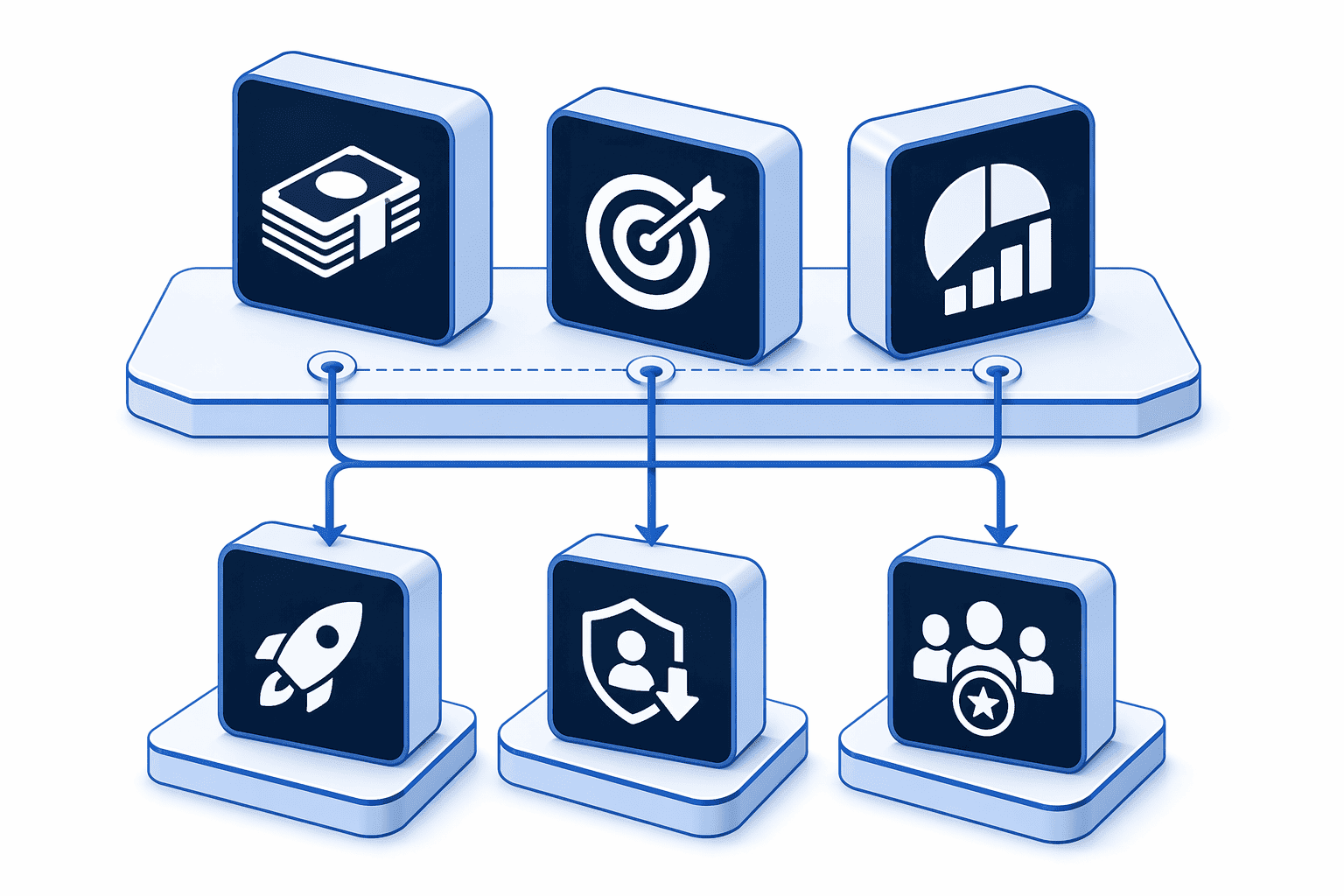
Strategic alignment is the architecture that connects base pay, incentives, and equity directly to your named business outcomes. Stop asking if a salary is "competitive." Start asking if a compensation package accelerates a specific product milestone, reduces churn in a critical sales territory, or locks in the engineering leadership you need for a Series C.
This requires a compensation philosophy that maps explicitly to your business lifecycle stage. A hyper-growth startup calibrating cash vs. equity to extend its runway faces fundamentally different trade-offs than a public enterprise optimizing EPS.
61% of organizations say they have a compensation strategy. A strategy document sitting in a drawer is worthless. An operational framework demands that every budget dollar is traceable to a key performance indicator.
This is often where the internal tension lives. HR wants to fix internal equity gaps; Finance wants to hold the line on cost. Strategic alignment forces that trade-off into the open, turning it into a data-driven leadership conversation instead of a territorial dispute over spreadsheets.
This leads us to the central operational challenge of 2026: modelling those trade-offs before they become irreversible decisions. The ability to simulate how a 1% shift in the merit pool changes your burn rate, or how a new hire's equity grant dilutes existing shareholders, separates mature organizations from those flying blind.
With the baseline framework established, let's look at how to execute it. CompUp is a full-stack platform built to de-risk budget decisions by coupling real-time pay equity analysis with comprehensive merit cycle modelling. Here is how an HR leader would typically operationalize a "reducing pay increases" cost-control strategy within a unified workflow on the platform:
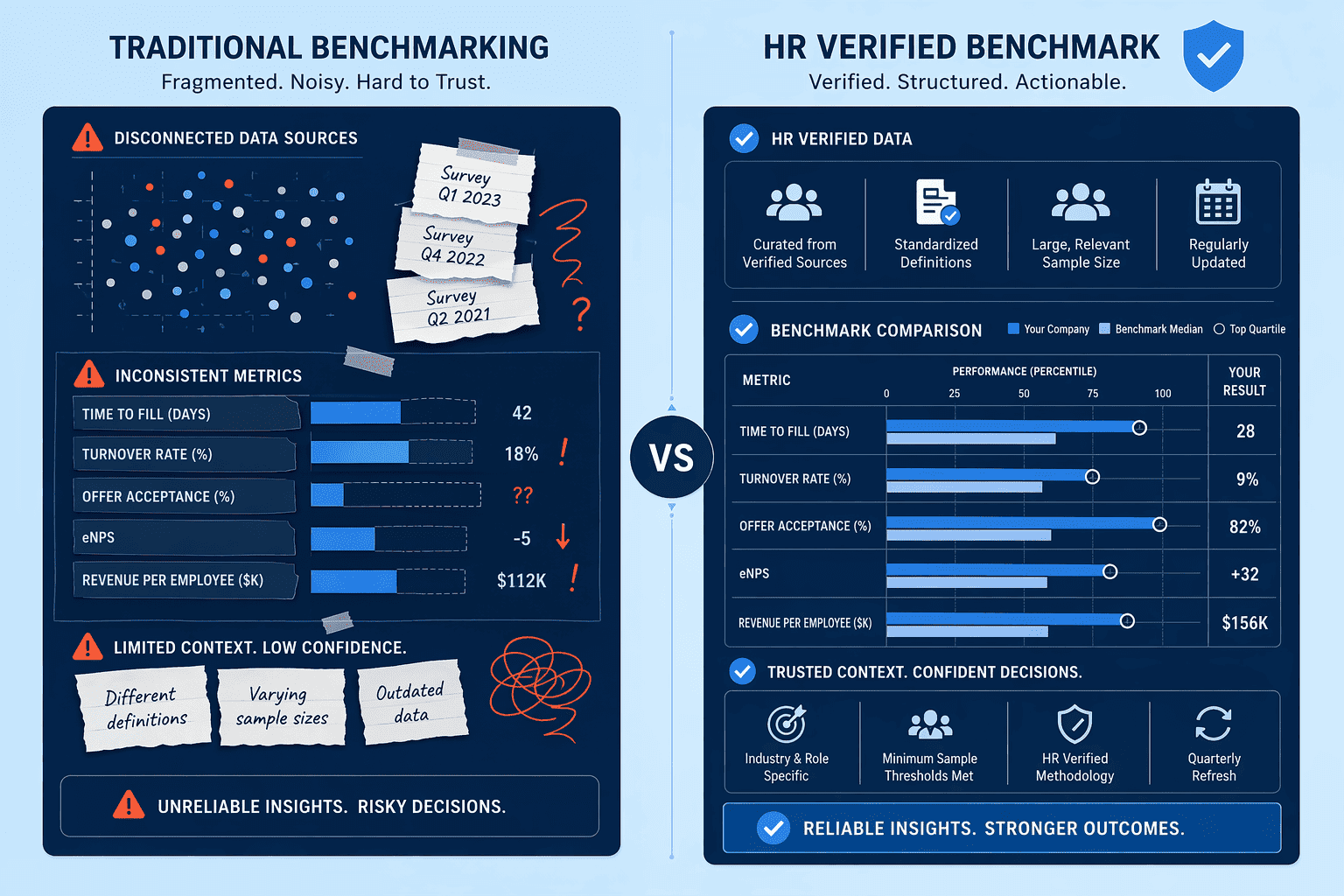
Scenario modelling is only as reliable as the market data you feed it. Here, the source of your benchmarks is everything. Misinformation is rampant, and it creates a dangerous illusion of precision:
| Data Dimension | Unverified Self-Reported Data | Salary.com CompAnalyst (HR-Reported) |
|---|---|---|
| Source | Aggregated employee surveys, public scrapes, or user-submitted entries. | Verified data directly from employer HR departments through rigorous surveys. |
| Risk Profile | High. 40% of organizations cite this data as a driver of unfair pay perceptions due to misinformation. | Low. Methodologically sound matching reduces the risk of anchoring on inflated or deflated figures. |
| Job Matching | Title-level matching that cannot distinguish scope (e.g., a 'VP of Product' at a 50-person startup vs. a 5,000-person public company). | Granular job-matching methodology that factors in company size, industry, and revenue to build a true peer set for precise competitive benchmarking. |
CompAnalyst gives you ranges built on data you can actually stand behind with a candidate or employee.
Tenure-based pay bands are dissolving. The market now pivots on skills. Payscale's AI-powered models address this head-on by helping you quantify the premium for specific competencies. Instead of relying on a static job architecture that values a "Software Engineer III" as a static benchmark, their tools help you dynamically price the premium for skills like Kubernetes or generative AI model training into the role.
This data is critical for structuring an offer, but its real value is in communication. When you tell an employee *why* their pay is what it is, you build a defense against misinformation. Transparency in how pay is determined builds trust and strengthens employee loyalty. The research clearly shows that when companies openly communicate their pay structures and rationale, they dismantle the mystery that allows resentment to fester. This is not about revealing everyone's salary; it is about revealing the *logic*.
Payscale's approach provides the narrative. You can move from a defensive posture, dreading the "how is my bonus calculated" question, to an offensive one, proactively framing the compensation architecture. This transforms compensation from a retention risk into a loyalty asset. It proves to your workforce that pay is a structured, strategic equation, not a negotiation outcome influenced by bias or arbitrary luck.
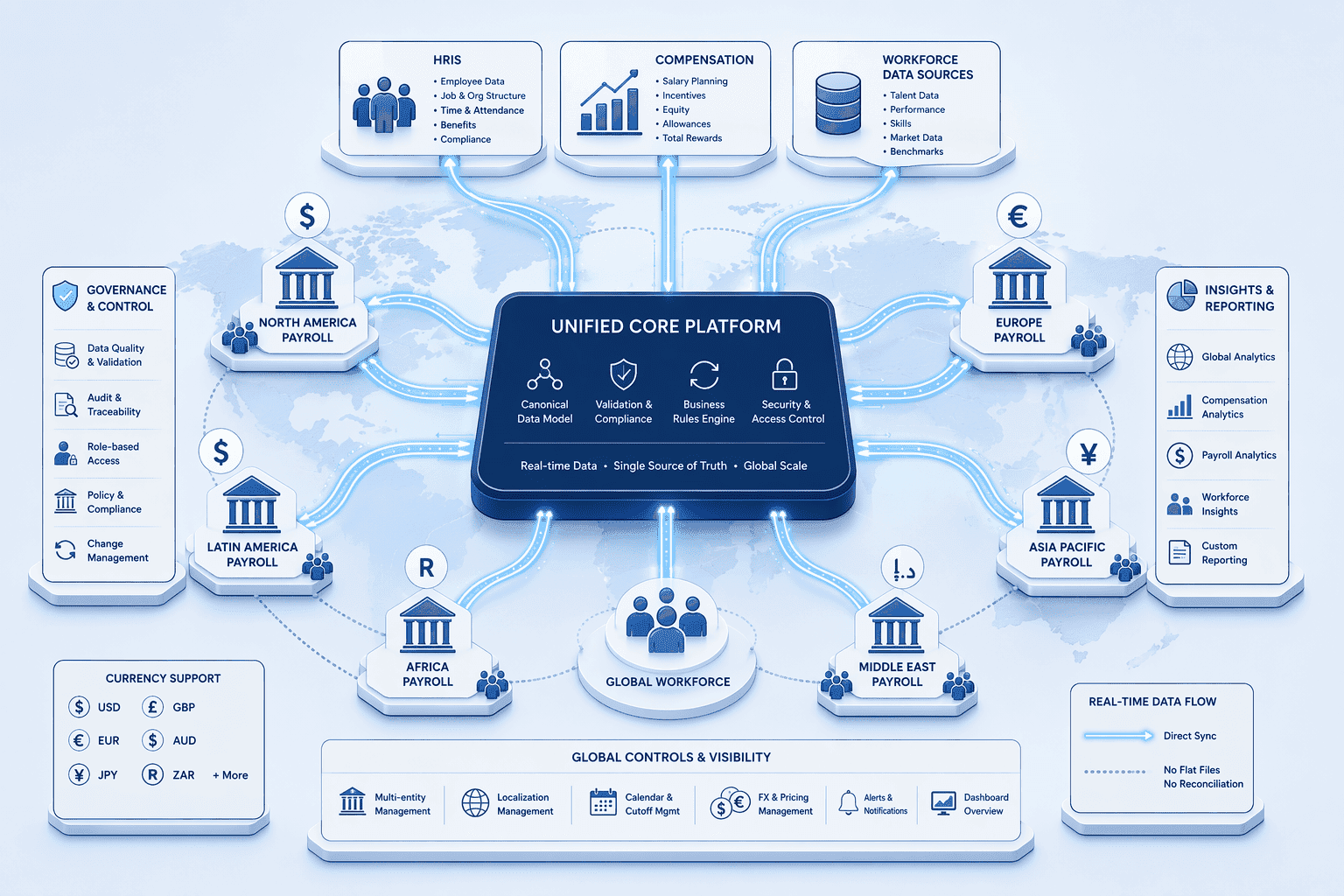
Strategic alignment becomes exponentially more complex for organizations managing international workforces. A compensation philosophy that is elegant in theory often breaks at the point of execution across jurisdictions. The primary driver of this breakdown is the disconnect between core HR records and the compensation module. When you rely on flat-file exports between a local payroll system and a standalone comp tool, you introduce reconciliation errors that cascade into incorrect pay slips, tax compliance failures, and budget overruns.
Workday HCM solves this at the architectural level. Because employee data, job profiles, and compensation plans exist in a single source of truth, there is no integration to break. When you initiate a global merit cycle, the system natively understands local currencies, statutory deductions, and reporting requirements.
For a benefit analyst managing a rollout across the EU, India, and the US, this is a different job. You push a single budget rule, and the platform works out the localized impact immediately. You are no longer the person who spends a week stitching spreadsheets together.
This native integration removes the manual work of normalizing currency swings and juggling regulations by hand. It closes the gap between the decision made at headquarters and the paycheck an employee sees in a different country, with the accuracy you need at scale.
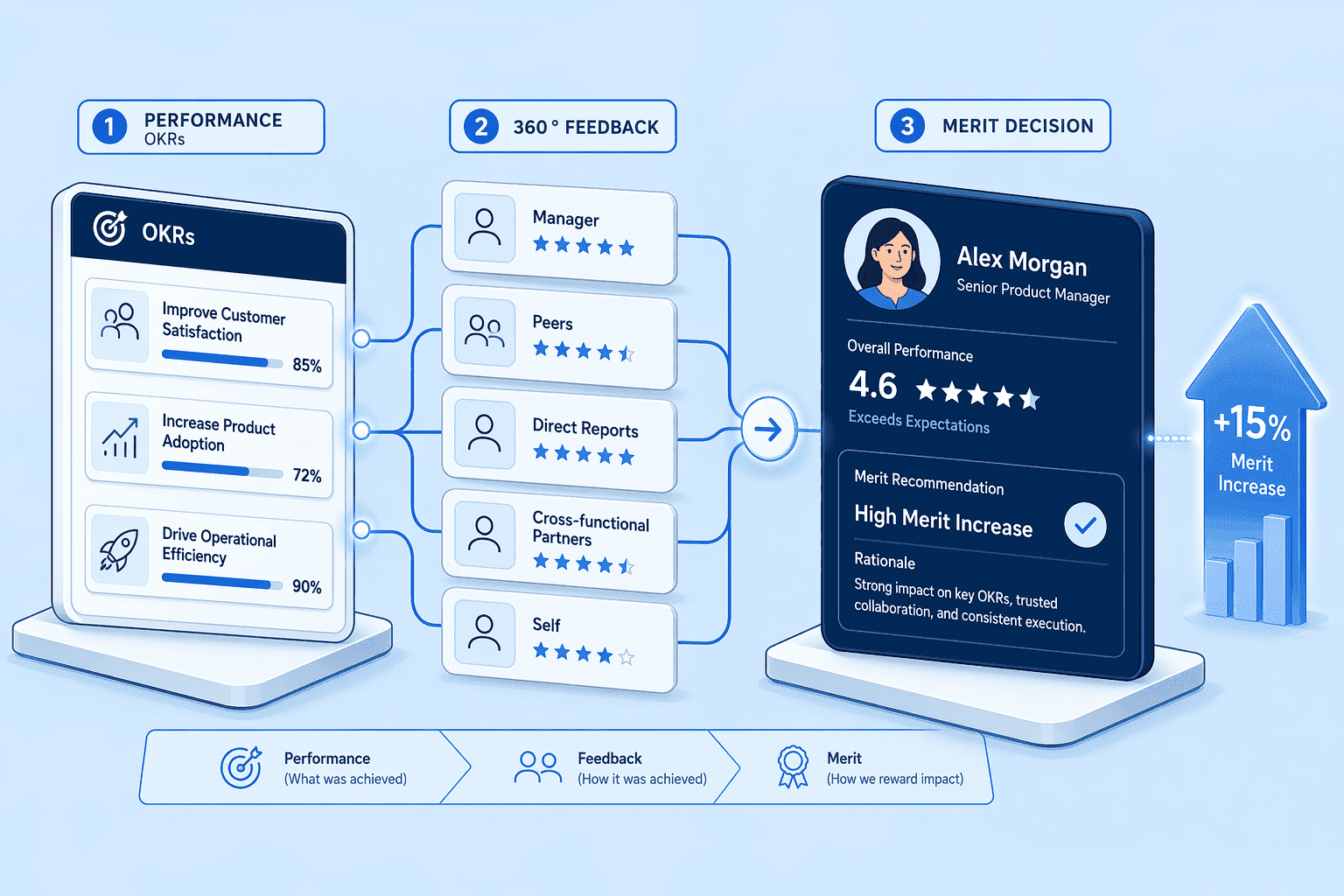
A performance-based incentives strategy is only as credible as the performance data that feeds it. Too many organizations run a detailed quarterly review process using Lattice, tracking OKRs and 360° feedback carefully, and then export a single "Meets Expectations" rating into a disconnected compensation spreadsheet months later. This gap destroys trust. Employees cannot see a direct link between their documented impact and their raise.
Lattice closes this loop natively. Inside its compensation module, a manager sees a recommended increase percentage alongside that employee's performance trajectory. Goal completion rates, upward feedback, and growth signals sit right next to the salary adjustment tool.
This tight coupling enforces pay-for-performance hygiene at scale and stops the "halo effect" recency bias that plagues annual reviews. The raise discussion becomes a structured conclusion of a full year's documented performance, not a negotiation session. It turns the merit cycle from a political exercise into a systematic application of your compensation philosophy.
For large enterprises with complex sales teams, the real risk lives in the variable compensation plan. Spreadsheet errors in commission calculations trigger not just accounting costs but legal challenges and immediate attrition of top-line producers. Beqom addresses this by unifying disparate calculation engines into a single, auditable source of truth. The table below contrasts this approach with standard legacy processes:
| Operational Dimension | Legacy Spreadsheet-Driven Approach | Beqom Total Rewards Automation |
|---|---|---|
| Complex Commission Logic | Manual formula creation in Excel, leading to errors in tiered accelerators, clawbacks, and MBO-based bonuses. | A unified engine that automates intricate rule sets for sales commissions and long-term incentive plans, eliminating manual miscalculation. |
| Employee Communication | Static, often opaque PDFs showing only base salary or a single bonus payout figure. | Automated generation of holistic Total Rewards Statements, giving employees a single-page view of base, bonus, equity, and benefits. |
| Long-Term Incentive View | Separate tracking in cap tables (equity) vs. spreadsheets (cash bonuses), preventing a holistic 'total wealth' analysis. | Balances short-term rewards with long-term growth by integrating equity and cash incentives into a single career-summary view, showing the total value accumulation over time. |
By unifying the calculation, Beqom also provides the communication layer. An employee receives a clear breakdown of their total package, reinforcing the full investment the company makes in them beyond just base salary.
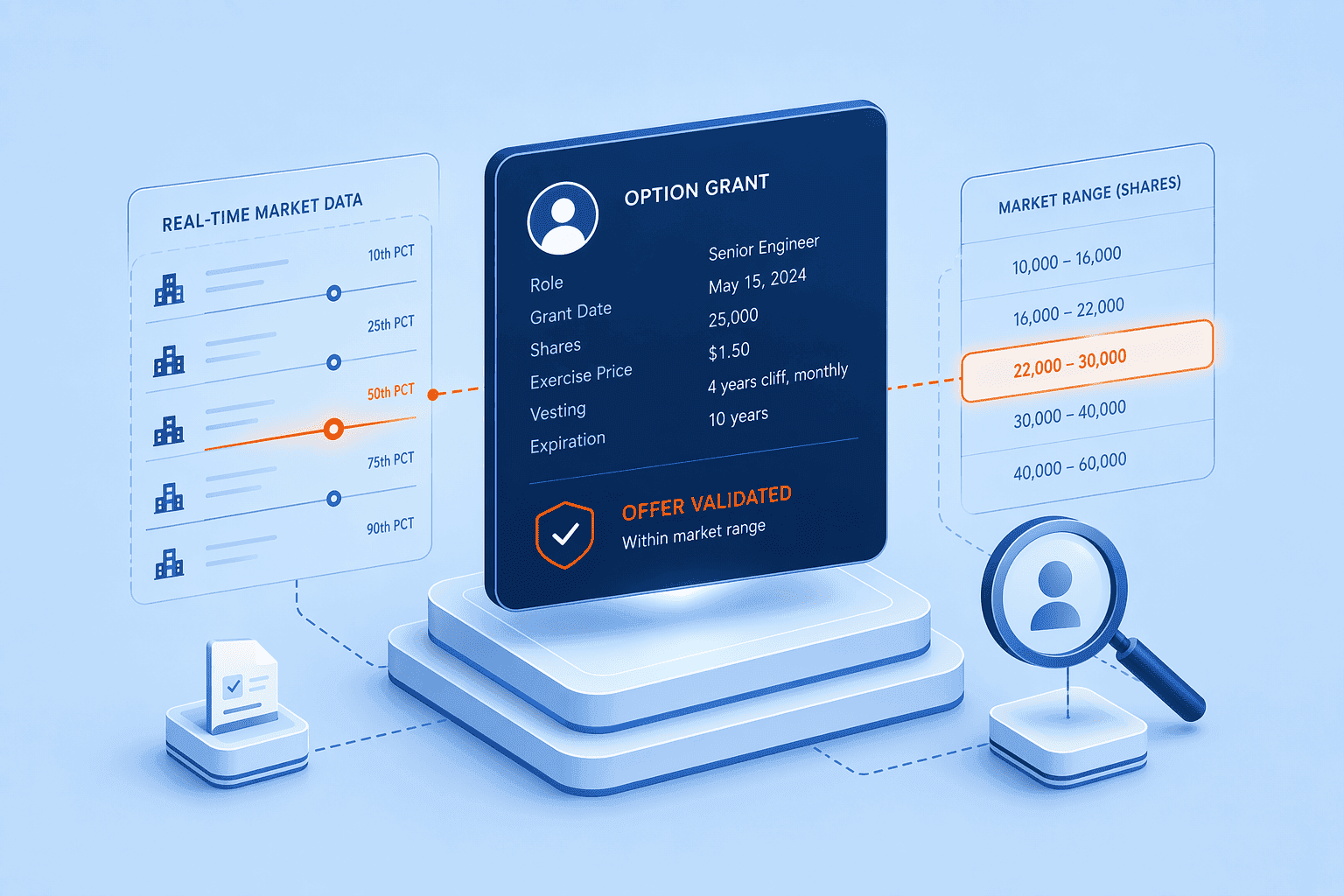
In a pre-IPO company, a single hiring mis-step on equity can have cascading consequences for dilution and fundraising. You can talk to a candidate about vision, but the offer letter must survive the brutal scrutiny of a venture-backed investor and a savvy hire. OpenComp provides market intelligence calibrated specifically for this high-stakes environment.
It eliminates the guesswork. You get verified, real-time market data sourced from the startup ecosystem to map your option grants against your burn rate targets.
With its scenario modeller, a founder or People leader can stress-test compensation bands against dilution limits. When you face the pressure of losing a critical engineering candidate to a competing offer, you can model an increased equity grant on the spot. The platform shows you the immediate dilution impact and validates whether the new offer remains "market-validated" or has veered into panic-overpay territory. This investor-grade rigor in building compensation bands allows you to sell the vision while defending the numbers with confidence.
2026 is not a year for incremental spreadsheet fixes. It is a year when your compensation stack either pulls its weight on business goals or gets in the way. The numbers tell a blunt story: if your approach does not connect pay directly to performance, skills, and honest communication, it is costing you.
The 40% of employees who encounter pay misinformation should stop every conversation in its tracks. Your people are constructing their own version of the pay story from noise, and you can replace that noise with a stack that runs accurate benchmarking, live scenario modeling, and a single thread from performance to payroll. That is not a soft HR project. It is how you keep the producers you cannot afford to lose and turn your largest expense into an edge nobody else can copy. A good next step is seeing how CompUp puts this into practice.
Compensation planning is the active design and management of a company's total rewards strategy, including salary, bonuses, and equity. Strategically, 68% of organizations now view it as a vital business success factor, driving performance, retention, and a high-performance culture directly tied to business outcomes, not just payroll.
An effective compensation planning cycle follows a structured sequence of steps:
Scenario modelling lets you test compensation decisions in a sandbox before committing funds. Tools like CompUp allow you to run concurrent 'what-if' analyses, such as simulating a differentiated merit increase distribution against your budget cap while simultaneously checking if the changes introduce new pay equity disparities.
They create the structural logic for all pay decisions. Market benchmarking, powered by HR-reported data from platforms like Salary.com, sets competitive salary range boundaries. When combined with internal pay equity audits, these compensation bands ensure employees in similar roles with similar performance are paid consistently and fairly relative to the external market.
Transparency directly combats the 40% of organizations suffering from misinformation-driven distrust. The best practice is to communicate the pay *rationale* and structure openly. This means explaining the mechanics of market data and performance criteria, not necessarily broadcasting individual salaries, to build trust and strengthen employee loyalty.
The core challenge is maintaining a unified strategy across fragmented systems, which leads to costly data reconciliation errors and compliance risks. A key trend is the adoption of unified HCM systems like Workday, which natively automate multi-currency calculations and local statutory deductions within a single compensation cycle, eliminating the integration gap.
Community Manager (Marketing)
As a Community Manager, I’m passionate about fostering collaboration and knowledge sharing among professionals in compensation management and total rewards. I develop engaging content that simplifies complex topics, empowering others to excel and aim to drive collective growth through insight and connection.
Revolutionizing Pay Strategies: Don't Miss Our Latest Blogs on Compensation Benchmarking