compup
Automate Total Compensation Communication Without Spreadsheets: The 2026 Step-by-Step Guide
29 Oct 202610 min

Automate Total Compensation Communication Without Spreadsheets: The 2026 Step-by-Step Guide

Your CHRO emails you at 9 PM: a comp statement sent to a Director in France listed their salary in US dollars and missed $15,000 in local allowances.

Compensation Management
Shradha Vadhone

Introduction

Your CHRO emails you at 9 PM: a comp statement sent to a Director in France listed their salary in US dollars and missed $15,000 in local allowances. The source? A version-7 spreadsheet an HRBP had edited offline.

Manual spreadsheet processes have become a structural liability. As EU pay transparency directives roll out in 2026 and multi-country compliance tightens, an undefendable figure triggers litigation. Spreadsheets strand benefits data away from payroll, break currency formatting, and leave no audit trail for regulators.

Automated total rewards platforms solve this by generating personalized, verifiable statements straight from a centralized compensation core. This guide walks you through migrating from manual chaos to a defensible, automated communication ecosystem, step by step.

Key Takeaways

Automating total compensation communication delivers immediate, measurable operational and compliance wins. Here are the critical insights before you begin your implementation:
  • Eliminate compliance risk: Remove the human error and security breach potential inherent in spreadsheets by generating statements from a validated, locked database.
  • Reduce HR ticket volume: Organizations that enable self-service compensation portals report a 65% drop in HR support requests, freeing your team for strategic work.
  • Achieve multi-country readiness: A unified platform applies local currency formatting and country-specific data schemas, preventing the cross-border errors spreadsheets create.
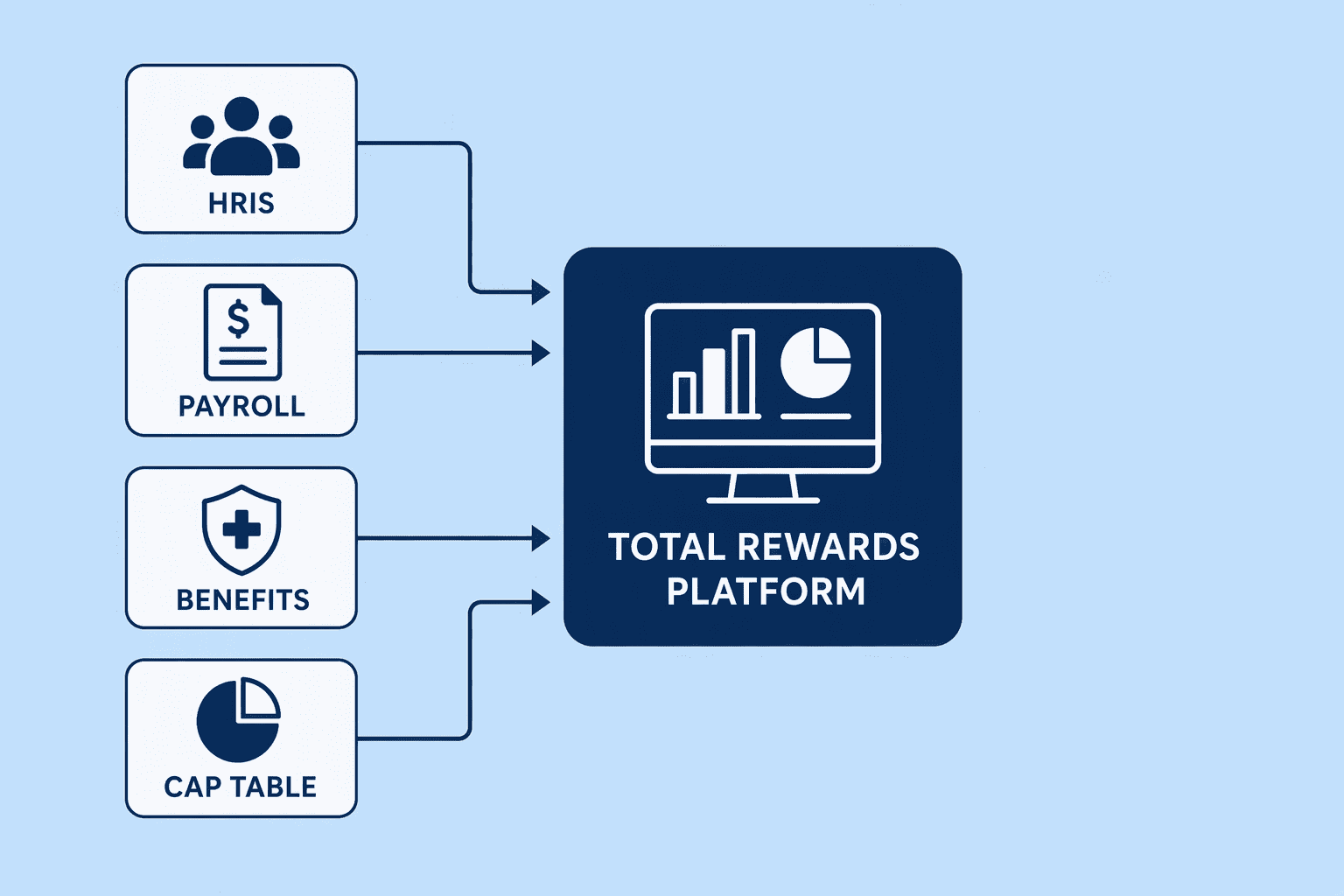
  • Centralize your data first: The gating factor is integrating fragmented data from HRIS, payroll, and benefits systems into one defensible source of truth.
  • Run a parallel cycle: Mitigate transition risk by generating automated statements alongside your manual spreadsheet process for one full cycle before cutting over.
  • Monetize the full value proposition: Go beyond base salary. Configure templates that capture benefits, equity, and perks to show a personalized total rewards view, such as how a $50,000 salary can translate into a real compensation package worth $64,700.

Step 1: Centralize Your Compensation Data into a Single, Integrated System

Illustration for Step 1: Centralize Your Compensation Data into a Single, Integrated System

Scattered data is the primary blocker to automation. Your source data is probably quarantined across three payroll platforms, a benefits administration silo, and a cap table spreadsheet. You cannot auto-generate a defensible statement without pulling it together first. A dedicated total rewards platform becomes the integration hub. Follow these steps to consolidate your ecosystem:

  1. Map your data sources: Identify every system that holds compensation-related data. Your HRIS carries base salary and job architecture. Payroll holds actual earnings. An equity platform tracks stock grants and vesting schedules. A benefits tool stores employer-paid premiums.
  2. Prioritize API-first integrations: Modern platforms like Compport integrate with open APIs to pull data automatically. Avoid tools that require flat-file exports as a primary connection method; that replicates the manual risk you are trying to eliminate.
  3. Ingest multi-currency and entity data: For global enterprises, ensure the platform pulls local salary data, applies real-time exchange rates, and respects local entity structures. A statement with inaccurate, localized currency formatting fails instantly with the employee.
  4. Establish a single data governance hub: Stop editing data in the source HRIS for compensation communication purposes. The total rewards platform is your presentation layer. Compport, for example, runs merit, bonus, equity, and pay equity in a structured workflow, and populates statements with approved figures rather than manually typed numbers.

Step 2: Define and Configure Your Total Compensation Statement Template

A template is a conditional, multi-dimensional engine that translates raw compensation data into a personalized employee narrative. Your design must capture the full value proposition, because a single salary figure hides most of what you actually spend on each person. The table below compares a monetary-only approach with a full-spectrum total rewards design:

DimensionSalary-Only StatementComprehensive Total Rewards Statement
Pay ComponentsBase salary; cash bonus.Base salary, variable incentive pay, sales commissions, and real-time equity grant values.
Benefits MonetizationAbsent or a static annual figure.Dynamic, line-item pricing for health insurance, 401(k) match, life insurance, and tuition assistance.
Geographic TieringA single template breaks for international employees.Country-specific templates pulling localized currency and statutory benefits, such as gratuity, directly from the system.
Employee SegmentationOne-size-fits-all. Blurs critical differences between hourly and salaried workers.Configurable rules that show different reward elements or performance multipliers for specific grades or populations.
Non-Monetary RewardsTypically overlooked entirely.Fields for remote work stipends, professional development allowances, or wellness perks that differentiate your EVP.

Platforms such as Decusoft's Compose platform let you do this at scale. Its communication feature auto-generates total rewards statements and communication letters covering salary, incentives, equity, healthcare, retirement, and lifestyle benefits. The goal is to configure each field to pull dynamically from the centralized database so no human retypes a number.
Step 3: Validate Data Integrity and Run a Parallel Compensation Cycle

Illustration for Step 3: Validate Data Integrity and Run a Parallel Compensation Cycle

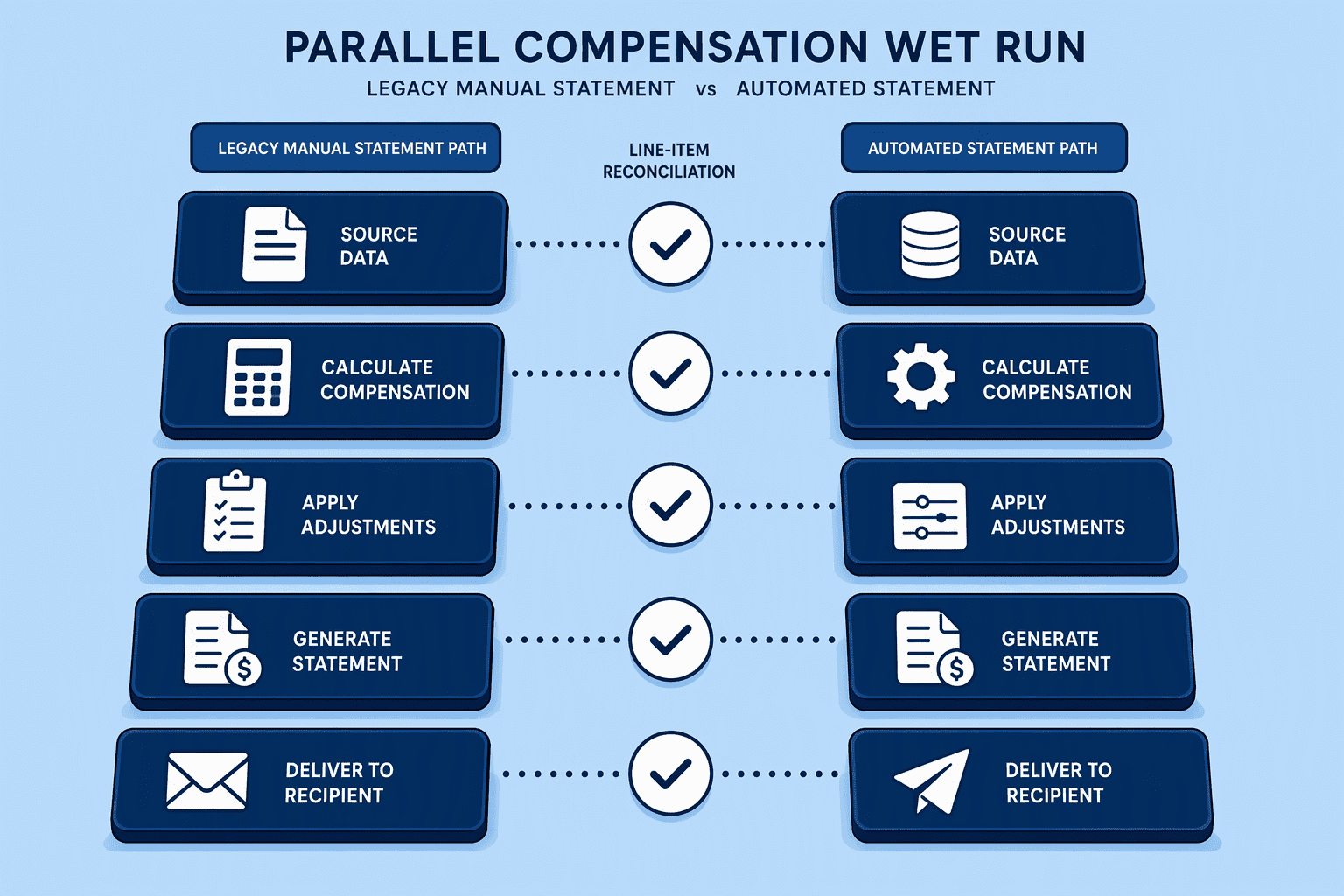
The medical device industry calls this a 'wet run', operating a new automated system simultaneously with the legacy manual process to compare outputs. For one complete compensation cycle, follow these steps:
  1. Generate two sets of statements using real employee populations, not a sandbox with dummy data.
  2. Generate the automated total rewards statements and cross-reference every line item against the spreadsheet version you have historically produced.
  3. Discrepancies will surface. Almost always, you will find a broken formula, a forgotten local allowance, or a misclassified equity tranche in the spreadsheet. Correct the discrepancy in the source system.
  4. Once every figure is reconciled and you have documented that the automated version fixes errors the spreadsheet contained, secure stakeholder sign-off from Finance, HR leadership, and one person in legal who understands the penalty phase.
  5. The Office of Federal Contract Compliance Programs (OFCCP) does not accept spreadsheets as a defense. If your compensation data lives there and repeated errors surface, the fines are substantial. This validation cycle is your documented proof that your data is now defensible.

Step 4: Launch the Self-Service Portal and Manager Workflows

Illustration for Step 4: Launch the Self-Service Portal and Manager Workflows

A compensation statement locked inside a PDF is still dead data. The permanent home for total rewards is a secure, self-service portal. This transformation involves three parallel changes:
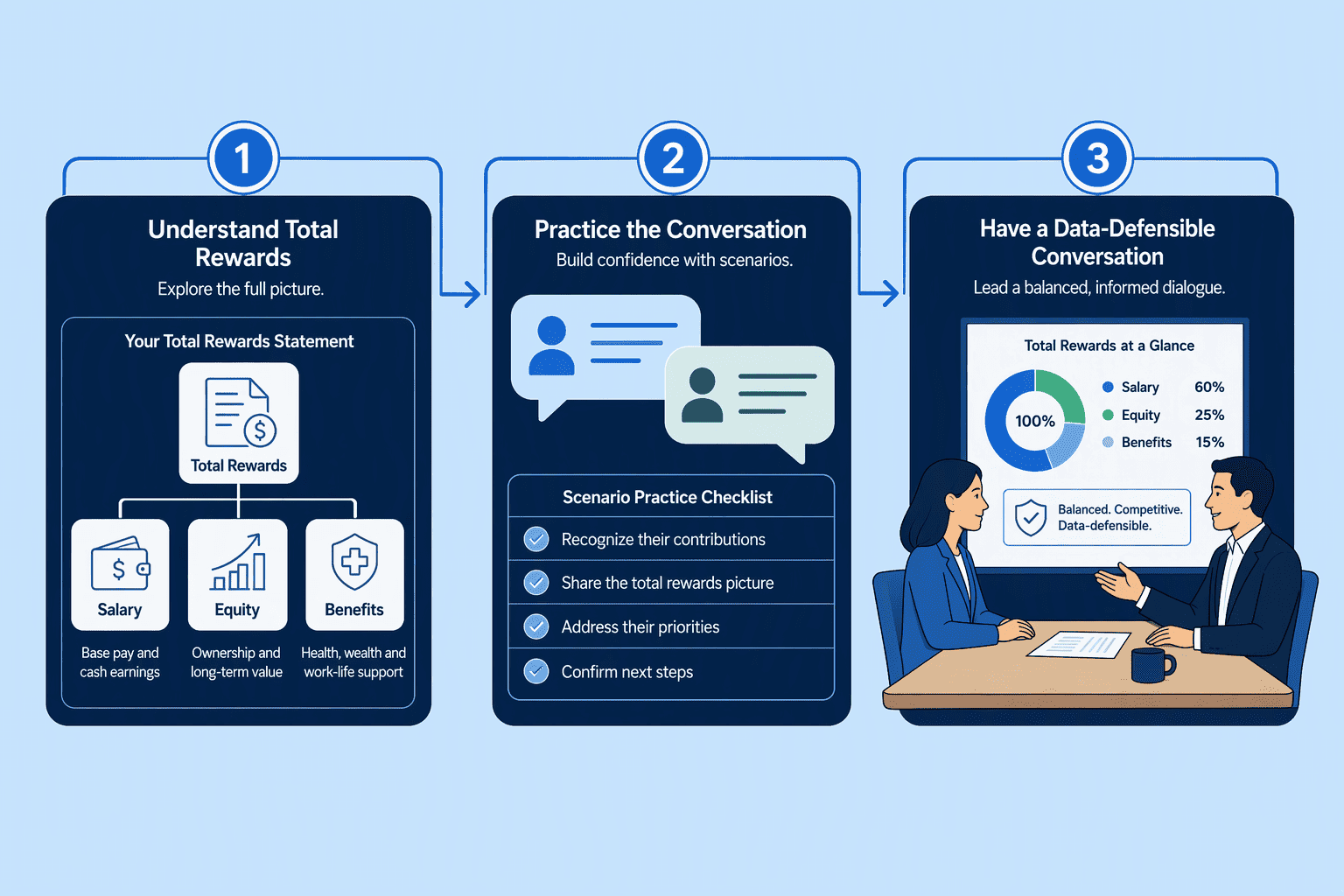
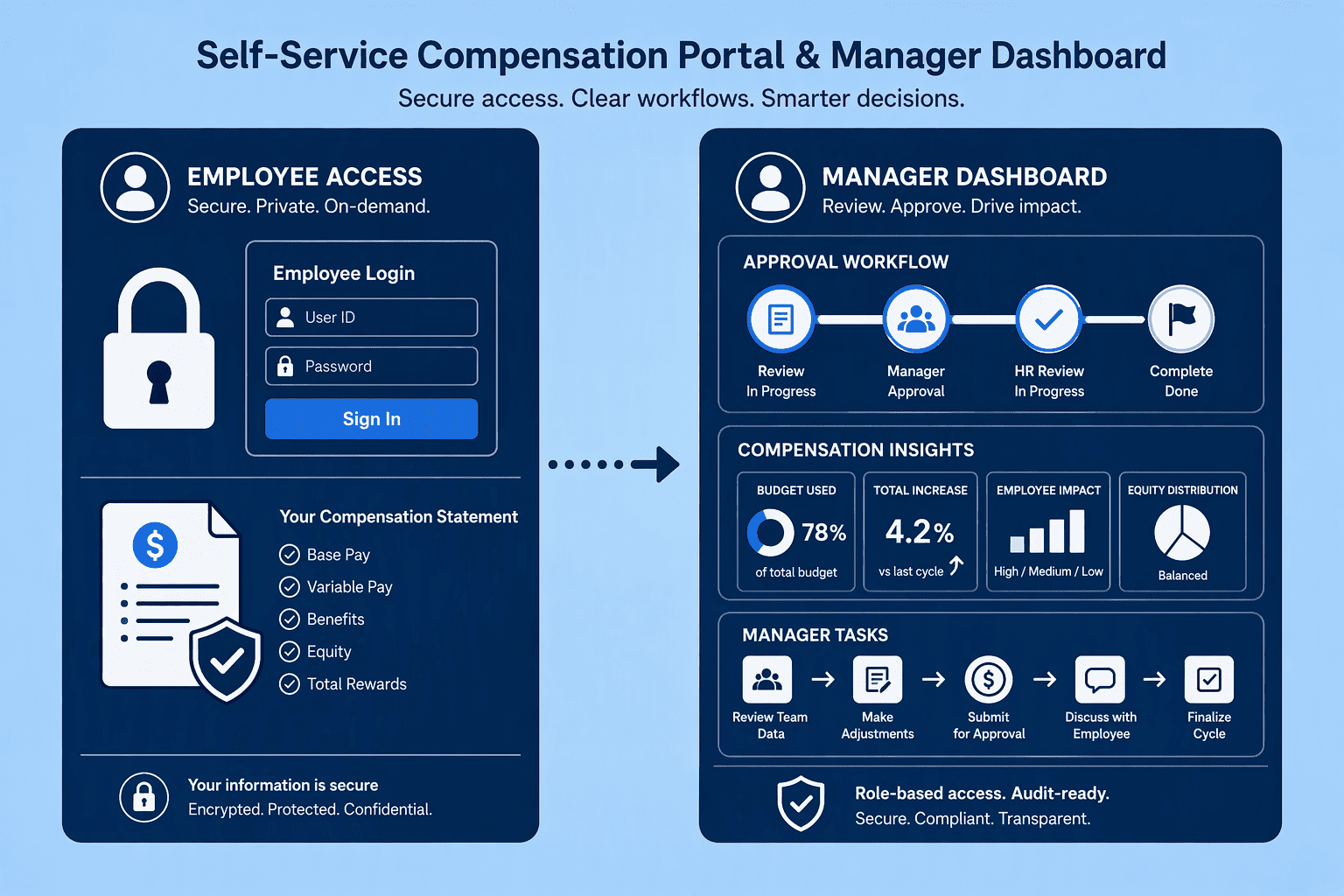
  • Portal launch: Give every employee a private, credentials-protected login where they can pull their latest statement on demand, shifting ownership of comprehension to the employee when they are most motivated to understand their worth.
  • Manager dashboard: In a tool like Compport's module, managers get a dashboard view of their direct reports' full compensation picture through live, data-defensible commentary fields. When a direct report asks why their bonus is a certain percentage, the manager can reference the exact performance multiplier and market benchmark visible in the platform. No fragile spreadsheet required.
  • Notification process: The distribution method changes from chaotic email chains to an automated notification that states the statement is available, redirecting employees to the portal. Platforms such as SnapComms can push the notification, but a dedicated total rewards environment keeps the displayed data as the single source of truth. The broadcast solves reach. The portal solves comprehension.

Step 5: Train Managers to Use Data-Defensible Rewards Conversations

Illustration for Step 5: Train Managers to Use Data-Defensible Rewards Conversations

Without training, a sleek portal becomes a doorway to confusion. Build a structured program using these steps:

  1. Build a practical interpretation guide: Use the WorldatWork total rewards model to map how base salary, equity, and fully loaded benefits connect on the statement. Walk a manager through each section so the conversation starts with total value instead of stopping at salary.
  2. Run scenario-based training on the conversations that go sideways. Your platform offers a hard, exportable audit trail that shows who approved each salary or bonus decision and when. Train managers to use it. When an employee calls a merit increase unfair, the answer comes from the approved workflow: 'Your increase was calibrated against the market median for your grade, adjusted during the Q2 cycle. Here is the data.' That precision disappears inside a spreadsheet whose closest thing to an audit trail is an Excel cell history buried in advanced options.
  3. Specific legal guardrails are non-negotiable here. Under US pay transparency laws, you cannot promise future compensation adjustments based on gut feeling. Training must explicitly prohibit verbal commitments not already reflected in the system's approved planning cycle. Managers learn to say: 'The platform reflects the total value allocated for this cycle. Let's review this together in the next merit window.'
  4. Embed a post-training micro-certification: a 10-minute simulated conversation where managers answer a comp question by navigating the tool. It's a higher-signal check than any slide deck.

Step 6: Retire Spreadsheets and Embed Ongoing Auditing Processes

Retiring spreadsheets is an organizational act, not just an IT cleanup. After the parallel cycle is signed off, take these actions:
  • Set a hard cutover date. On that day, legacy compensation sheets are archived to a read-only compliance vault and access to the old templates is revoked for every HRBP and manager.
  • Permanently eliminate the risk that someone will drag an outdated, unvalidated file into the Q4 merit cycle. Compensation software marks the end of manual processes based on email, spreadsheets, and paper printouts only if you force the retirement of the old method entirely.
  • Shift the goal from generation to surveillance. Embedding continuous auditing means setting up exception reports that run automatically before any statements go live. These should flag any data field that falls outside a predefined band: a cost center with zero allocated bonus, a base salary 30% below the grade minimum, or a missing equity entry for a VP-level hire. The platform should not generate a statement for a flagged record until the exception is cleared, preventing errors from reaching the employee.

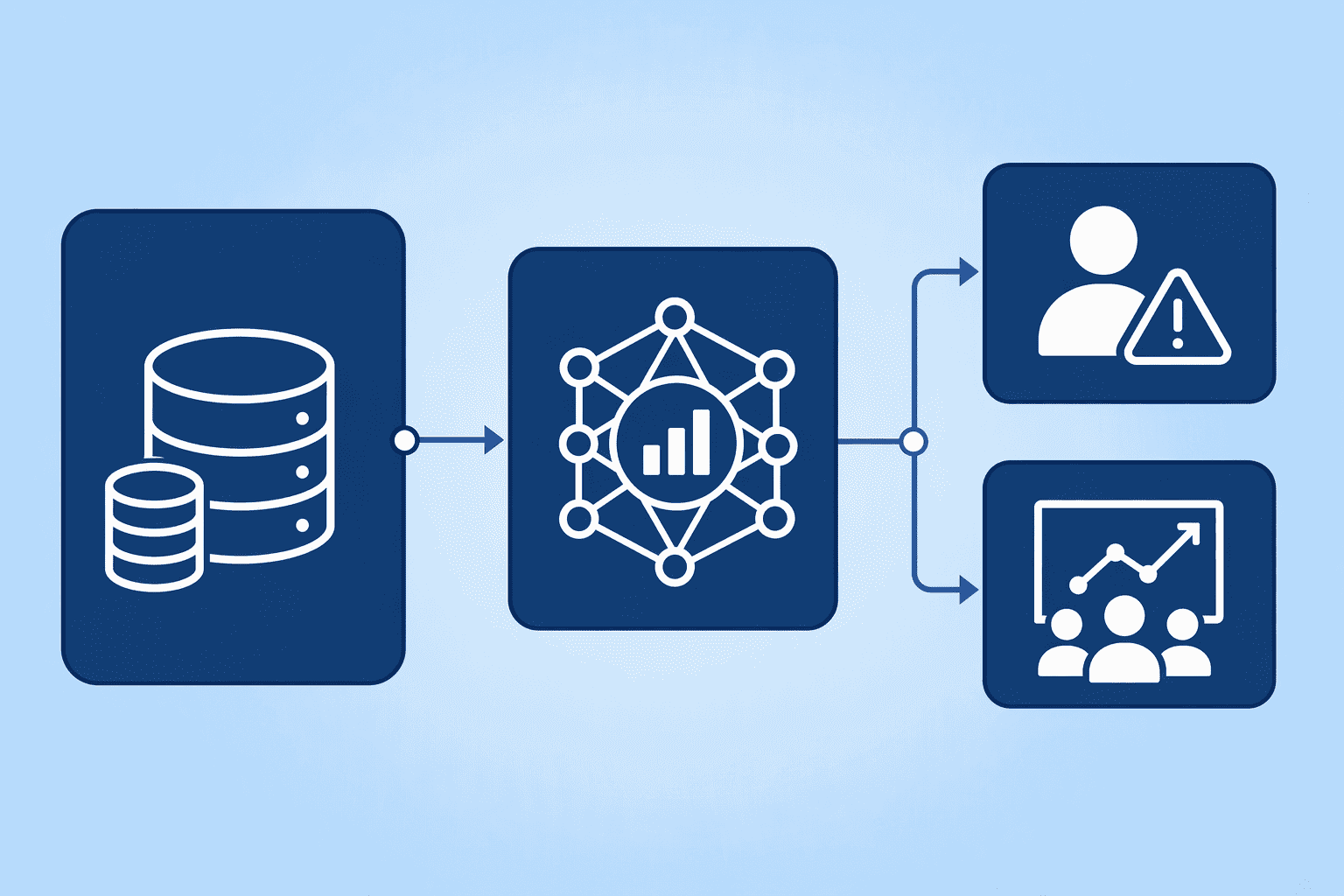
Step 7: Optimize with AI-Driven Workforce Planning and Attrition Insights

Illustration for Step 7: Optimize with AI-Driven Workforce Planning and Attrition Insights

A centralized, clean compensation database is your most valuable strategic asset. You have moved beyond automating communication into predictive intelligence. The same data that produces a total rewards statement for a senior engineer also fuels AI-powered attrition models. Platforms with AI analytics, such as CompUp's workforce planning capabilities, let you run simulation scenarios to identify flight risks by cross-referencing internal pay against real-time market benchmarks and internal compa-ratios. This is a forward-looking alert that surfaces pay inequity hot spots before they become retention crises.

What once took weeks of Finance and HRBP wrangling now runs in real time: what-if budget scenarios for merit and equity cycles. Using tools designed for workforce cost modeling, you can simulate the financial impact of a 4% merit budget versus a targeted adjustment only for employees flagged by the attrition model. This elevates HR's role from a communication facilitator to a strategic planner. You are modeling investment and predicting organizational capacity collapses before they happen, enabled entirely by the spreadsheet-free data architecture you have built.

Conclusion

Switching off the spreadsheets is the moment your compensation function matures. You trade a fragile network of offline files for an integrated ecosystem where statements are accurate by default and every line item carries a compliance trail.

Pay equity regulations in 2026 demand audit-ready precision. Automation has crossed from efficiency into baseline operational survival.

The next maturity stage is real-time workforce intelligence. When clean, centralized data feeds into AI-driven planning tools, your compensation data starts predicting what you'll need six months from now. If you're weighing options, CompUp is worth a closer look.

Frequently Asked Questions

What exactly is automated total compensation communication?

It is software that replaces manual spreadsheets by auto-generating personalized statements showing each employee's full value: base salary, bonuses, equity, and monetized benefits. It produces total rewards statements, equity letters, and compensation sheets from a centralized, validated database and distributes them via a self-service portal.

What are the primary risks of using spreadsheets for comp statements?

Spreadsheets create version control failures, broken multi-currency formatting, and data entry errors. They strand benefits data away from compensation figures and provide zero audit trails. Under US regulations, the OFCCP can levy hefty fines if repeated errors are found in spreadsheets used for compensation reporting and disclosure.

Which platforms automate total rewards statements instead of spreadsheets?

Dedicated total rewards platforms like Compport and Decusoft’s Compose generate statements from compensation data already processed in structured workflows. Compport specializes in personalized multi-country statements. They differ from broadcast tools like SnapComms, which only push notifications, and HCM modules that keep benefits data isolated.

How do we transition from spreadsheets to an automated platform step by step?

Follow a structured seven-step path: centralize all compensation data sources into a single integrated system, configure dynamic statement templates, validate data by running a parallel comp cycle alongside spreadsheets, launch an employee self-service portal, train managers on defensible pay conversations, permanently retire the spreadsheets, and embed continuous audit processes.

What features should I prioritize in compensation communication software?

Prioritize multi-country and multi-currency support, deep HRIS integration via API, a thorough template engine that monetizes benefits, an employee self-service portal, manager dashboards with data-defensible commentary fields, rigid data validation workflows before statement generation, and a full audit trail for regulatory compliance.

What business impact does automating comp communication deliver?

Organizations see a direct reduction in administrative noise. beqom's implementation data shows that enabling self-service compensation portals results in a 65% drop in HR support tickets. It eliminates the compliance and security risks of manual spreadsheet processes and can accelerate the total compensation cycle by up to six times.

Sources

  1. 4 Ways Technology Can Streamline Your Compensation Lifecycle - www.beqom.com
  2. 4 Risks of Using Spreadsheets for Compensation Management - HRSoft - hrsoft.com
  3. 5 Best Employee Benefits Communication Software (2026) - www.compport.com
Tags:
Share:

Shradha Vadhone
Shradha Vadhone

Community Manager (Marketing)

As a Community Manager, I’m passionate about fostering collaboration and knowledge sharing among professionals in compensation management and total rewards. I develop engaging content that simplifies complex topics, empowering others to excel and aim to drive collective growth through insight and connection.


Our Latest Posts

Revolutionizing Pay Strategies: Don't Miss Our Latest Blogs on Compensation Benchmarking

View All
Ready to Get Started?
HiresureLogo
ApicaSocLogoISOCertifiedGDPRLogo