
Your finance team spent weeks building a headcount model in Anaplan, but HR can't run a real-time what-if scenario without IT support. The cost per seat keeps climbing, and the platform's flexibility now feels like a double-edged sword: powerful but perpetually under construction. You are not alone.
The workforce planning software market reached $9.76 billion in 2026, growing at a 4.3% CAGR, signaling a decisive shift. Organizations are moving away from generalized low-code environments that demand heavy customization. They are choosing tools purpose-built to answer one question fast: do we have the right people, at the right cost, in the right places?
Static workforce planning cannot keep pace with AI-driven work redesign. The tools that worked for annual budgeting cycles break under the pressure of quarterly re-forecasting and continuous skills-gap analysis. This article maps the specialized, AI-native alternatives to Anaplan that HR and finance leaders are adopting in 2026.
Here is what you need to know before evaluating any alternative:
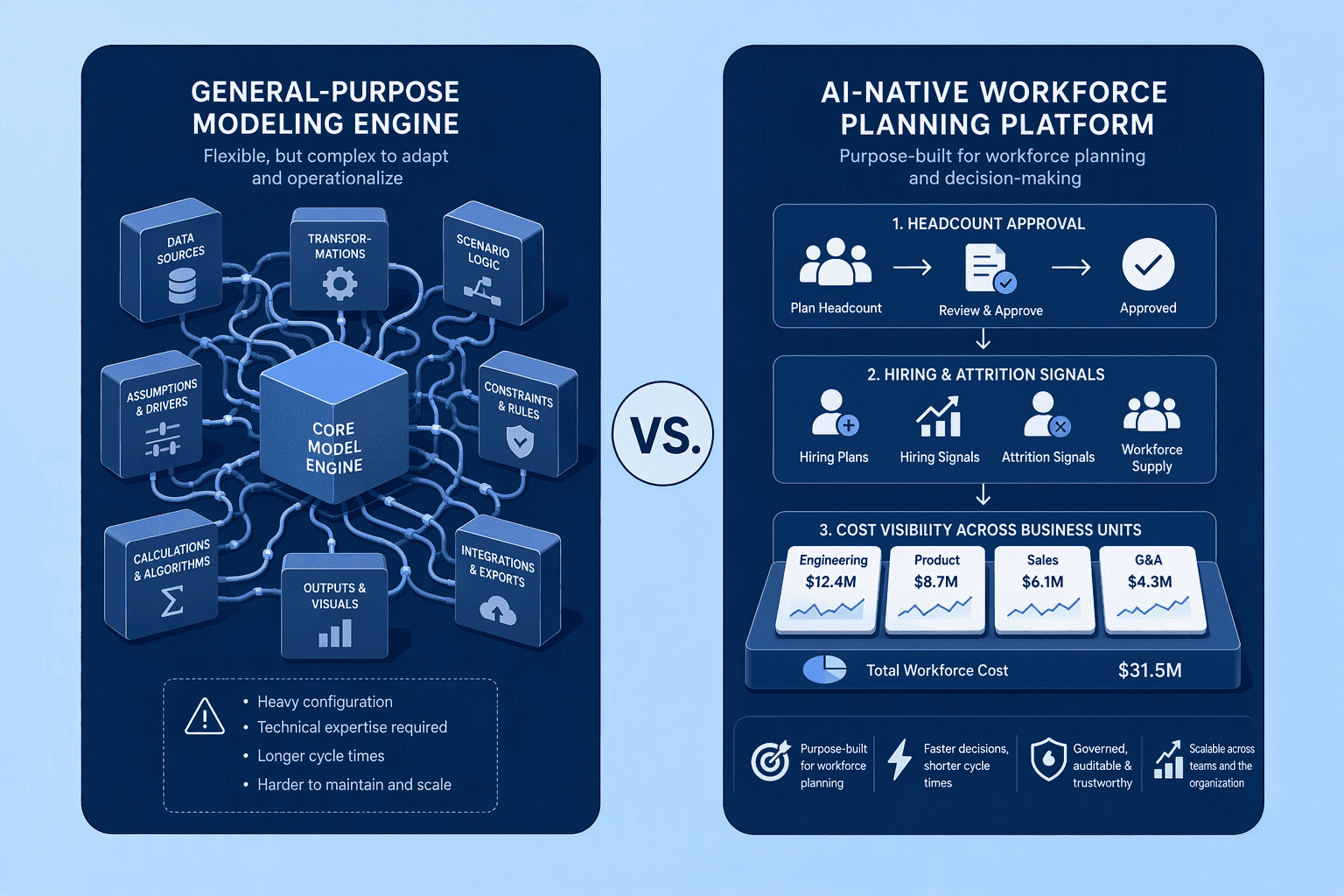
Anaplan's low-code environment is both its superpower and its Achilles' heel. You can model almost anything, but predictive modeling, pre-built workforce templates, and rapid deployment are projects that demand time and builders.
Specialized platforms invert this equation. They ship with the logic HR and finance need: headcount approval workflows, hiring and attrition planning, and cost visibility across business units. You start planning faster because you are configuring a domain-specific tool.
Static workforce planning cannot keep pace with AI-driven work redesign. Specialized tools embed real-time scenario analysis that Anaplan requires a model builder to create. The difference is operational speed.
Gartner Peer Insights data shows SAP SuccessFactors HCM scored 4.4 out of 5 and Workday Human Capital Management scored 4.3 out of 5, yet Anaplan consistently outscored them on service and support. This tells a story. Suite vendors win on breadth; Anaplan wins on support because you need it.
Specialized AI-native platforms reduce dependency on service interactions by making the critical workforce workflows intuitive from day one. The right specialized tool cuts IT cycle time and aligns HR and finance on a single source of truth. Chief human resources officers (CHROs) and FP&A leads need a system that surfaces headcount risk, models cost, and accelerates a decision, in the room, during the meeting.
Every platform here solves a different problem. Anaplan is a modeling engine. Workday Adaptive Planning is an enterprise consolidation layer.
Pigment is a flexible data canvas. Board is a unified CPM control tower.
CompUp is an AI-native workforce command center. The right choice depends on whether your priority is modeling flexibility or workforce-specific predictive power.
Workforce planning without integrated compensation management creates data silos and manual reconciliation work. This gap explains why dedicated platforms are gaining traction. When a tool natively connects headcount plans to budget simulations and merit-cycle forecasts, the monthly reconciliation meeting between HR and finance shrinks from two hours to a fifteen-minute sign-off.
Gartner Peer Insights ratings back the demand shift: Oracle Talent Management Cloud scored just 3.8 out of 5, with Anaplan outscoring it on integration, deployment, and evaluation. The market is signaling that depth wins in workforce planning.
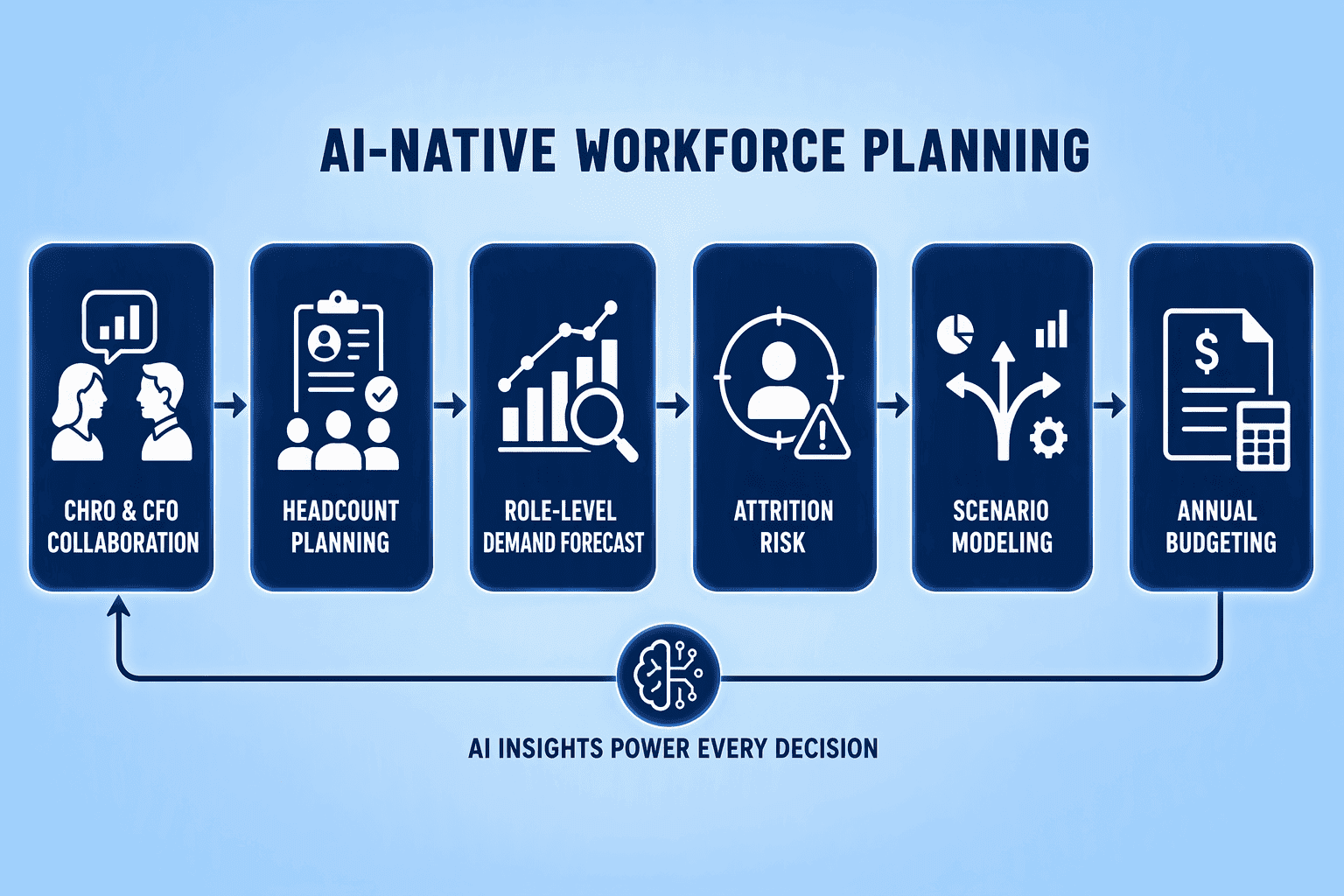
CompUp is a dedicated AI-native workforce planning platform built for the operational reality where the CHRO and CFO jointly own headcount decisions. It delivers headcount planning, role-level demand forecasting, annual manpower budgeting, and workforce cost visibility across business units, functions, and geographies as standard.
You can run what-if scenario modeling, hiring and attrition planning, and AI-powered attrition risk insights without a model builder. The platform includes headcount approval workflows that route decisions through HR, Finance, and Talent Acquisition, closing the gap between plan creation and plan execution. Over 200 global companies use CompUp to track plan-vs-actual workforce costs and make data-driven adjustments. You can get granular with workforce supply-demand analysis or pull back for a board-ready workforce intelligence dashboard. For organizations prioritizing speed, built-in workforce logic, and predictive power over unlimited model-building flexibility, you can explore CompUp's workforce planning approach here.
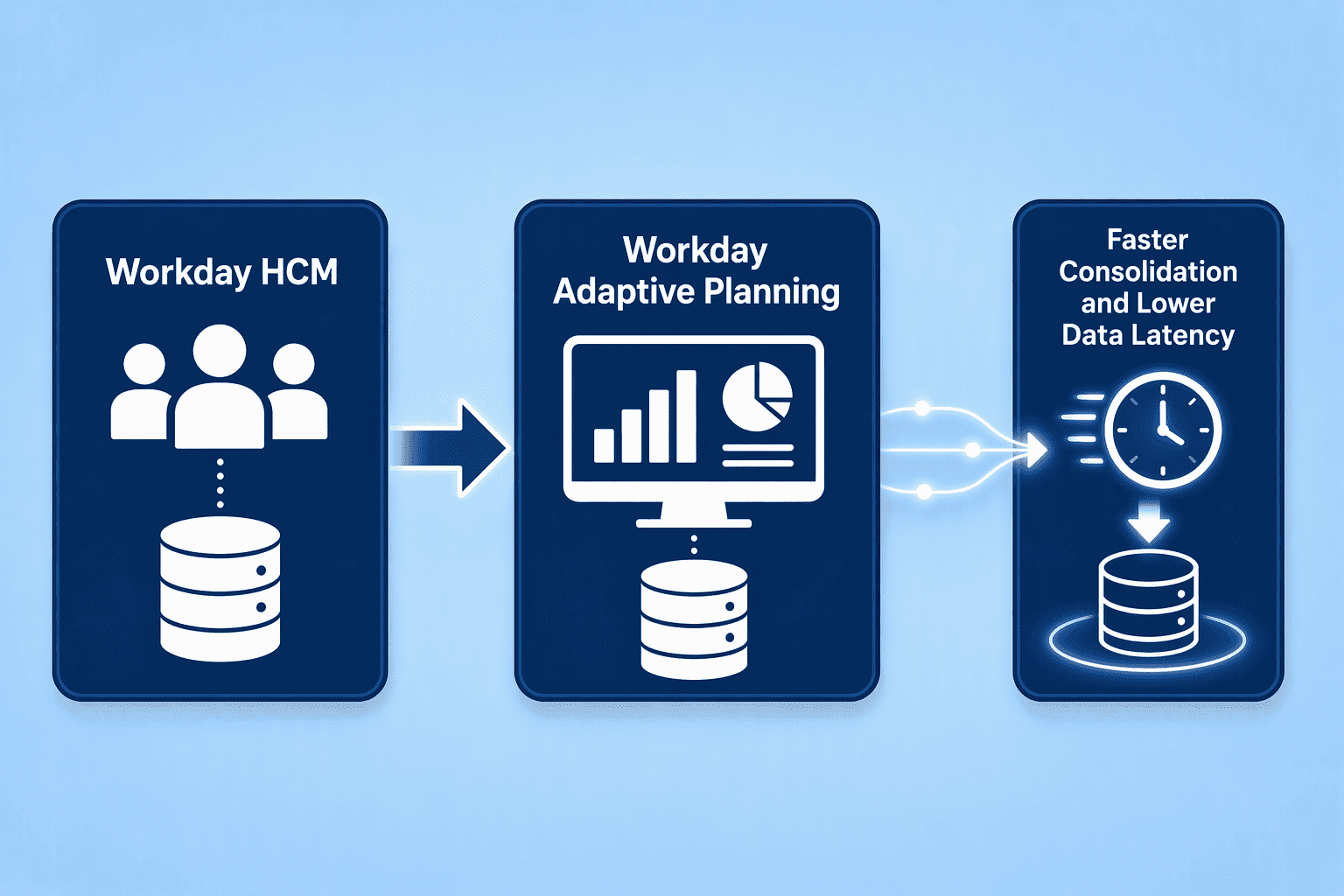
Workday Adaptive Planning is the default alternative for large enterprises already running Workday HCM, and for good reason: the native integration enables 30 to 40% faster implementation compared to non-Workday environments. When your workforce data and financial models live in the same ecosystem, consolidation cycles accelerate and data latency drops.
| Dimension | Anaplan | Workday Adaptive Planning |
|---|---|---|
| Core strength | Low-code modeling engine for custom business planning | Native consolidation of HCM and financial planning data |
| AI/ML maturity | Model-building dependent; limited native predictive | Growing AI feature set, stronger in financial than workforce |
| Deployment speed | Months with custom model build | Weeks for Workday HCM shops; longer otherwise |
| HCM/ERP integration | Connector-dependent | Native Workday HCM; indirect for non-Workday ERP |
| Pricing model | Platform-based subscription, high customization costs | Unified subscription, cost efficient for Workday ecosystem |
| Scalability | High for custom models; model maintenance increases complexity | High for multi-entity consolidation inherently |
Workday Adaptive Planning is the right call when financial consolidation is the primary driver and HR integration is a secondary benefit. The limitation is clear: if your HR stack is not Workday, much of the speed advantage evaporates. Acquired in 2018 for $1.55 billion, the platform retains a financial-first DNA that serves FP&A teams exceptionally well but leaves CHROs wanting more workforce-specific predictive features.
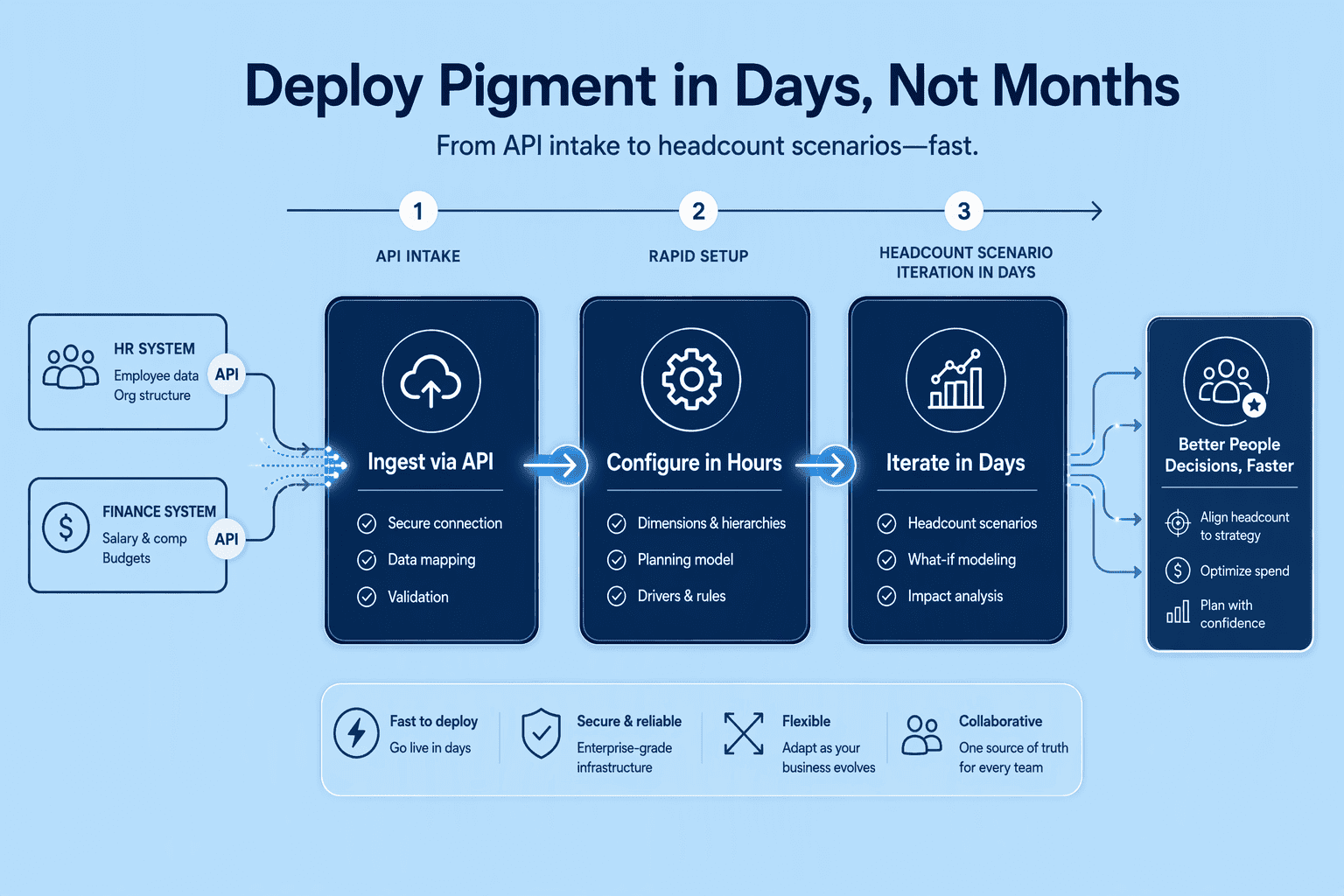
Pigment wins on speed and flexibility. It appeals to high-growth companies that need to model workforce plans across multiple scenarios quickly and cannot afford the three-month model-building timeline common with Anaplan deployments. The platform's data modeling layer lets you pull in HR and financial data rapidly and start iterating on headcount plans in days. Pigment is strongest where adaptability trumps thorough integration.
Companies with a modern, API-first HR stack appreciate its ability to go live fast. Organizations needing deep, pre-built HCM process integration may hit limits sooner than they would with Workday or a dedicated workforce-native tool.
Board takes a different bet. Rather than splitting workforce planning into a separate tool, it folds it into a unified corporate performance management (CPM) and business intelligence (BI) platform. For a multinational manufacturer or a financial services firm running complex, multi-departmental plans where workforce, revenue, and Capex are tightly coupled, this approach is persuasive. You are modeling headcount in the same environment as profitability analysis and strategic long-range plans.
Board suits organizations where the planning process is led by the office of the CFO and HR planning feeds directly into the corporate financial model. The risk is exactly that strength: HR-specific predictive models and real-time talent analytics sit outside the platform's design center.
When evaluating Board, ask a practical question: will your HR leaders log into a CPM platform daily to manage attrition risk and hiring forecasts? If the answer is no, the unified model may leave HR working outside the system. The integration is architecturally elegant but functionally burdensome for non-finance users.
Cornerstone Workforce AI scored 4.2 out of 5 on Gartner, confirming that HR-specific platforms carry their own credibility. Board's unified approach is best reserved for organizations where workforce planning genuinely operates as a sub-function of corporate FP&A.
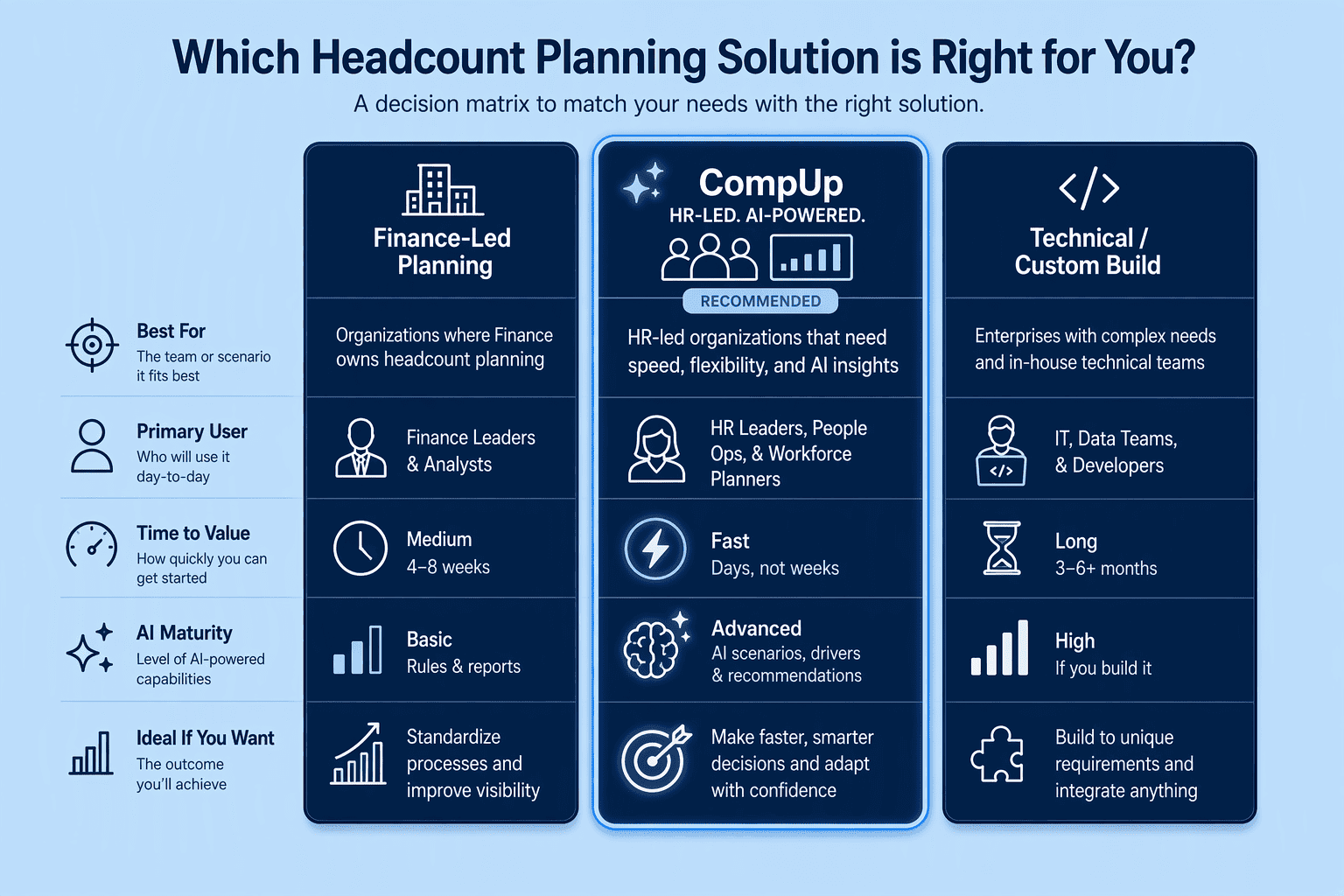
Match your organizational profile to the right platform using the decision matrix below. The table prioritizes the dimension that most determines a successful workforce planning deployment: how your HR and finance teams actually work together.
| Profile | Priority | Best Alternative | Why |
|---|---|---|---|
| Mid-market, HR-led planning; need speed and AI | AI maturity, deployment speed, HR-finance collaboration | CompUp | Purpose-built for headcount planning with native AI attrition insights and approval workflows; rapid deployment |
| Large enterprise on Workday HCM; finance-led | HCM integration, consolidation, financial alignment | Workday Adaptive Planning | Native integration delivers faster rollout; strong for financial-first workforce plans |
| High-growth company; non-Workday HR stack | Speed, flexibility, scenario modeling | Pigment | Rapid-deployment modeling layer; strong for agile, multi-scenario planning |
| CFO-run organization; complex multi-dept planning | Unified CPM and BI, strategic alignment | Board | Consolidates workforce, financial, and strategic plans; best when HR is an input to FP&A |
The $9.76 billion market is not growing because companies need more planning tools. It is growing because the old approach, building custom models on a low-code canvas, is too slow, too costly, and too disconnected from the real-time decisions CHROs and CFOs now make together. CIOs who focus dynamic workforce planning on critical value streams can identify capability gaps earlier and accelerate AI value realization. In 2026, the best Anaplan alternative for HR-finance collaboration is a specialized, AI-native platform that delivers predictive modeling and cost visibility not as a project, but as a product. A good next step is seeing how CompUp puts this into practice.
The top alternatives fall into two categories:
CompUp differentiates from Anaplan in several key ways:
Three reasons dominate the shift away from Anaplan:
When selecting a workforce planning tool, prioritize these capabilities:
AI-native platforms embed predictive models and scenario analysis directly into the planning workflow. Anaplan offers a low-code environment where you can build those models, but they are not native. The difference is speed: an AI-native tool surfaces an attrition risk alert or a cost variance in real time; Anaplan requires that logic to be built first.
Anaplan uses a platform-based subscription with significant implementation and model-building costs that raise total cost of ownership. Specialized tools like CompUp start at $3 per employee per year. Workday Adaptive Planning offers efficient pricing within the Workday ecosystem. Pigment and Board use subscription models but vary based on modules and user count.
Community Manager (Marketing)
As a Community Manager, I’m passionate about fostering collaboration and knowledge sharing among professionals in compensation management and total rewards. I develop engaging content that simplifies complex topics, empowering others to excel and aim to drive collective growth through insight and connection.
Revolutionizing Pay Strategies: Don't Miss Our Latest Blogs on Compensation Benchmarking