
The compensation landscape has evolved significantly heading into 2026. Across regions - from the EU Pay Transparency Directive to pay equity mandates in the UK, Australia, Canada, and beyond - organizations everywhere are under pressure to build fairer, more defensible compensation structures. The right compensation management software helps HR teams enforce pay equity, run efficient review cycles, and communicate total rewards clearly to employees, regardless of where they operate.
This guide reviews the top 20 platforms in 2026, covering key features, pricing models, and ideal use cases to help you make the right decision.
Compease — Best for pay-for-performance strategies and equal pay analytics
In a competitive talent market, a basic salary no longer cuts it. Organizations need a compensation strategy that blends pay, benefits, work-life balance, and overall employee satisfaction to attract and retain top talent.
This is where modern compensation management software becomes essential. Manually managing the complexity of today’s compensation landscape is time-consuming and prone to error. These systems ensure fairness and align with today’s workforce values.
This article will walk you through the top compensation management software solutions for 2026. These are the best compensation management software - each designed to simplify compensation planning, promote pay equity, and meet the expectations of today’s employees.
Comparing key factors like features, target audience, benefits, and integrations is essential when selecting compensation management software. These aspects directly impact how well the software fits your organization’s needs based on your size, goals, and operational requirements.
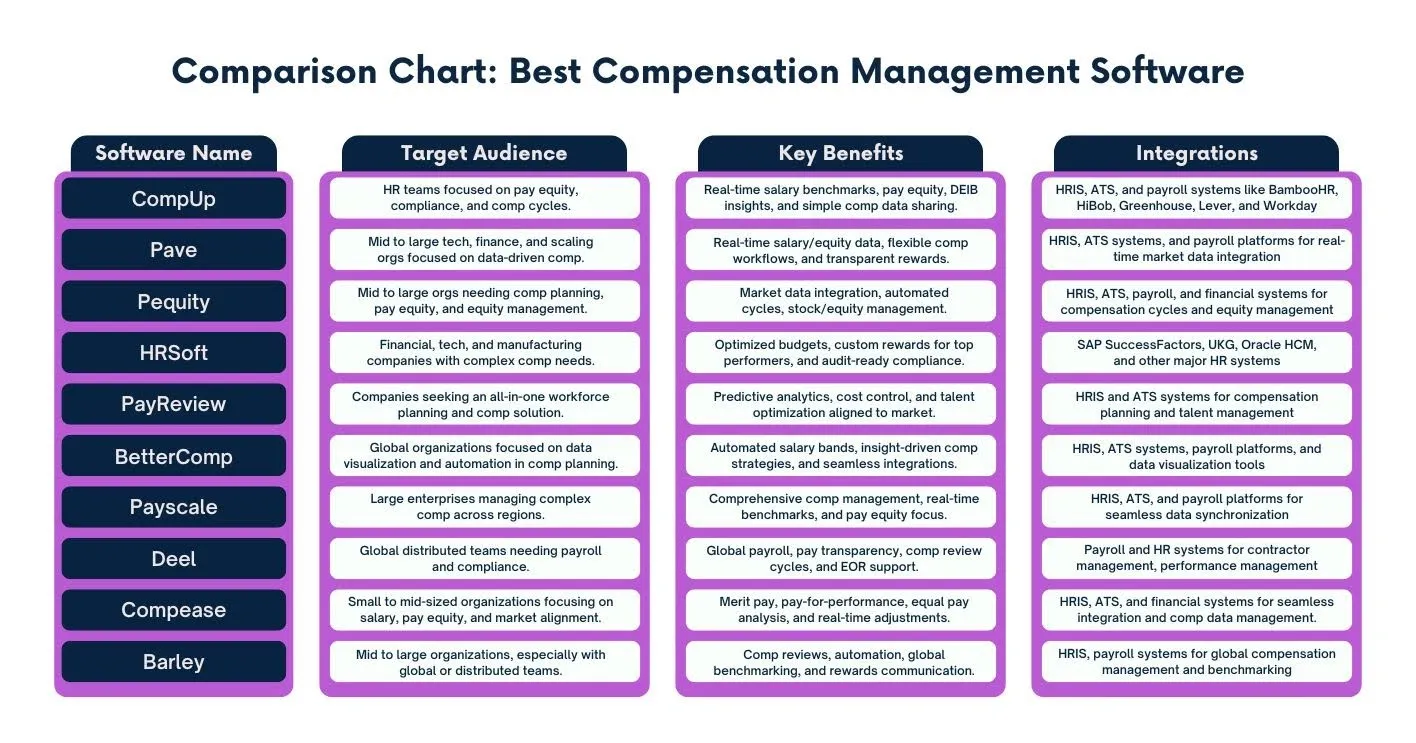
Now that we have briefly introduced the leading software options, let’s explore the basics of compensation management software and take an in-depth look at the top 20 platforms being used today.
A few macro trends are making this category more important than ever:
Compensation management software is a dedicated planning system that centralizes employee pay data and automates compensation workflows, from salary benchmarking to merit cycles, bonus distribution, equity grants, and total rewards communication.
Rather than relying on manual spreadsheets (which are error-prone and hard to audit), these platforms give HR teams a structured, compliant, and data-driven framework for managing every element of employee compensation. They integrate with HRIS, payroll, and ATS systems to ensure data consistency across the stack.
Choosing the right compensation management platform is key to optimizing your organization’s compensation strategy. Salary planning should be part of a holistic solution that also supports you in overcoming challenges such as benchmarking, managing compensation cycles, and staying compliant with labor laws.
These top compensation management software tools are explained in greater detail below:
4.9/5 user rating (G2)
CompUp is a modern compensation management software designed to help organizations streamline salary planning, ensure pay equity, and effectively communicate total rewards.
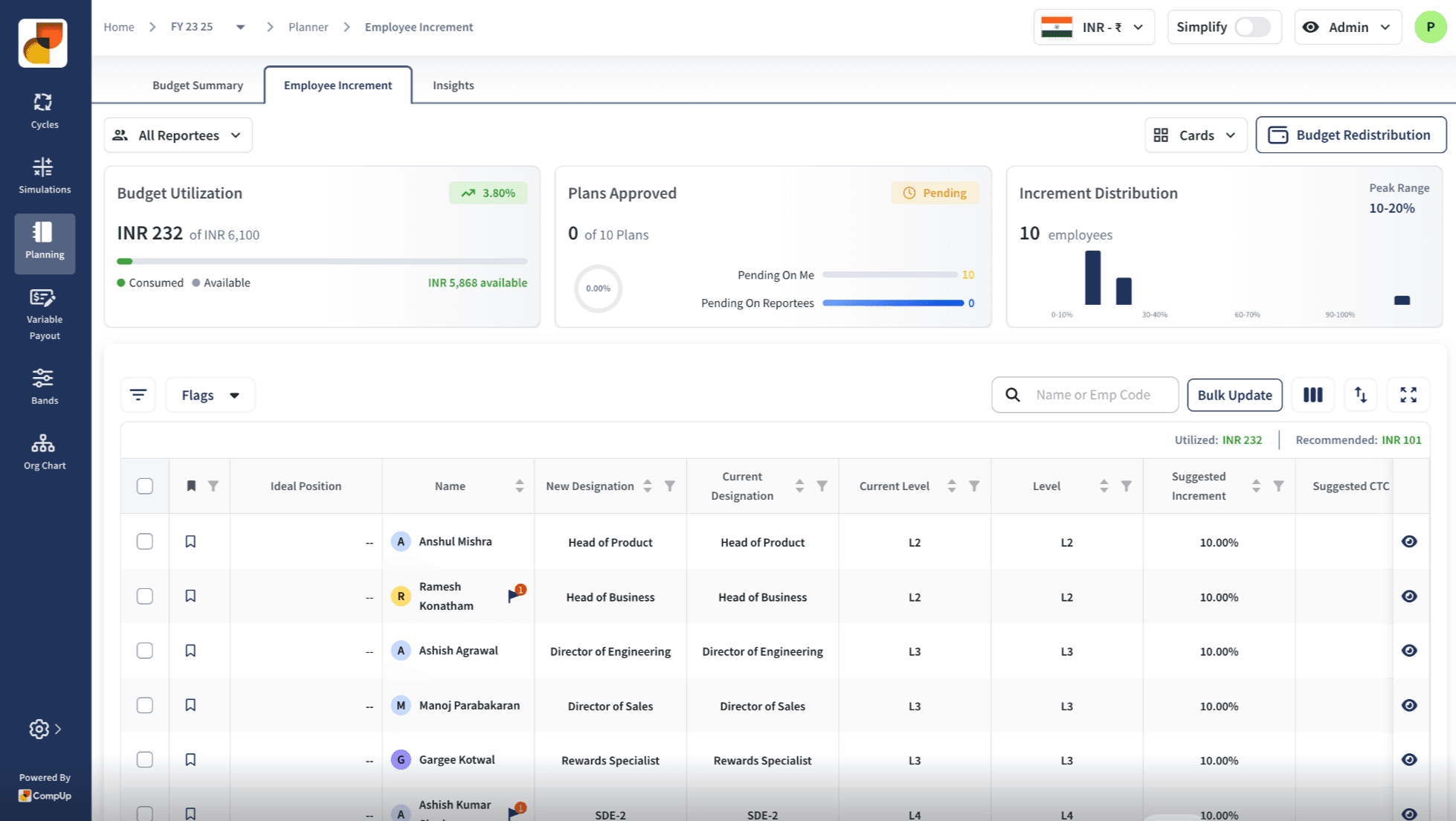
Built for HR and Total Rewards teams, CompUp replaces fragmented spreadsheets and manual workflows with a centralized platform that simplifies compensation cycles and improves decision-making.
By combining structured compensation frameworks with actionable insights, CompUp enables organizations to build fair, transparent, and scalable pay strategies.
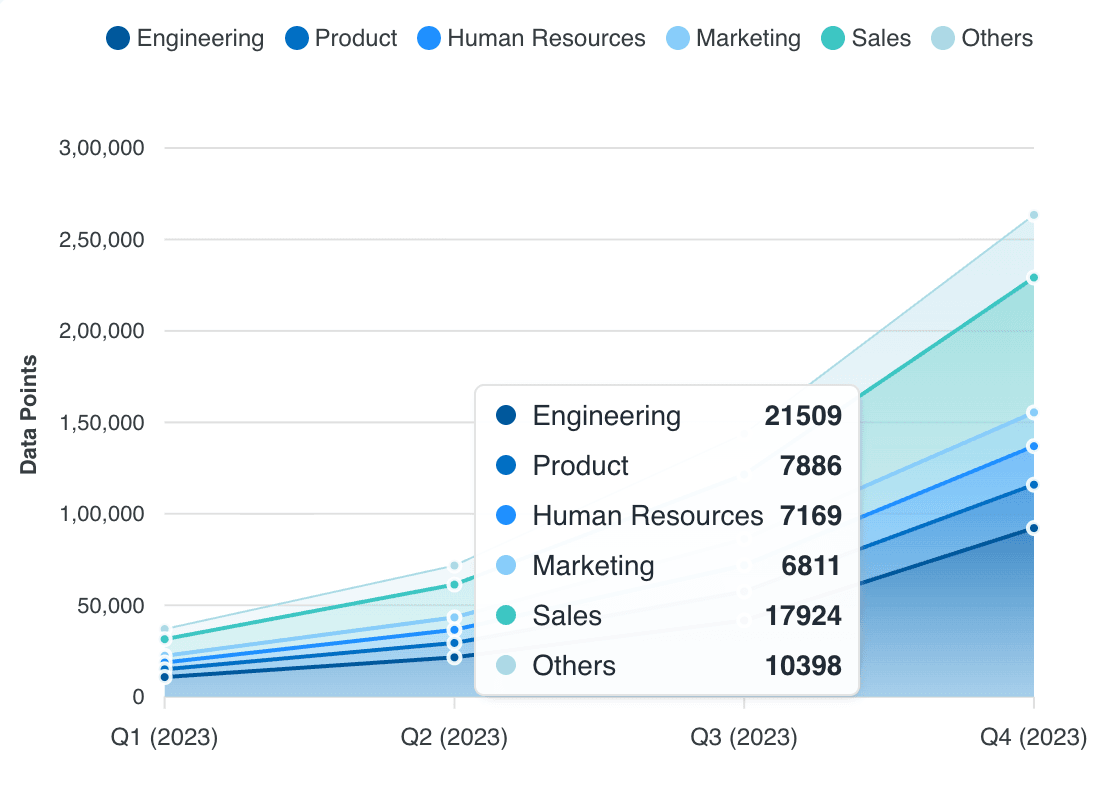
Compensation Bands Management
Design and manage structured salary bands across roles, levels, and geographies, ensuring consistency and internal alignment.
Total Rewards Communication Software
Create and share personalized total rewards statements to improve employee understanding, engagement, and retention.
Pay Equity Analysis Tools
Identify compensation gaps and ensure fair pay practices with built-in analytics and reporting capabilities.
Compensation Cycle & Survey Management
Streamline compensation reviews, internal data collection, and planning workflows for better decision-making.
DEIB Insights for Compensation
Access insights on diversity, equity, inclusion, and belonging to strengthen equitable compensation strategies.
CompUp offers scalable pricing for growing organizations, with enterprise plans starting at $3 per employee per year, making it a cost-effective compensation management solution.
4.7/5 user rating (G2)
Pave offers an end-to-end compensation management platform tailored to meet the needs of your entire team. It’s designed to help you plan budgets, benchmark salaries, and communicate total rewards effectively.
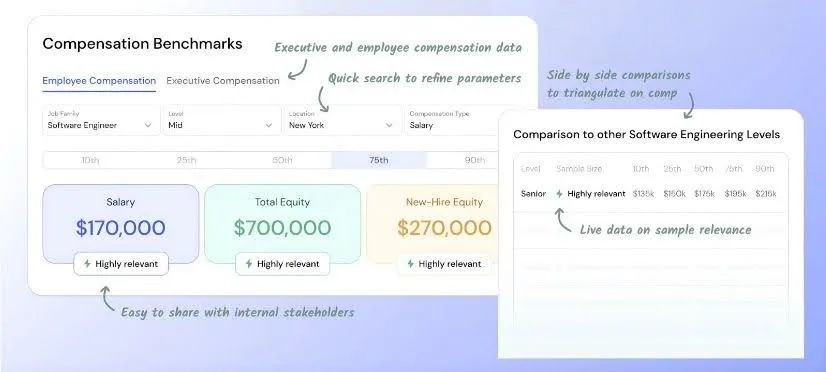
Modular pricing based on the features you choose. They do not advertise their pricing. However, Pave offers a free benchmarking tool to access real-time salary and equity data from over 7,500 companies. Organizations can make informed compensation decisions without any initial investment.
Pave is best suited for mid-sized to large organizations that require a data-driven, transparent, and scalable compensation management solution, particularly those in technology, finance, and rapidly scaling sectors. It's ideal for companies that streamline complex compensation workflows, ensure pay equity, and integrate real-time market data into their compensation strategies.
4.5/5 user rating (G2)
HRSoft offers a robust compensation planning tool with features designed to sustain you through any complex compensation scenarios.
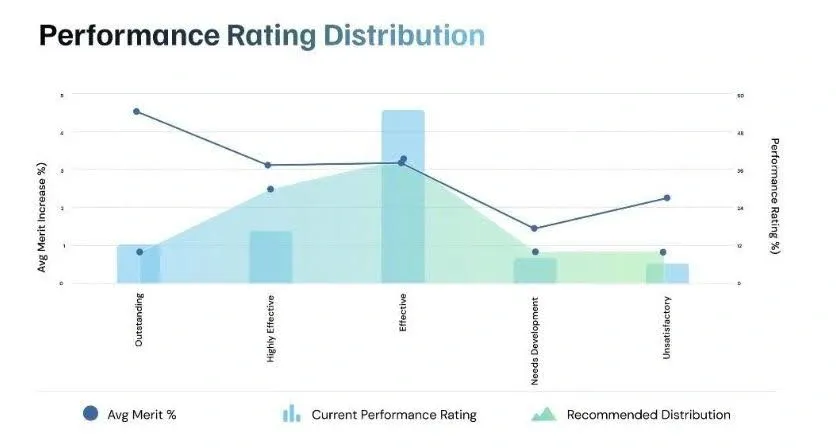
HRSoft offers tiered pricing for its compensation management software, tailored to the size and needs of your organization. Pricing is subscription-based and varies depending on the number of employees and the required features.
HRSoft is ideal for companies in financial services, technology, and manufacturing industries, where compensation structures can be complex and require careful management. It is particularly beneficial for organizations looking to automate compensation planning, align pay with performance, ensure compliance with global regulations, and integrate compensation data across various HR systems like SAP SuccessFactors, UKG, and Oracle HCM.
5/5 user rating (G2)
PayReview is a complete workforce planning solution offering salary benchmarking, budget planning, and more.
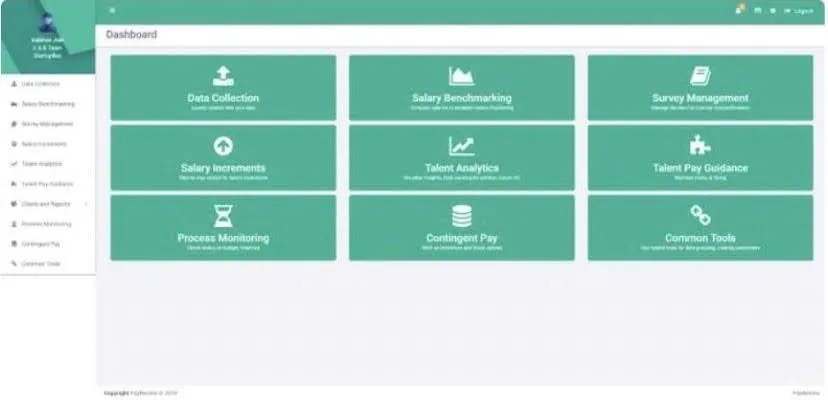
Pricing includes a monthly subscription fee and may involve one-time implementation and integration fees. Customization fees are applicable based on specific requirements. They do not advertise their pricing.
PayReview is ideal for companies looking for an all-in-one workforce planning and compensation solution. It benefits HR teams aiming to move beyond traditional spreadsheets and adopt a more strategic approach to compensation management.
4.9/5 user rating (G2)
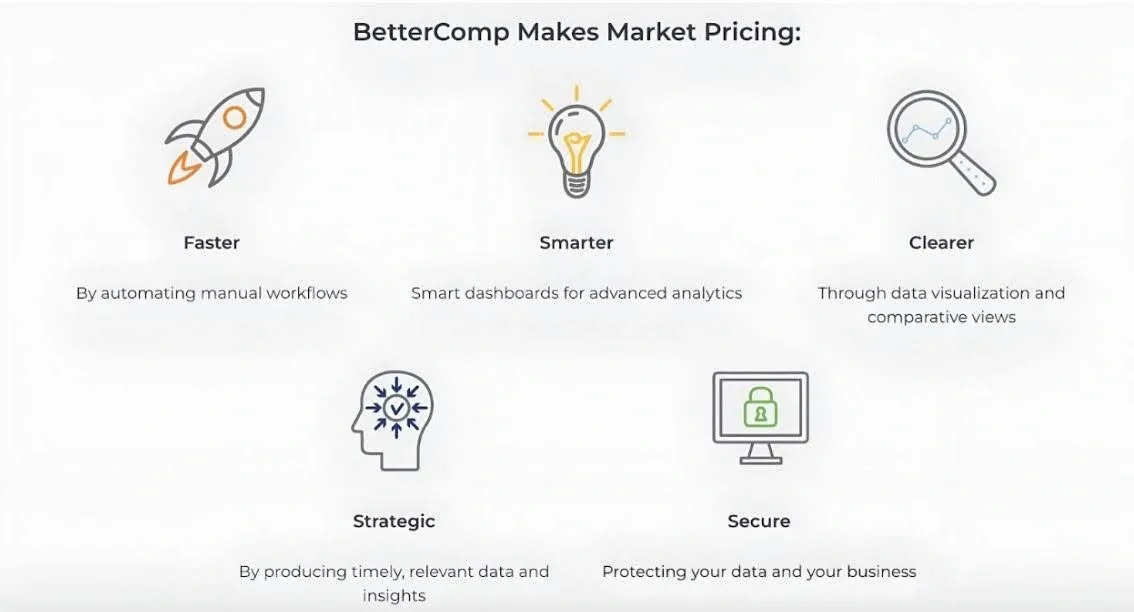
BetterComp is designed to help you get your market pricing right, offering features to streamline the process of creating salary bands.
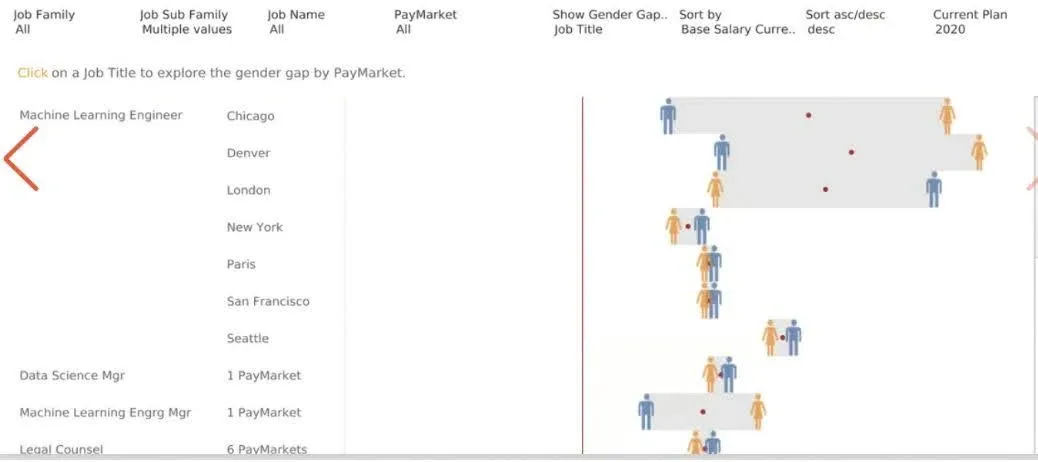
BetterComp does not publicly disclose specific pricing details. For accurate and tailored pricing information, it is recommended that you contact BetterComp directly or request a demo through their official website.
Organizations with global operations or those experiencing rapid growth can leverage BetterComp's real-time benchmarking across 55+ countries and 90+ cities to maintain competitive and equitable compensation practices. Its seamless integration with HRIS, cap table, and ATS systems allows for efficient data synchronization, reducing manual processes and enhancing decision-making.
3.4/5 user rating (Glassdoor)
Payscale integrates various models to create an effective compensation planning structure for large enterprises and efficiently manages the entire compensation process, leading to desired business outcomes.
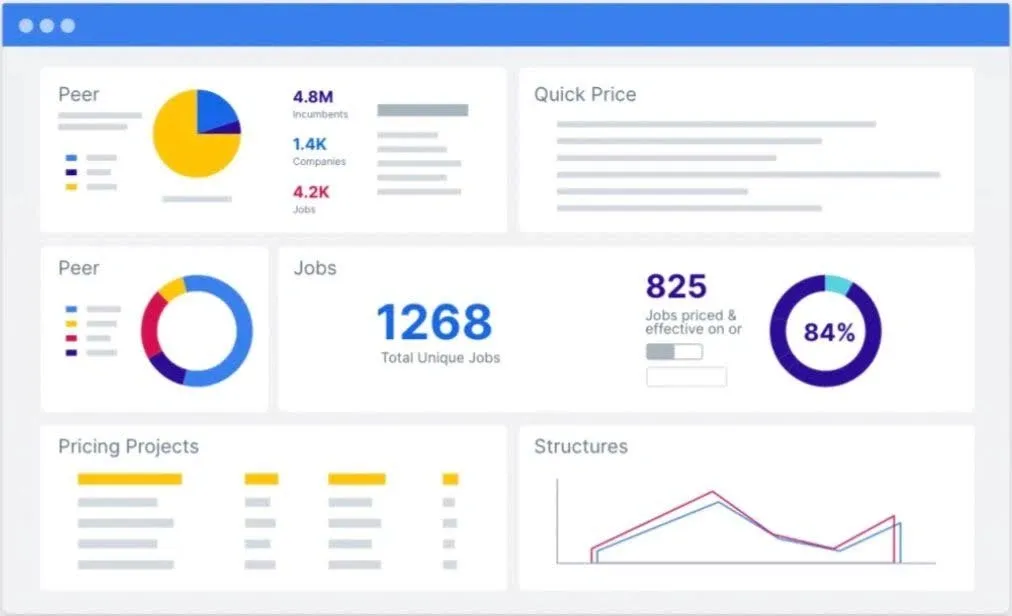
PayScale offers a variety of technology, data, and service offerings tailored to different organizational needs. Pricing is customized based on factors such as company size, required features, and specific use cases. Enterprise-level pricing is available on request.
It is best for large enterprises managing complex compensation data across multiple regions that want to streamline their compensation management process. PayScale's solutions are designed to help organizations optimize their compensation strategies, enhance employee satisfaction, and maintain compliance with evolving pay regulations.
4.8/5 user rating (G2)
Deel is a comprehensive global HR platform designed to streamline compensation management, payroll, and compliance for distributed teams. Acquired by Deel in December 2024, Assemble's compensation management technology has been integrated into Deel's suite, enhancing its capabilities in global compensation planning and analytics.
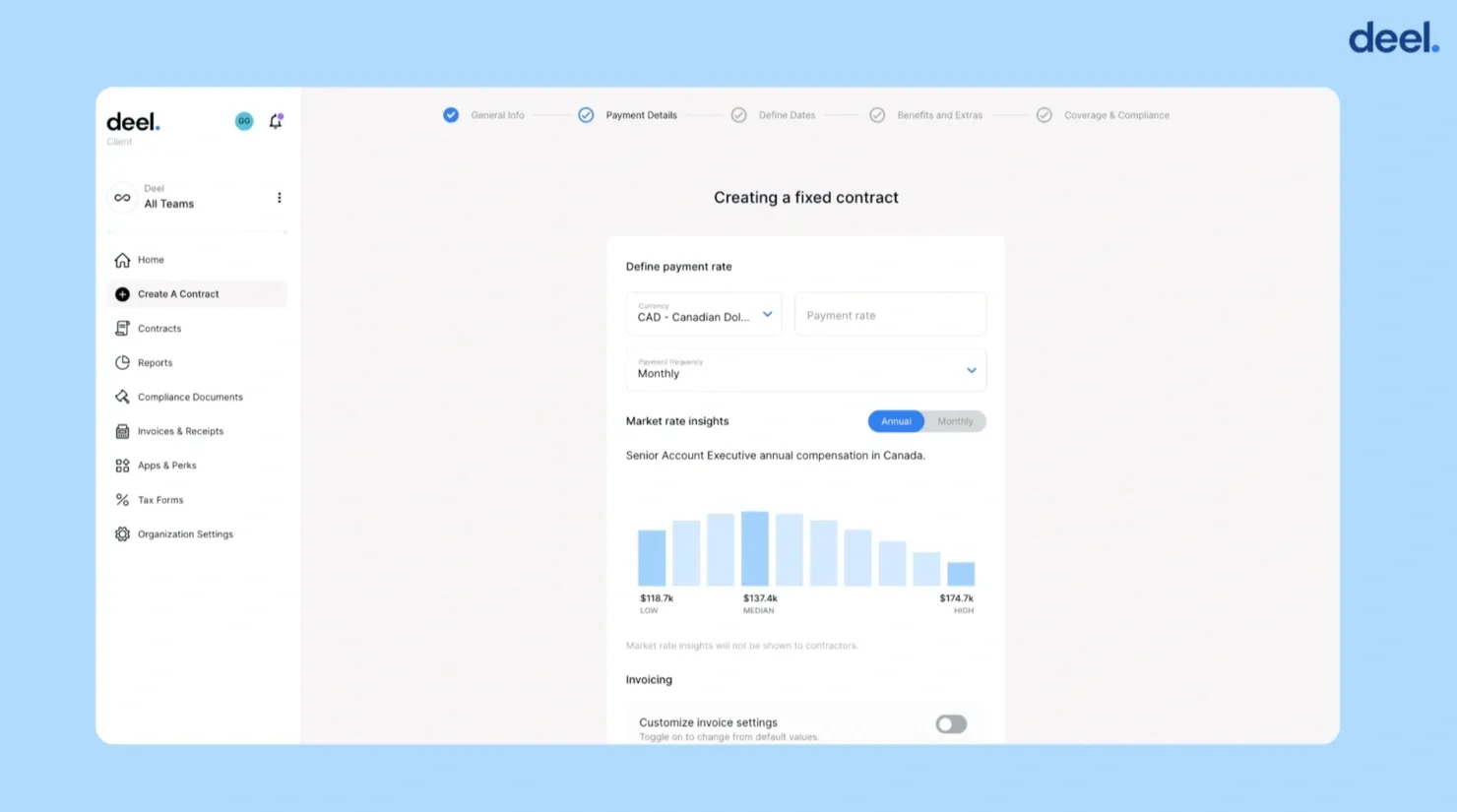
Deel offers a variety of pricing plans designed to meet the needs of businesses with global teams. Plans include options for managing contractors, payroll, and benefits across multiple countries. Their pricing starts at $49 monthly for contractor management and goes up to $599 monthly for the Employer of Record (EOR) plan.
Deel also provides additional services like HR tools and employee performance management. Its basic HR platform is free, and more advanced features are available starting at $20 per employee per month.
Deel is best suited for organizations with distributed or remote teams, particularly those that operate across multiple countries and need to manage global payroll, compliance, and workforce management. It is ideal for businesses that want a streamlined solution for hiring employees and contractors without establishing local entities.
4.9/5 user rating (G2)
Compease is a cloud-based compensation management software designed to assist organizations in structuring and administering competitive and equitable pay systems. It offers tools for job evaluation, salary benchmarking, merit increase modeling, and pay-for-performance strategies, enabling HR teams to align compensation with both market standards and internal equity.
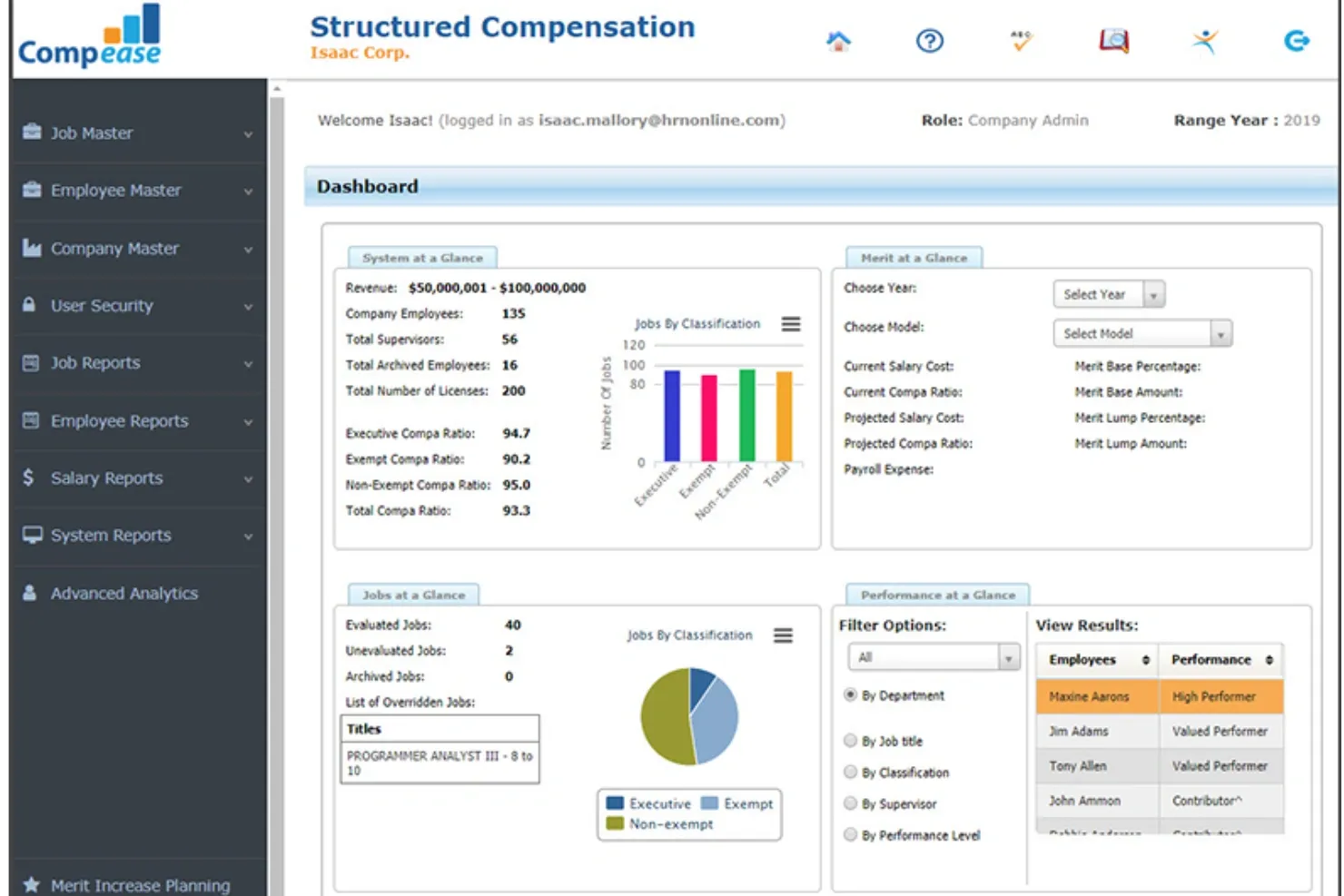
Compease offers a custom pricing plan tailored to your organization's specific needs and scale. While the exact cost varies based on factors such as company size, industry, and required features, this plan includes all the core functionalities of the standard offerings, such as equal pay analysis, market adjustments, merit pay modeling, and pay-for-performance automation.
Compease is best suited for small to mid-sized organizations across various industries, including retail, manufacturing, and education, that seek a straightforward and cost-effective solution for managing compensation. It's ideal for HR teams looking to automate salary administration, ensure pay equity, and align compensation strategies with both internal policies and external market data.
In addition to the 10 compensation management software platforms we have previously explored in detail, several other notable tools are available in the market that offer unique functionalities tailored to different organizational needs.
These software solutions represent powerful tools that may be ideal for businesses with particular compensation strategies, budget constraints, or preferences for specific integrations.
Payfactors is a compensation management solution designed to integrate real-time salary and market data. It allows businesses to optimize compensation strategies with data-driven insights, enabling better decision-making on compensation structures. This platform is widely used for salary benchmarking and ensuring pay equity across organizations.
Salary.com offers a comprehensive compensation tool suite that delivers real-time salary data, customizable salary surveys, and pay equity analysis. These tools help organizations ensure that their pay structures remain competitive and aligned with market standards.
Paycom is powerful HR software that integrates payroll and compensation management features with performance management and reporting tools. It automates complex payroll processes while providing a unified solution for managing compensation and employee performance.
PayScale MarketPay is a scalable solution that focuses on compensation planning and real-time market comparisons. It is designed to help businesses with large, distributed teams ensure compensation alignment across different regions.
UKG Pro is a comprehensive HR platform that provides payroll management, talent management, and compensation planning tools. It helps organizations optimize their compensation strategies while integrating with other HR functions for seamless operations.
Workday is an advanced compensation management platform that offers global compensation management, performance-based pay, benchmarking, and forecasting. Its powerful data-driven tools help businesses ensure their compensation strategies align with business objectives.
SimplyMerit is designed to streamline merit increase planning and pay-for-performance management. It allows businesses to automate compensation processes and create customizable pay models that reward top performers.
Ceridian Dayforce offers an integrated suite of HR tools, including compensation planning, workforce management, payroll, and performance management. It helps businesses manage compensation with real-time data and ensures alignment with internal and market standards.
CompXL is a compensation management platform focusing on pay equity analysis, compensation reporting, and data visualization to optimize salary structures. It’s ideal for enterprises that need advanced tools to analyze and manage complex compensation plans.
AEQIUM specializes in compensation management, offering pay equity analysis, benchmarking, and reporting tools to optimize salary structures. It helps organizations enhance transparency and ensure fairness in their compensation processes.
Ultimately, the best compensation management software will depend on your organization’s size, budget, and specific compensation goals. The tools mentioned in both lists offer flexibility, scalability, and a variety of pricing models, making it essential to carefully assess your needs before choosing a platform.
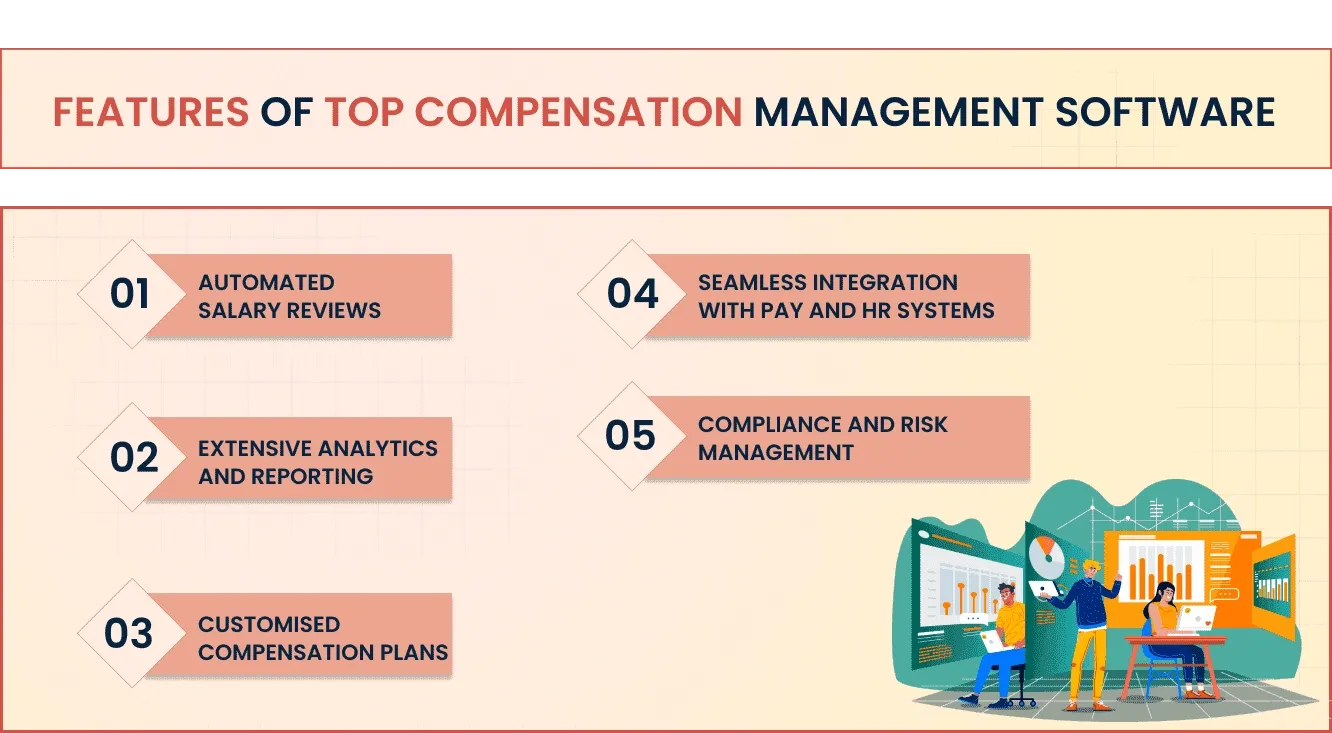
Automation has become the baseline expectation. The best platforms now handle the entire merit cycle — from budget allocation to manager recommendations to approvals — with minimal manual intervention. Notifications, escalations, and audit trails are built in.
In 2026, leading platforms use machine learning to surface pay equity risks proactively, flag roles that are drifting out of market range, and predict attrition likelihood based on compensation positioning. This is a step beyond traditional reporting.
Effective platforms allow HR to tailor pay structures by department, level, geography, and performance tier — and update these structures dynamically as business needs change.
Data consistency is critical. The best tools integrate bidirectionally with HRIS, ATS, and payroll platforms to ensure changes made in compensation planning reflect immediately in operational systems.
With pay transparency and pay equity mandates now active or in progress across the EU, UK, Australia, Canada, and parts of Asia-Pacific, platforms have added built-in compliance workflows, salary range publishing tools, and documentation features tailored to different regional frameworks.
Beyond base salary, employees want visibility into their full package. Modern platforms generate personalized, branded total rewards statements that include equity, benefits, bonuses, and more — accessible via employee-facing portals.
1. Features & Functionality
Ensure the platform covers your core needs: benchmarking, pay equity analysis, salary band management, merit modeling, bonus administration, and total rewards communication.
2. Compliance Readiness
In 2026, verify that the platform supports pay transparency compliance for all jurisdictions where you operate — this may include the EU Pay Transparency Directive, UK gender pay gap reporting, Australia's Workplace Gender Equality Act obligations, Canadian pay equity legislation, or other regional frameworks.
3. User Experience
Evaluate usability for both HR administrators and line managers. Overly complex tools reduce adoption and introduce errors during review cycles.
4. Integrations
Confirm the platform integrates with your existing HRIS, payroll, ATS, and performance management systems. Native integrations are preferable to manual data exports.
5. Scalability
Choose a platform that can grow with you — handling more employees, additional geographies, and more complex compensation structures without requiring a platform switch.
6. Pricing & ROI
Compare total cost of ownership — including implementation, training, and ongoing subscription costs — against the efficiency gains and risk reduction the platform delivers.
7. Data Security
Compensation data is highly sensitive. Verify relevant security certifications (SOC 2, ISO 27001), data encryption standards, role-based access controls, and the platform's approach to data residency and privacy regulations in your region (GDPR, PDPA, PIPEDA, Privacy Act, etc.).
Compensation management has moved from a back-office administrative function to a strategic HR priority. With pay transparency legislation reshaping how organizations communicate and justify pay, and with employees expecting more visibility into their total rewards, the right platform is now a competitive advantage.
For most mid-to-large organizations in 2026, CompUp stands out as a strong all-in-one solution — offering advanced pay equity tools, DEIB insights, and total rewards communication at a competitive price point. Deel is the clear choice for companies with significant global and distributed workforces. Workday and UKG Pro remain benchmarks for large enterprises requiring full HCM integration.
Whatever your size or stage, the key is to match the platform to your actual compensation strategy, integration requirements, and compliance obligations — not just the feature list.
Compensation management software enables companies to manage salary structures, merit increases, bonuses, and equity-based compensation while ensuring pay equity, compliance, and market competitiveness. Modern platforms also support pay transparency reporting and total rewards communication.
The best platform depends on your organization's size, goals, and compliance requirements. CompUp is a strong choice for pay equity and total rewards communication. Deel leads for global teams. Workday and UKG Pro are preferred by large enterprises with complex HCM needs.
Leading providers include Mercer, Payscale, and Salary.com. These platforms specialize in market salary data and survey aggregation for organizations seeking external benchmarking reference data.
Platforms like CompUp, Pave, and Barley include features specifically designed for pay transparency: salary band documentation, equity analysis reports, audit trails, and employee-facing total rewards statements. These tools help organizations meet regulatory requirements across the EU, UK, North America, Australia, and other regions with active pay equity or transparency obligations.
Expect continued expansion of AI-driven features (proactive equity gap detection, attrition risk scoring), deeper integration with workforce planning tools, and expanded compliance modules as pay transparency regulations continue to spread across new jurisdictions.
Community Manager (Marketing)
As a Community Manager, I’m passionate about fostering collaboration and knowledge sharing among professionals in compensation management and total rewards. I develop engaging content that simplifies complex topics, empowering others to excel and aim to drive collective growth through insight and connection.
Revolutionizing Pay Strategies: Don't Miss Our Latest Blogs on Compensation Benchmarking