
Attracting and retaining talent today goes far beyond offering competitive salaries. Employees are increasingly looking at the full picture, including health coverage, retirement plans, time off, and other meaningful benefits that impact their daily lives and long-term well-being.
We recognize how challenging it can be for employers to create a benefits package that is both legally compliant and truly valued by employees. In fact, nearly one in ten workers say they would willingly accept a pay cut in exchange for better benefits. That speaks volumes about what people prioritize.
This guide breaks down the essentials of employee benefits in the U.S., from those mandated by law to fringe perks that enhance company culture. It can help you build a program that supports your team and strengthens your workplace.
Employee benefits are non-wage compensations provided to employees in addition to their regular salaries or wages. These offerings are designed to support the health, well-being, and financial security of workers while also improving job satisfaction and loyalty.
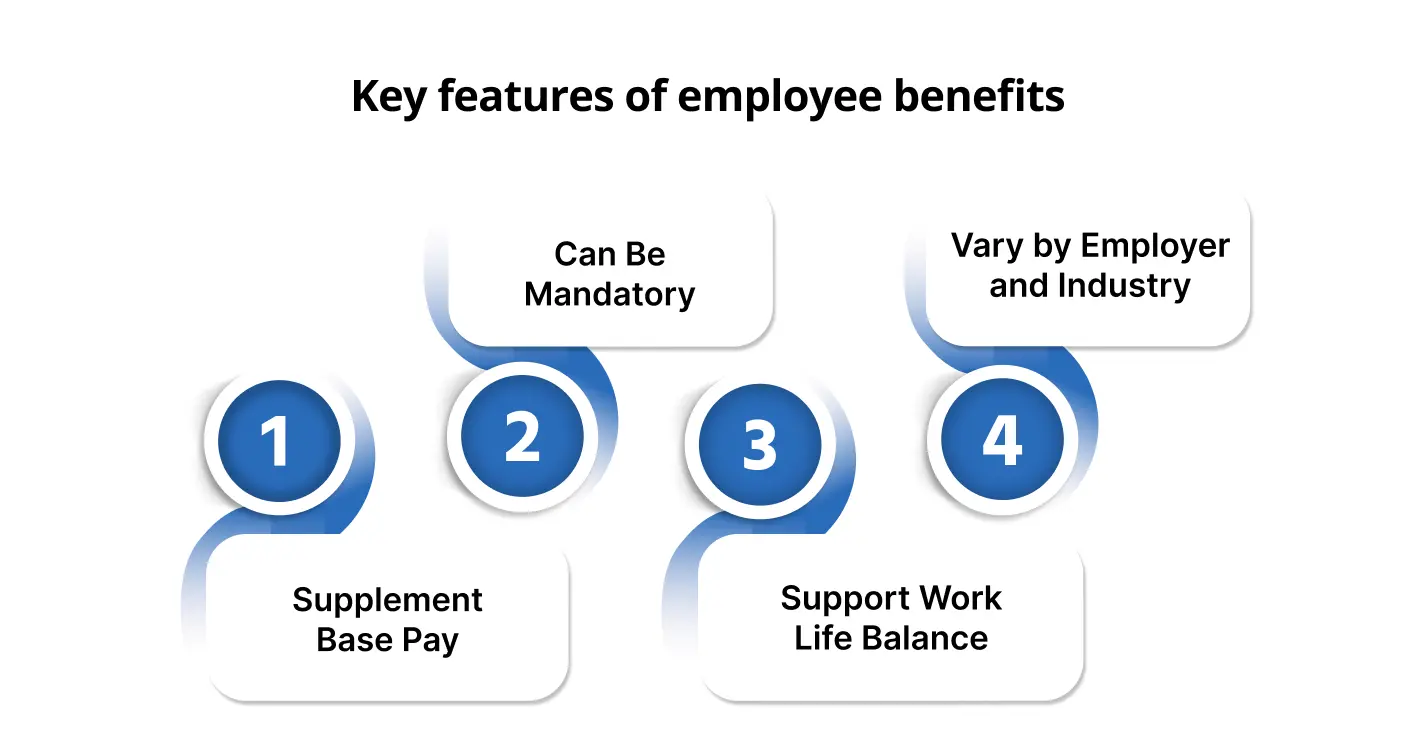
Here are the key features of employee benefits:
While understanding what benefits are is a helpful first step, it is equally important to understand why they hold so much weight for both employers and employees. Let us now explore why employee benefits matter.
Suggested Read: Pay Transparency: Understanding Salaries in the Workplace
Employee benefits have a direct impact on employee satisfaction, retention, productivity, and even a company’s reputation. For employers, offering the right mix of benefits is not just a perk; it is a strategic investment in workforce stability and long-term growth.
Here is why they matter:
Now that we understand the importance of employee benefits, it is useful to break them down into broad categories. Let us examine these benefits in the next section.
Suggested Podcast: Explore expert insights from David Thompson, Senior Consultant at HR Integrations, in our latest podcast episode. CompUp can make Total Rewards communication clearer and more impactful for employees.
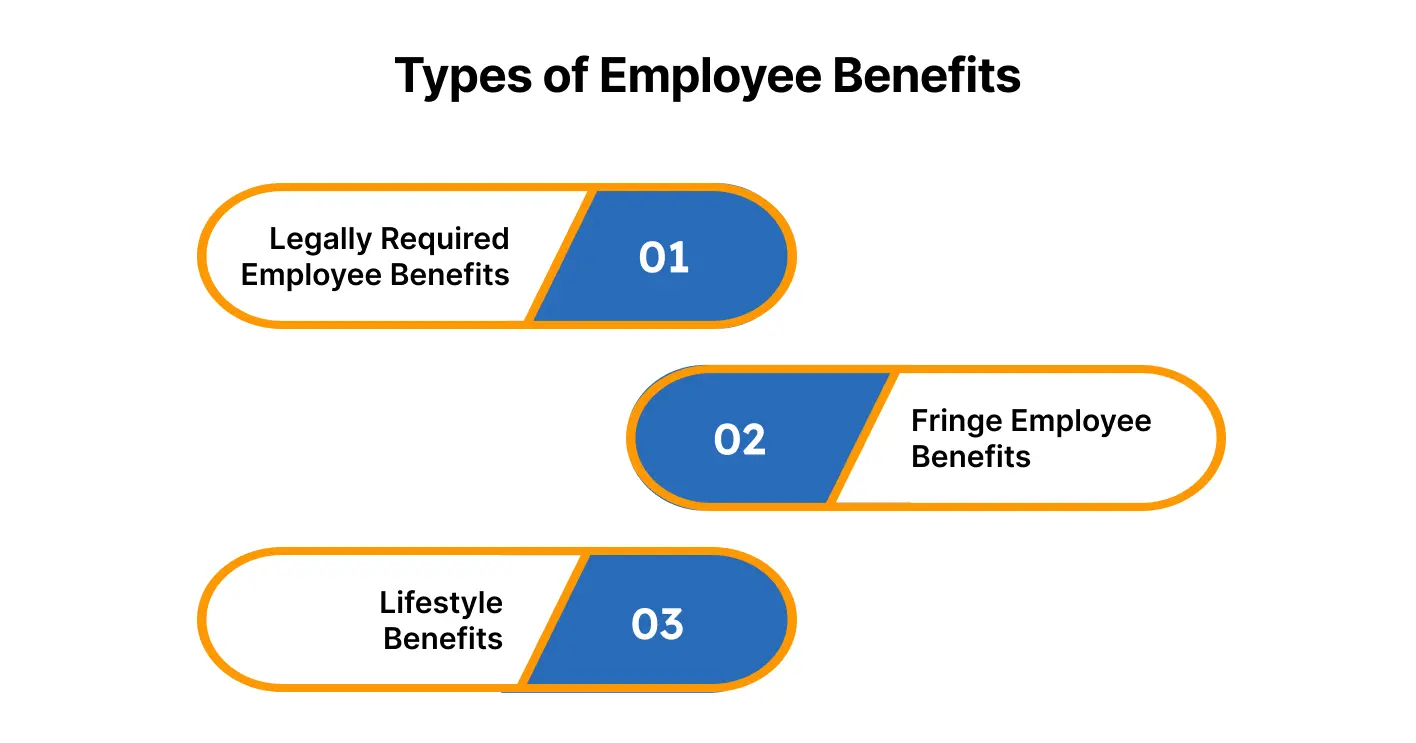
Employee benefits typically fall into three main categories: legally required benefits, fringe (voluntary) benefits, and lifestyle benefits. Legally mandated benefits ensure compliance and provide essential protections. Fringe and lifestyle perks go beyond compliance, helping employers boost morale, support diverse employee needs, and strengthen retention.
These are the core benefits that U.S. employers must provide, depending on company size and structure. Failure to comply with these requirements can result in penalties and legal action.
Fringe benefits are additional perks employers may offer voluntarily to enhance employee well-being and satisfaction. These are explained in greater detail in the next section.
Fringe benefits are not mandated by law but can be powerful tools for recruitment, engagement, and retention. They allow companies to express their culture and values while meeting employees’ diverse needs. These are a few of the more popular fringe benefits in workplaces today:
While fringe benefits cover popular perks like health insurance, retirement plans, and wellness programs, many organizations are now going a step further.
Lifestyle benefits build on this foundation, offering personalized support that aligns with employee expectations and modern work-life needs.
Lifestyle benefits are designed to support employees’ personal and professional lives beyond traditional perks, reflecting modern workforce expectations and well-being priorities. These benefits often enhance flexibility, convenience, and overall quality of life.
Offering the right mix of legal, fringe, and lifestyle benefits starts with a thoughtful and compliant setup. In the next section, we will walk you through the process of designing and implementing an employee benefits program from the ground up.
Suggested Read: Understanding Pay Transparency Laws in Different States - 2025 Guide
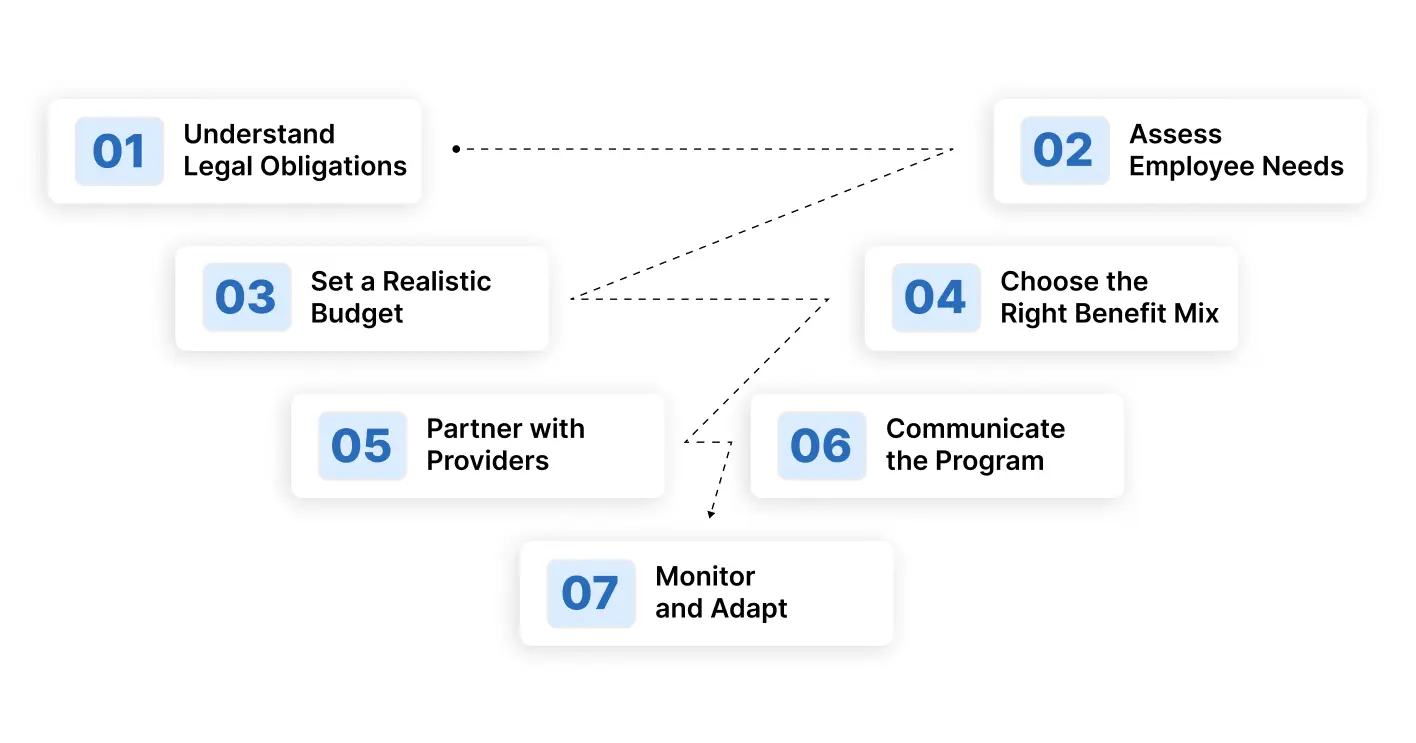
Designing an employee benefits program is about building a package that attracts talent, promotes well-being, and retains your workforce.
At a minimum, employers should offer essential benefits such as Social Security, Medicare, unemployment insurance, and workers’ compensation (as legally required). You should also offer other widely expected benefits, such as health insurance, paid time off, and retirement plans.
When structured thoughtfully, your benefits program can reflect your values and meet the evolving needs of employees. Here is how to set up a strong and compliant employee benefits program step by step:
Before building your benefits program, review federal and state laws to determine the minimum requirements you must offer. This includes Social Security contributions, Medicare, unemployment insurance, and workers’ compensation. If your business meets certain thresholds, you may also be subject to ACA requirements and COBRA continuation coverage.
Conduct surveys or hold focus groups to understand what your employees value most. Consider demographic factors, family situations, and work environments. Tailoring your program based on real data will help you invest in the benefits that matter.
Balance generosity with sustainability. Estimate the total cost of offering benefits and explore options such as cost-sharing, tax-advantaged plans, or tiered benefits. Your goal should be to maximize impact without overextending resources.
Select a combination of required and fringe benefits. For example:
Make sure offerings align with your company’s goals and employee expectations.
Vet vendors and service providers for health plans, retirement accounts, or wellness offerings. Look for partners that offer user-friendly platforms, transparent pricing, and strong customer service.
Once your benefits are in place, ensure employees understand what is offered and how to access it. Use onboarding sessions, benefits guides, and regular check-ins to keep the information fresh and accessible.
Regularly review your program’s effectiveness. Track enrollment, usage, and feedback, and be willing to make changes based on workforce shifts, budget changes, or emerging trends.
Setting up your program is just the beginning. Employee benefits are undergoing rapid change. Let us explore what is changing and what you should be watching for in the next section.
As the workforce becomes more diverse and employee expectations continue to grow, traditional benefits are no longer enough. Companies are adopting new benefits like pet insurance, fertility support, and remote work options to meet changing employee needs.
Here are some of the most significant trends shaping employee benefits today:
These trends indicate a broader shift toward more holistic, employee-centered benefits strategies. But staying on top of trends is not enough—effective management is what turns benefits into real value. Let us now look at the best practices for employee benefits management.
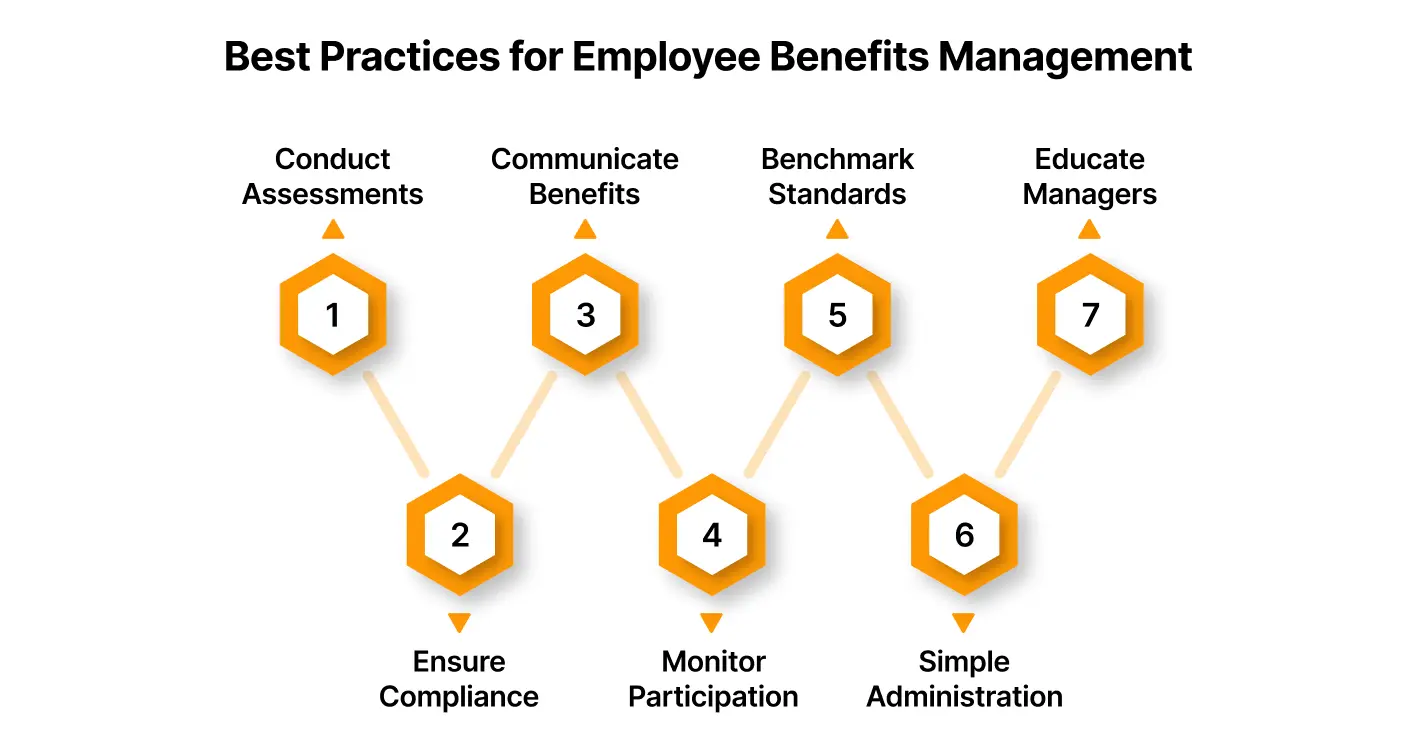
Designing an excellent employee benefits program is only half the challenge. Managing it effectively is what determines long-term success. Here are some proven best practices to guide benefits management:
A well-managed benefits program strengthens the overall HR strategy. However, managing all these moving parts can be complex without the right infrastructure in place.
Let us now explore tools and platforms that simplify and optimize employee benefits management.
Suggested Read: Understanding Enterprise Compensation Management
Managing employee benefits manually can lead to errors, inefficiencies, and a suboptimal employee experience. These platforms do more than reduce paperwork. They centralize complex processes and allow for better decision-making across the board.
Here are the key types of tools employers use to manage employee benefits effectively:
With a growing number of platforms available, choosing the right tool depends on your organization's size, goals, and existing infrastructure.
For employers looking to connect compensation, benefits, and performance strategies under one umbrella, platforms like CompUp offer an integrated approach. Let us look at how CompUp can support your employee benefits strategy.
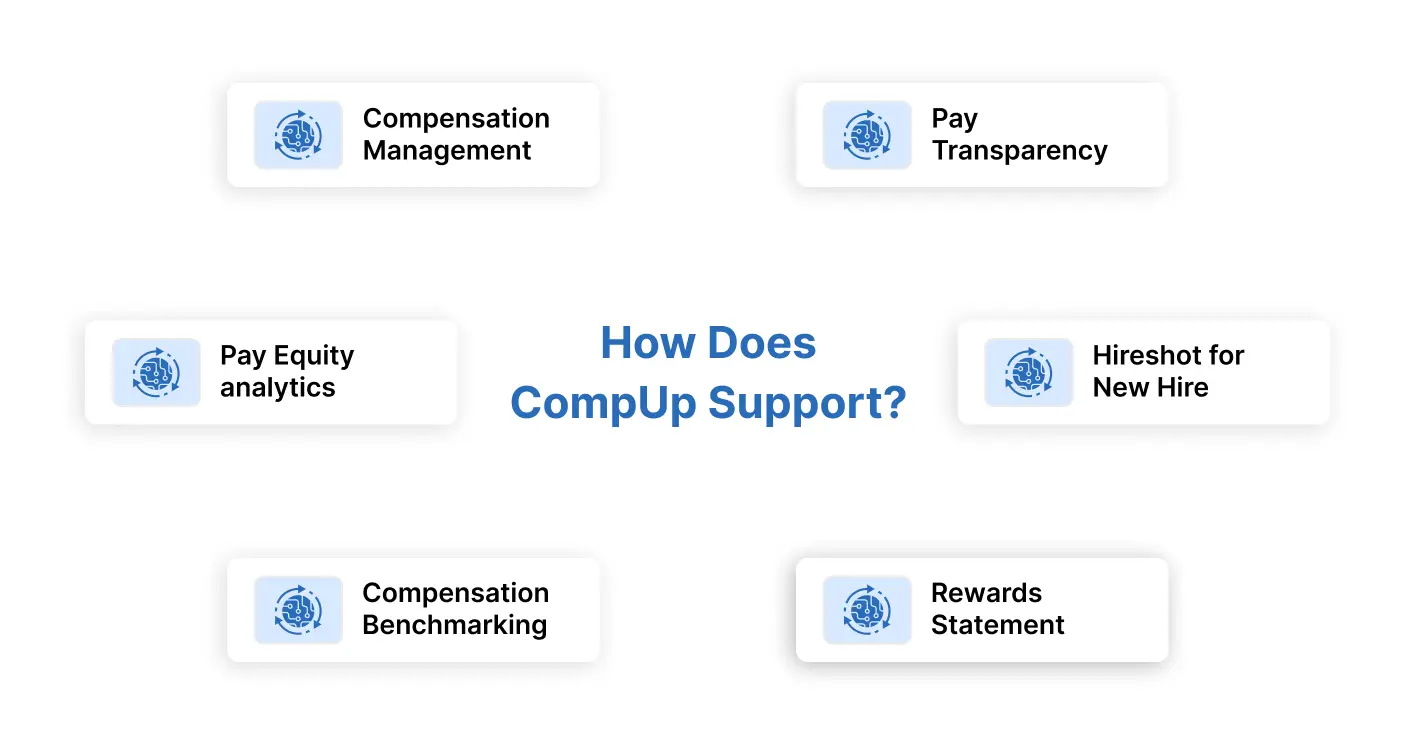
Crafting an employee benefits strategy requires clarity, consistency, and alignment with your overall compensation approach. CompUp's integrated platform enhances each of these areas by enabling data-driven decisions, promoting transparency, and improving communication across the compensation lifecycle.
A strong benefits offering is only effective when it is aligned with fair and equitable pay structures. CompUp’s Compensation Management system helps employers define and manage increments, promotions, and adjustments holistically. This alignment ensures benefits are not offered in isolation but as part of a balanced total rewards strategy.
Benefits are often underutilized when employees are unsure of their full value. CompUp’s Pay Transparency tools help employers clearly communicate how benefits fit within the larger pay philosophy, building trust and improving perceived value.
Benefits should be distributed fairly across all employee demographics. CompUp’s Pay Equity feature helps identify gaps not just in base pay but in access to rewards and benefits as well, promoting a culture of inclusion.
Offering competitive benefits starts at the offer stage. Hireshot ensures new hires receive not just a compelling salary but a clear picture of their full benefits package, helping reduce offer dropouts and supporting long-term retention.
CompUp’s benchmarking tools allow HR leaders to compare base pay and benefit norms across industries and regions. This ensures your packages remain competitive and relevant.
A unified, personalized view of compensation is essential for reinforcing the value of benefits. With CompUp’s Rewards Statement, employees can easily understand what they are offered, whether in the form of salary, bonus, or fringe benefits.
CompUp supports your employee benefits program by aligning benefits with compensation strategies, personalizing communication, and benchmarking against competitors. Whether you are redesigning your approach or building from the ground up, CompUp gives HR leaders the clarity and control necessary to succeed.
A thoughtfully designed employee benefits program demonstrates your organization's commitment to employee well-being, fairness, and long-term retention. In an increasingly competitive talent market, benefits can be the deciding factor in attracting and keeping top performers.
CompUp supports this strategic approach by offering services that directly strengthen your benefits strategy. Features like Pay Transparency, Rewards Statement, and Hireshot ensure employees understand and appreciate the full value of their compensation packages. Tools like Compensation Management and Pay Equity ensure benefits are distributed fairly and communicated clearly across the organization.
Schedule a free demo today to learn how CompUp can help you create fair, transparent, and impactful rewards programs.
1. What are the three R's of employee benefits?
The three R's of employee benefits are Recruitment, Retention, and Reward. Employee benefits help attract top talent, reduce turnover, and recognize employee contributions by offering meaningful perks.
2. What is included in a benefit guide?
A benefit guide outlines available plans, eligibility criteria, enrollment timelines, coverage details, and contact information to help employees make informed choices.
3. What is the standard employee benefits package?
Typically includes health insurance, retirement plans (like 401(k)), paid time off, and life or disability coverage, forming the foundation of most employer-sponsored benefit programs.
4. When do employees select their benefits?
Employees usually choose benefits during an annual open enrollment period, or when experiencing a qualifying life event like marriage or childbirth.
5. What are the top three most sought-after employee benefits?
Health insurance, flexible work arrangements, and paid time off consistently rank as the most valued benefits among employees across industries.
Customer Success Manager - Team Lead
Led by a vision to transform the landscape of total rewards with an innovative mindset and technological advancements.
Revolutionizing Pay Strategies: Don't Miss Our Latest Blogs on Compensation Benchmarking