
In 2003, a single misaligned row during a sort-and-paste inside a spreadsheet cost TransAlta a US$24 million pre-tax charge. That was a capital project bid. Inside compensation workbooks, the mechanics are identical, and the stakes hit closer to home: a broken formula can push an incorrect bonus straight into payroll, discovered only after funds have cleared an employee's bank account.
These are not hypothetical risks. Cell error rates in real operational spreadsheets range from 0.4% to 6.9%, and more recent audits using proper cell-by-cell code inspection found errors in at least 86% of spreadsheets examined. When those cells carry compensation decisions, the damage multiplies. A single error in base salary compounds through every merit cycle, bonus target, and promotion after it.
Compensation leaders are caught between two forces. The Board expects a clean, defensible allocation against audit-ready budgets. The cycle runs against a fixed calendar with no room for rework. This article maps a dual-track response: specific controls you can build directly into Excel or Google Sheets today, and the architectural fix a specialized compensation platform provides when you conclude that spreadsheets have become the risk itself.
The annual compensation cycle carries material financial and audit risk when managed through ungoverned spreadsheets. Here are the core findings that equip you to act immediately.
For organizations under about 500 employees in a single entity with straightforward eligibility rules and shallow approval routing, a tightly controlled spreadsheet remains a perfectly workable system of record. The switch to a platform pays for itself the moment you cross into multi-layered manager populations, matrix approvals, or a regulatory environment where 16 US states plus DC mandate range disclosure, and California now allows six years to bring a willful pay scale claim.
Stay with spreadsheets when one compensation team controls the master workbook, the manager population is limited, eligibility rules are straightforward, and employee changes during the planning window are rare.
Switch to a platform when version conflicts consume your timeline, spreadsheet errors have already reached payroll, audit examiners are questioning your controls, or the cycle has grown beyond what another qualified team member could reproduce from scratch.
The hidden costs of spreadsheet-driven cycles accrue in rework hours, audit deficiencies, and trust erosion. One unrecovered payroll error can exceed the annual license of a purpose-built compensation tool.
Software only improves control when the compensation team has already defined the employee source of truth, eligibility rules, budgets, approval ownership, and exception policy. A well-run spreadsheet can be safer than poorly configured software.
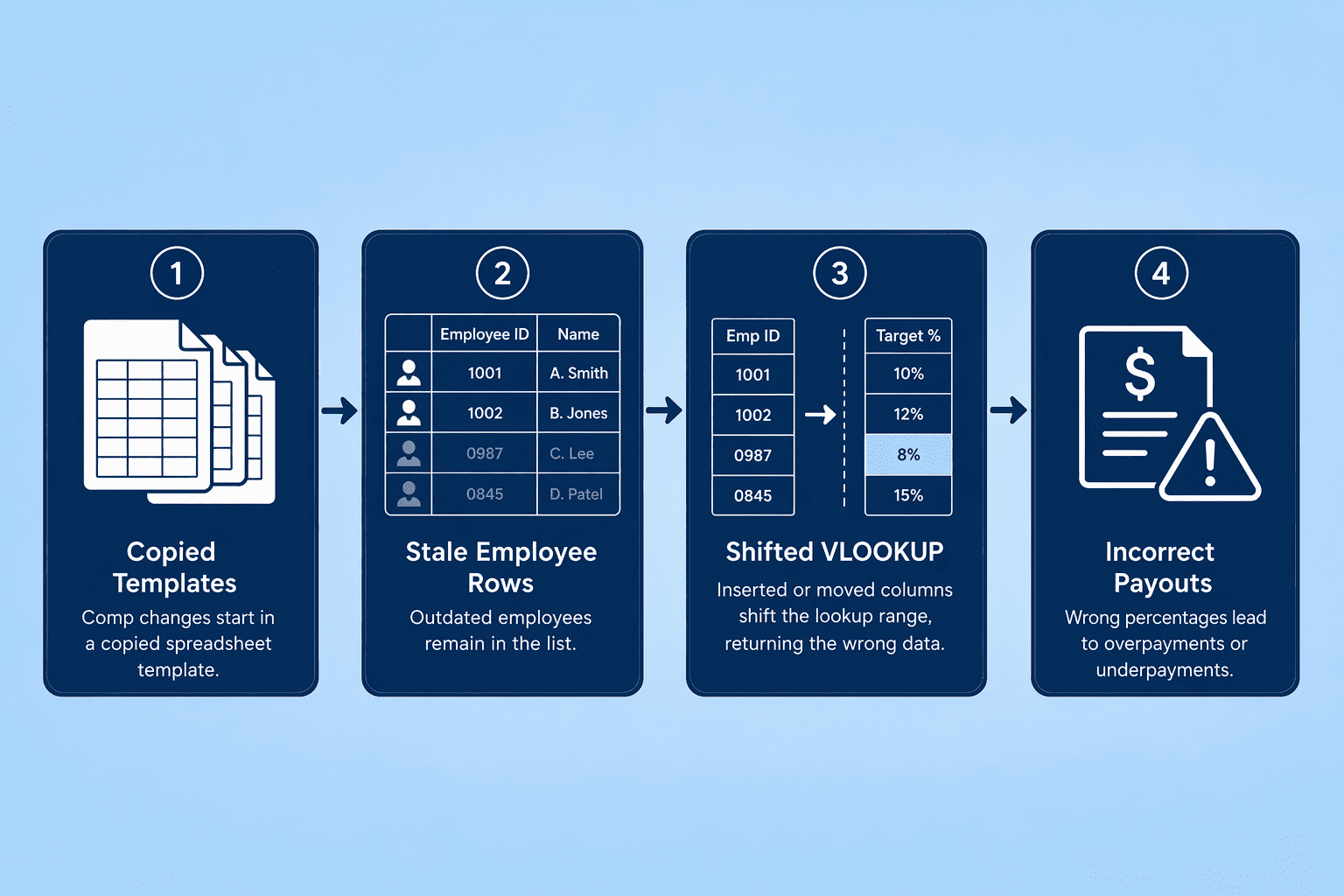
Spreadsheet errors in compensation reviews are usually workflow errors, not arithmetic mistakes. The SUM formula rarely stops working. What breaks is the process around the workbook: a manager copies a template and pastes values outside the protected range, a stale employee list carries terminated staff into the bonus pool, or the finance team merges five regional files and a VLOOKUP shifts by one row. The result is an incorrect bonus payment or salary adjustment that slips through to payroll, often discovered only after funds have landed in the wrong account.
The financial damage cascades in layers. There is the immediate cash cost of recovering an overpayment or making a corrective payment, which in a mid-market firm can cross six figures in a single cycle. Then there is the organizational cost. A compensation error sits in the base salary and compounds through every merit cycle, bonus target and promotion after it. Third is the reputational hit: employees who receive a clawback demand lose trust in the company's competence with their pay, and that distrust outlasts any spreadsheet patch.
Timeline pressure amplifies every mistake. The rework from untangling multiple spreadsheet versions and redoing budget rollups typically lengthens the review by days at the point when the Board is already waiting. Under [2026 US audit and internal control expectations], examiners now scrutinize access controls, change logs, and reconciliation procedures as part of the standard compensation audit. What was once an internal HR headache is now a documented control deficiency.
If you must run the current cycle on spreadsheets, lock your master workbook down before a single manager touches it. Start with formula-locked sheets and sheet protection: every cell carrying budget logic, allocation rates, or rounding rules gets locked, and only the compensation team holds the unlock password.
Next, layer on data validation. Build drop-down lists on manager-facing columns so only approved increase percentages or salary ranges can be entered. Add a cross-sheet reconciliation tab that compares manager submissions against the master headcount and budget totals, flagging any variance greater than your pre-set rounding tolerance. Execute a pre-set rounding rule so no individual adjustment creates a hidden decimal tail that accumulates across the employee population.
The caveat is real. Determined managers can still find ways to break locked structures, especially if your distributed workforce opens files on personal devices with corporate protections stripped away. A compensation planning spreadsheet can be a sensible operating model when the cycle is small enough to keep one authoritative version and simple enough for another qualified team member to reproduce. The controls work, but only when the governing team stays vigilant.
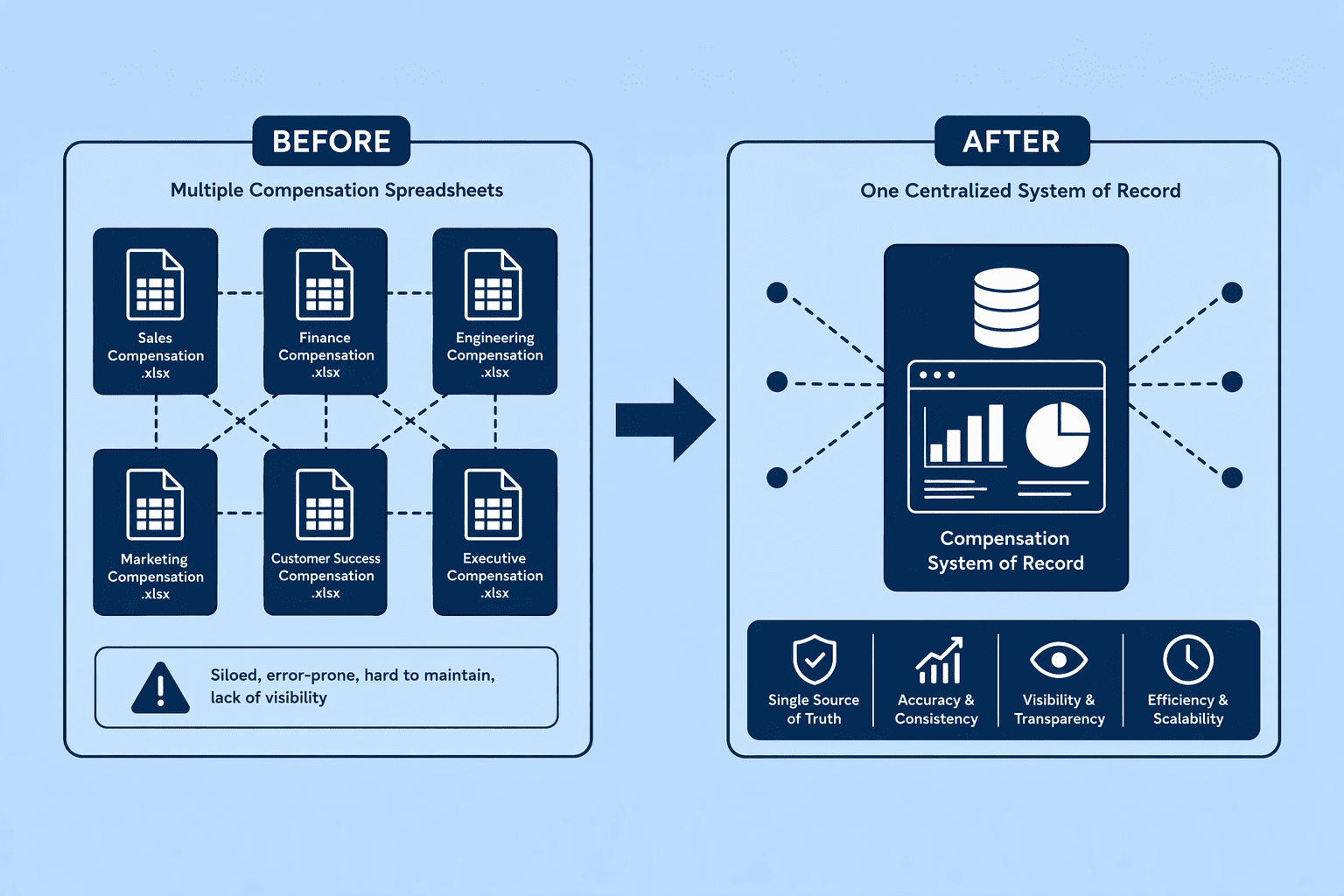
Dedicated compensation planning software can remove error paths such as version errors, stale employee populations, formula drift, access mistakes, budget lag, and approvals separated from the final number. The mechanism is architectural, not procedural. When you move compensation data into a dedicated platform, you collapse dozens of distributed workbooks into a single system of record where the employee list, eligibility rules, budgets, and approval chains all reference the same live dataset. No manager can operate from a stale copy because there is no copy at all.
The most important fix is not an arithmetic guardrail. It is centralized version control. A platform locks configuration out of manager reach, eliminating the two most dangerous vectors in any spreadsheet cycle: formula copying between workbook versions, and rogue re-engineering by a well-meaning manager who knows just enough Excel to break something. Employment Hero's Compensation Manager, for instance, allows bulk template uploads, custom column imports, and defined budget rules while keeping every stakeholder on the same cycle, removing the offline spreadsheet merging that consumes hours of reconciliation.
Automated budget rollups close another gap. Instead of a finance team member manually summing manager sheets to check whether the total allocation matches the approved budget, the platform does it in real time. As you work, the budget burns down against a live number. The platform also separates the approval step from the final number, so a manager's recommendation cannot reach payroll without passing through the configured approval chain.
The shift is from a reactive cycle of fixing broken formulas after they fire, to a proactive environment where many common error types simply cannot occur.
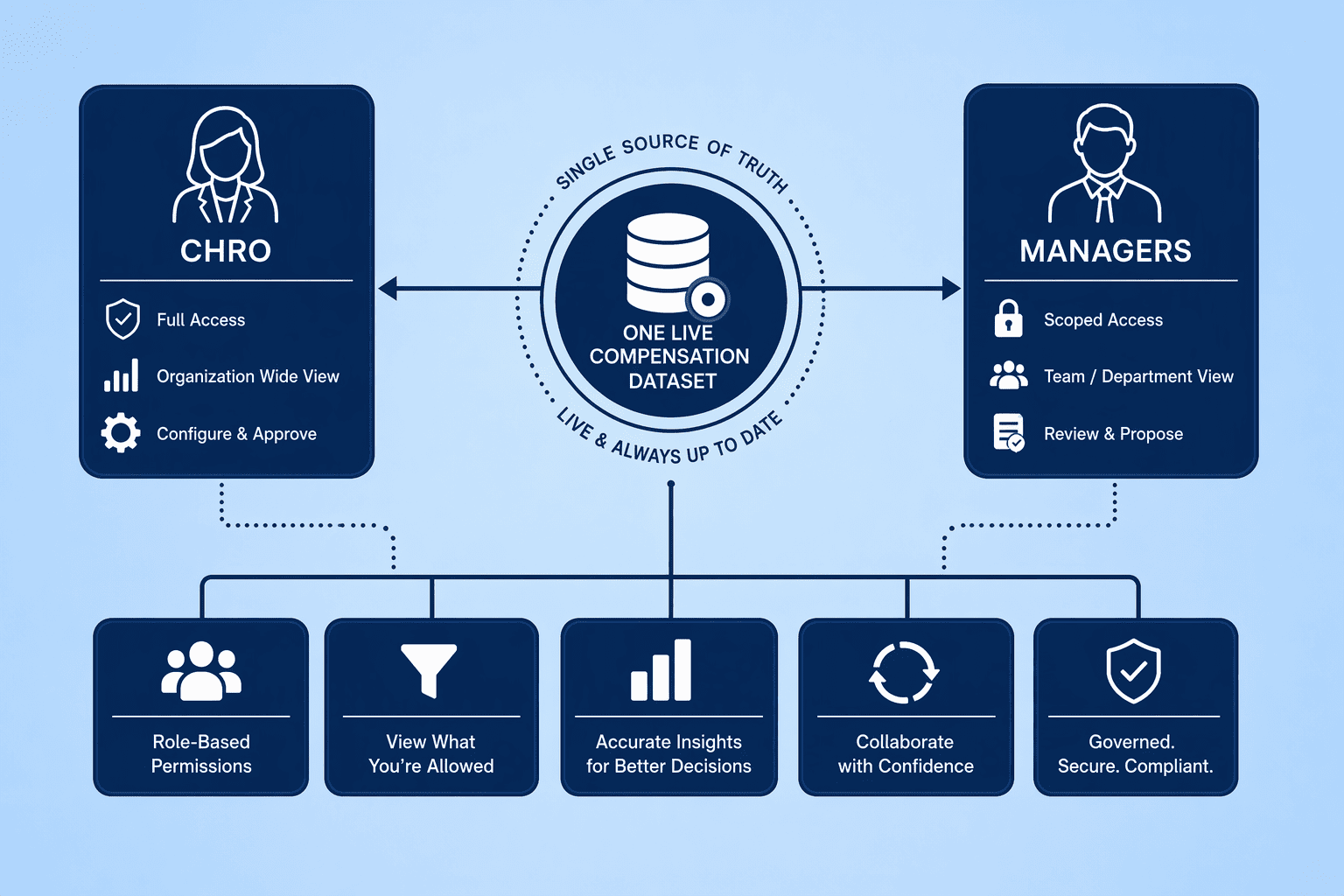
CompUp runs on a unified platform architecture that enforces a single source of truth across the compensation cycle. Every stakeholder, from the CHRO setting top-level budget guidance to a line manager entering increase recommendations, works from the same live dataset within permission-driven roles. There are no offline spreadsheets to merge, no version conflicts to arbitrate, and no mystery columns added by a regional lead who tweaked the template. The platform locks configuration changes behind compensation-team permissions, so a manager can adjust only the cells you expose.
The architectural advantage is most visible during the pre-approval window. Because all recommendation data lives in one system, You can run reconciliation checks, audit budget totals against allocation, and export a clean trail for the Board without waiting for anyone to return a file. When the company decides to go to market, CompUp starts at $3 per employee per year, operates in 80+ currencies, and generates personalized Total Rewards Statements automatically at the close of the appraisal cycle.
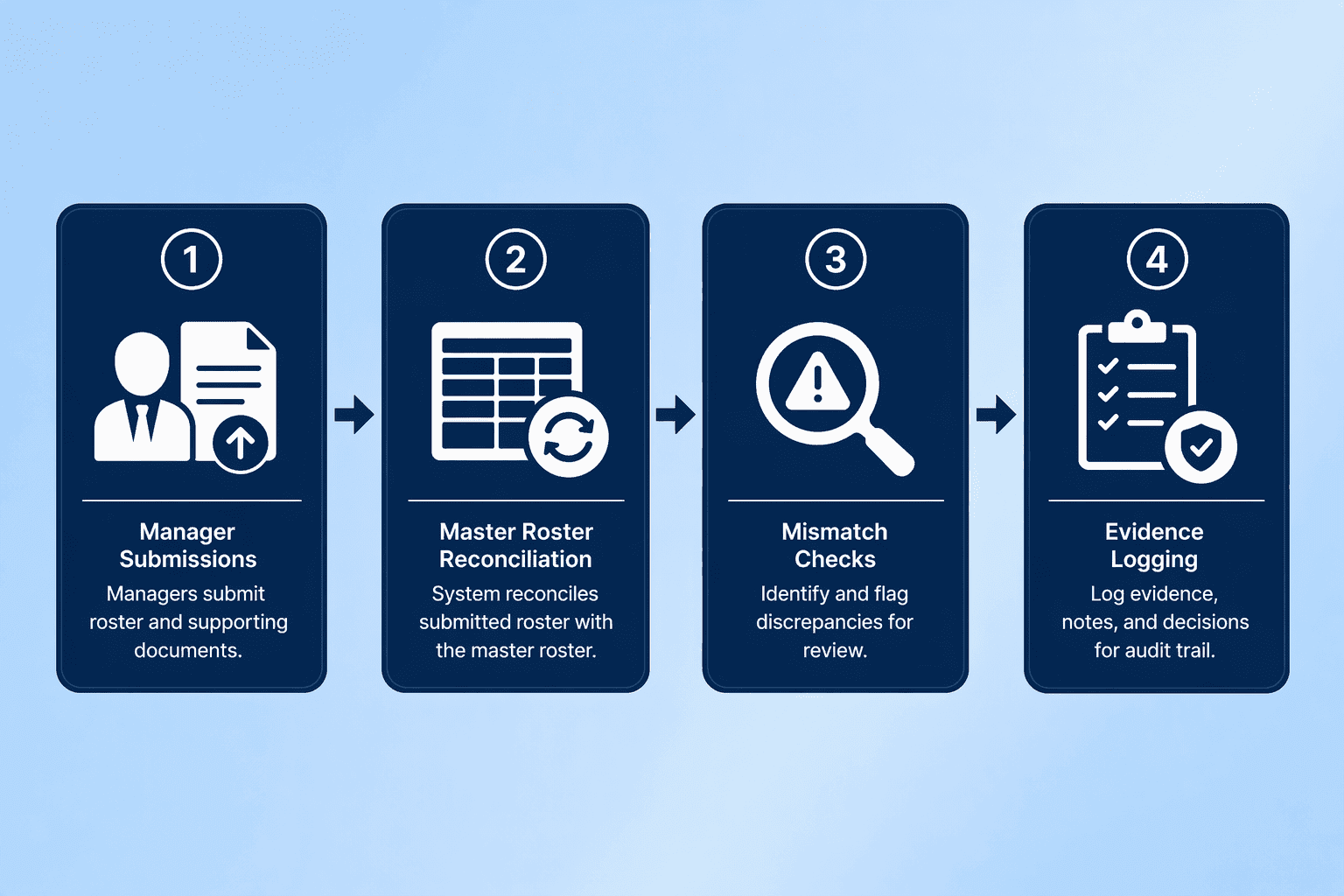
If spreadsheets remain your system of record for the current cycle, a formal pre-approval audit is not optional. It is your last line of defense before numbers reach payroll. Execute these steps in sequence, and document every action as evidence for the 2026 audit trail.
Not every compensation platform eliminates spreadsheet errors. Some just move the mess into a database and hand you an IT bottleneck instead. The table below flags the difference between a feature that actually prevents mistakes and one that looks fine in a demo but breaks under real comp-cycle pressure.
| Feature | What to Look For | What to Avoid |
|---|---|---|
| Centralized version control | All stakeholders operate on one live dataset; no offline copies exist | Platforms that allow exported spreadsheet editing outside the system with re-import |
| User permission locks | Role-based access that prevents managers from changing budgets, formulas, or eligibility rules | Rigid role structures that require an IT ticket for every configuration change mid-cycle |
| Automated budget rollups | Budget burns down in real time as recommendations are entered; formula drift is impossible | Batch-calculated rollups that introduce a lag between manager input and budget reality |
| Live configuration changes | Compensation team can adjust guidelines, eligibility, and approval chains without developer support | Platforms where every mid-cycle adjustment requires a backend script or vendor intervention |
Before migrating, run a pilot. Reconcile eligibility, budgets, permissions, approvals, exceptions, and final outputs against the controlled spreadsheet before the live cycle depends on the new system. The platform is only safer if the outputs match.
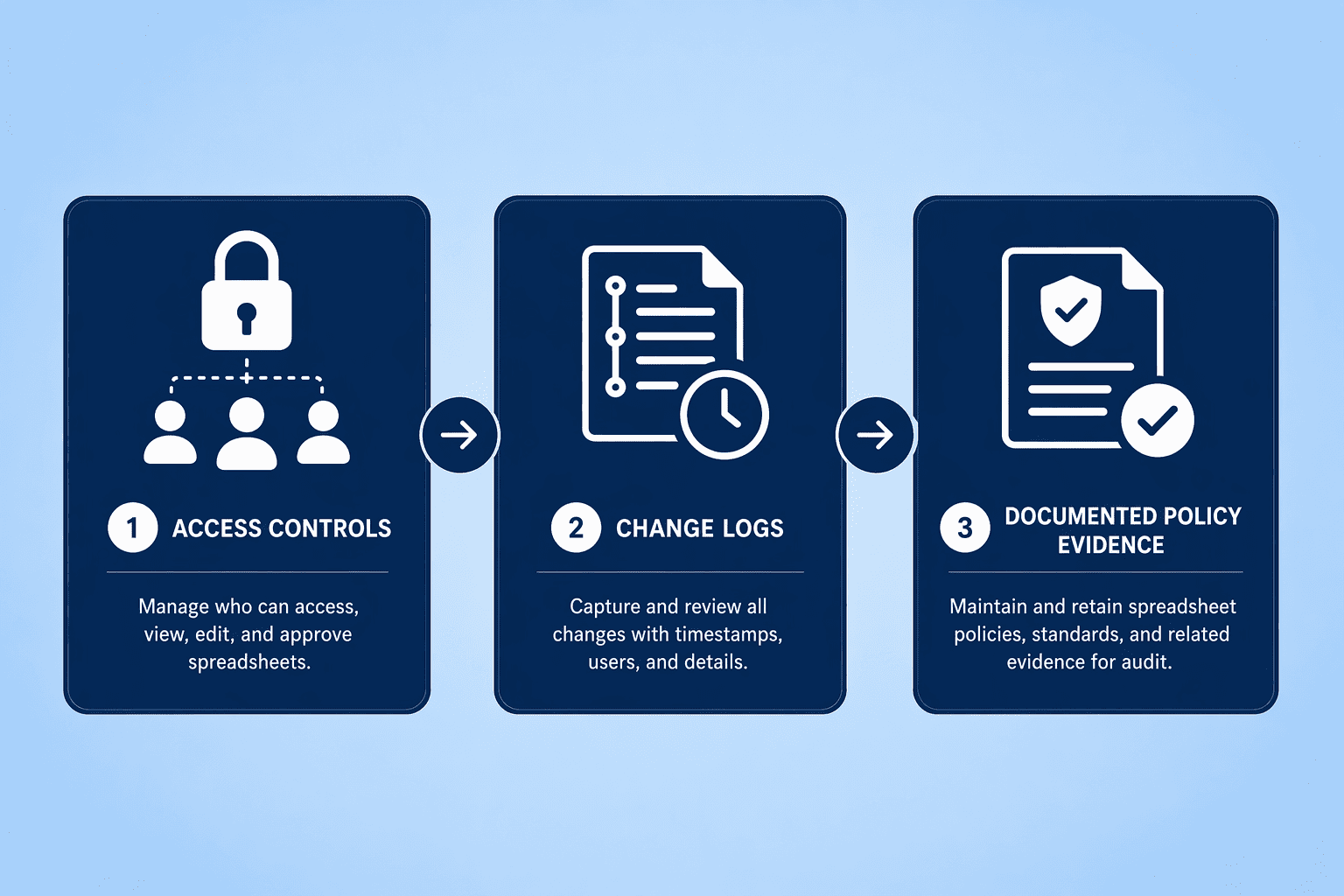
The 2026 US audit landscape has materially hardened around spreadsheet-driven compensation processes. Examiners now treat the absence of a formal spreadsheet governance policy as a material control deficiency. That policy must be documented, tested, and evidenced with a clear audit trail. Specifically, firms should expect scrutiny on three fronts: access controls that prove only authorized personnel could alter compensation data, change logs that capture every modification with timestamp and user identity, and reconciliation procedures that tie manager recommendations back to approved budgets and validated source data. The old practice of emailing spreadsheet attachments between stakeholders and hoping the final export is clean does not meet the new standard.
Firms that lack version locking and a documented pre-approval audit trail are increasingly viewed as carrying material control deficiencies in their compensation processes. The fix is procedural before it is technical: write the policy, enforce the controls, and produce the evidence.
Ungoverned spreadsheets in your compensation cycle now carry financial and compliance consequences that you can't ignore. The fix depends on when your cycle happens. Audit discipline and locked-down workbooks can secure a cycle already in motion. A unified platform like CompUp removes the root causes entirely.
If numbers are already moving toward payroll, run the pre-approval audit checklist before another dollar lands in someone's account. If you have a planning window before the next cycle, start evaluating error-proofing features that match your complexity and audit requirements. A good next step is seeing how CompUp puts this into practice.
Most compensation spreadsheet failures are workflow errors, not arithmetic mistakes. The dominant risk factors include:
To lock down a compensation spreadsheet effectively:
A platform centralizes all data into a single system of record, eliminating distributed workbooks that create version conflicts. The key advantages include:
To audit a spreadsheet-driven compensation cycle:
Seek centralized version control so all stakeholders share one live dataset. Require user permission locks that prevent configuration changes outside the compensation team. Look for real-time automated budget rollups. Insist on live configuration changes that do not need IT support. Pilot the platform and reconcile every output against the controlled spreadsheet before committing.
Under 2026 US audit expectations, examiners treat the absence of a formal spreadsheet governance policy as a material control deficiency. Companies must document access controls, change logs with timestamps and user identity, and formal reconciliation procedures. Version locking, input validation rules, and a documented pre-approval audit trail are now expected evidence.
Community Manager (Marketing)
As a Community Manager, I’m passionate about fostering collaboration and knowledge sharing among professionals in compensation management and total rewards. I develop engaging content that simplifies complex topics, empowering others to excel and aim to drive collective growth through insight and connection.
Revolutionizing Pay Strategies: Don't Miss Our Latest Blogs on Compensation Benchmarking