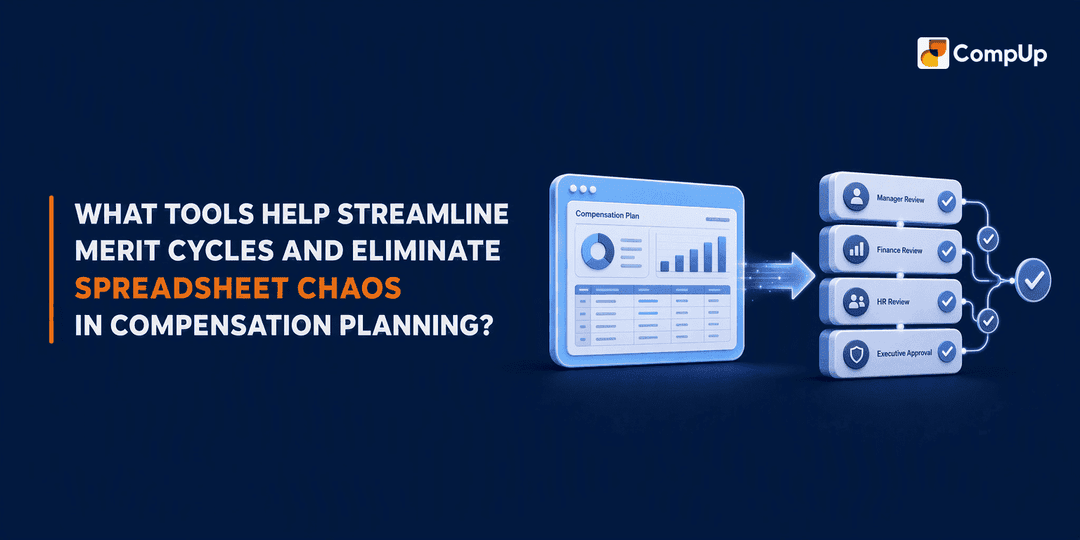

Your compensation lead sends an email at 11:47 p.m. with a spreadsheet titled `CompCycleFINALv9TuesdayFIXED.xlsx`. By morning, three managers have broken the formulas, one employee's bonus pool has been double-counted, and the audit trail is a folder of screenshots.
This is not a clerical nuisance. It is a structural risk. When compensation planning lives inside fragmented, offline files, budget leakage is built into the design and employee trust erodes before anyone delivers a single award letter.
Roughly 47% of organizations still run incentive compensation on spreadsheets, according to Business Research Insights (2026). Spreadsheets were never built to govern the allocation rules, approval hierarchies, and compliance requirements of a modern merit cycle.
This article maps the exit route. It defines the category of purpose-built compensation platforms, exposes the hidden costs of spreadsheet dependency, and walks through the features, workflow, and current tools that turn a chaotic annual scramble into a controlled, defensible process. The goal is to finish ahead of the calendar for the first time in recent memory.
The core answers sit in one place before the deeper analysis begins.
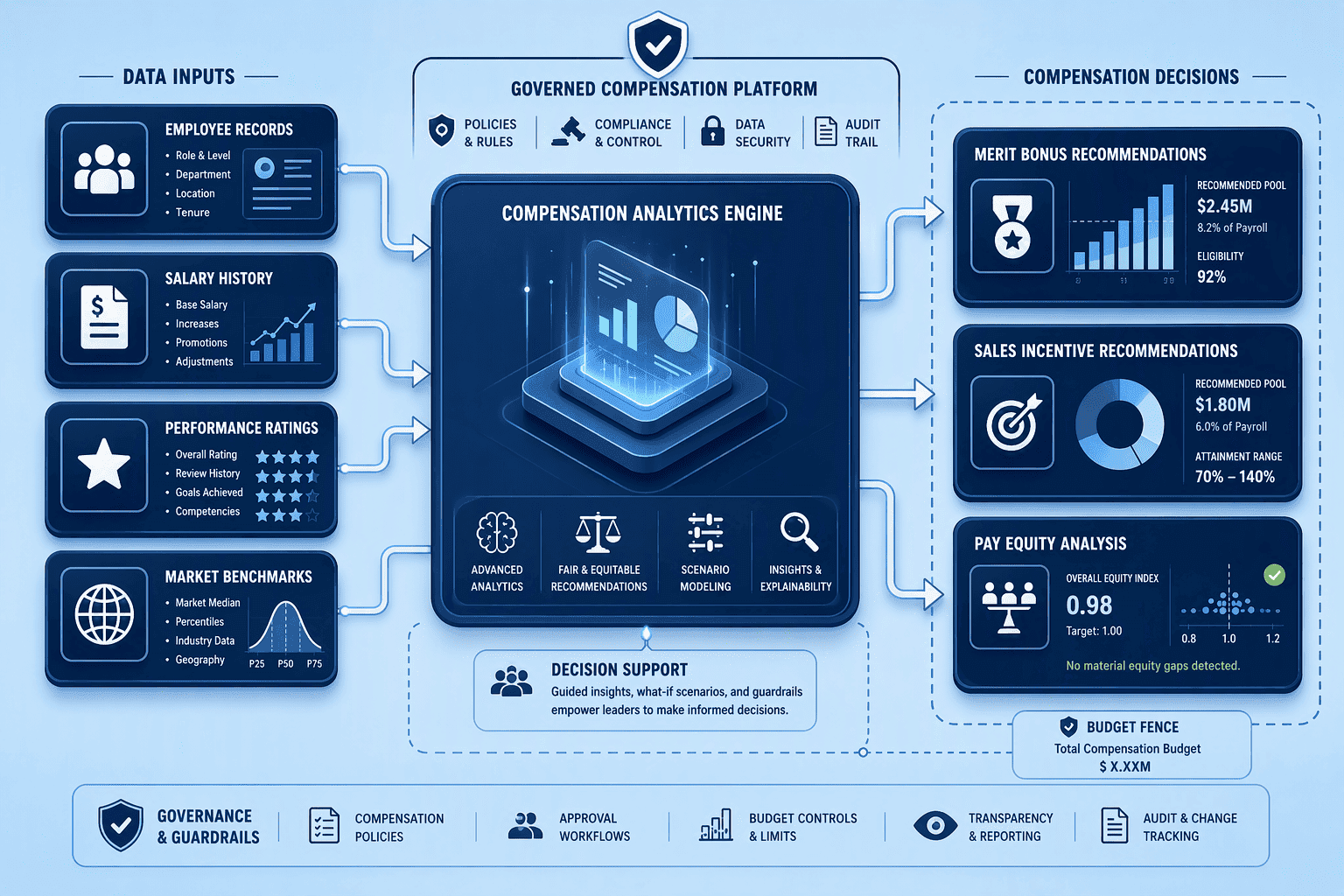
A dedicated compensation platform restructures the work entirely. It is not a spreadsheet that lives in the cloud. The core properties separate it sharply from general-purpose tools and HRIS add-on modules.
It pulls employee records, salary history, performance ratings, and market benchmarks into one governed system. The analytics engine builds dashboards for merit bonuses, sales incentives, and pay equity with real-time predictive insights.
Managers make decisions within hard budget fences. A platform like HRSoft COMPview locks allocation rules directly into the workflow so a line manager cannot approve a 14% increase when the budget pool allows only 8%.
Tools such as Aeqium support merit cycles, bonus planning, and equity reviews simultaneously. This replaces the tangled sheet-per-cycle file architecture with a single, version-controlled environment.
At cycle close, the system generates personalized statements automatically. This is the final mile that spreadsheets never run: delivering the decision to the employee with clarity and compliance documentation attached.
Roughly 47% of organizations still run incentive compensation on spreadsheets represents a staggering operational liability at enterprise scale. Every manual cell in a comp worksheet is a potential integrity failure that compounds across thousands of employees.
Version control breaks first. When a merit recommender completes a Compensation Planning Worksheet for an eligible employee and circulates it through email, the organization quickly accumulates four conflicting versions labeled 'final,' each with different manager overrides. The Check column in a well-designed planning worksheet displays color-coded warnings: green indicates the employee is OK and current entries are valid, yellow indicates a warning, and red flags a hard stop error that blocks submission. Spreadsheet-based cycles have no equivalent real-time guardrail; errors are discovered weeks later inside payroll.
The compliance gap is existential. Without a structured audit trail, an organization defending a pay equity claim cannot demonstrate who approved an adjustment, when, or under which budget rule. A platform like Aeqium directly addresses this by replacing error-prone spreadsheets with a secure, centralized system, making the decision history transparent and legally defensible. What looks like a free tool today becomes a multi-department reconciliation exercise and a compliance blind spot tomorrow.
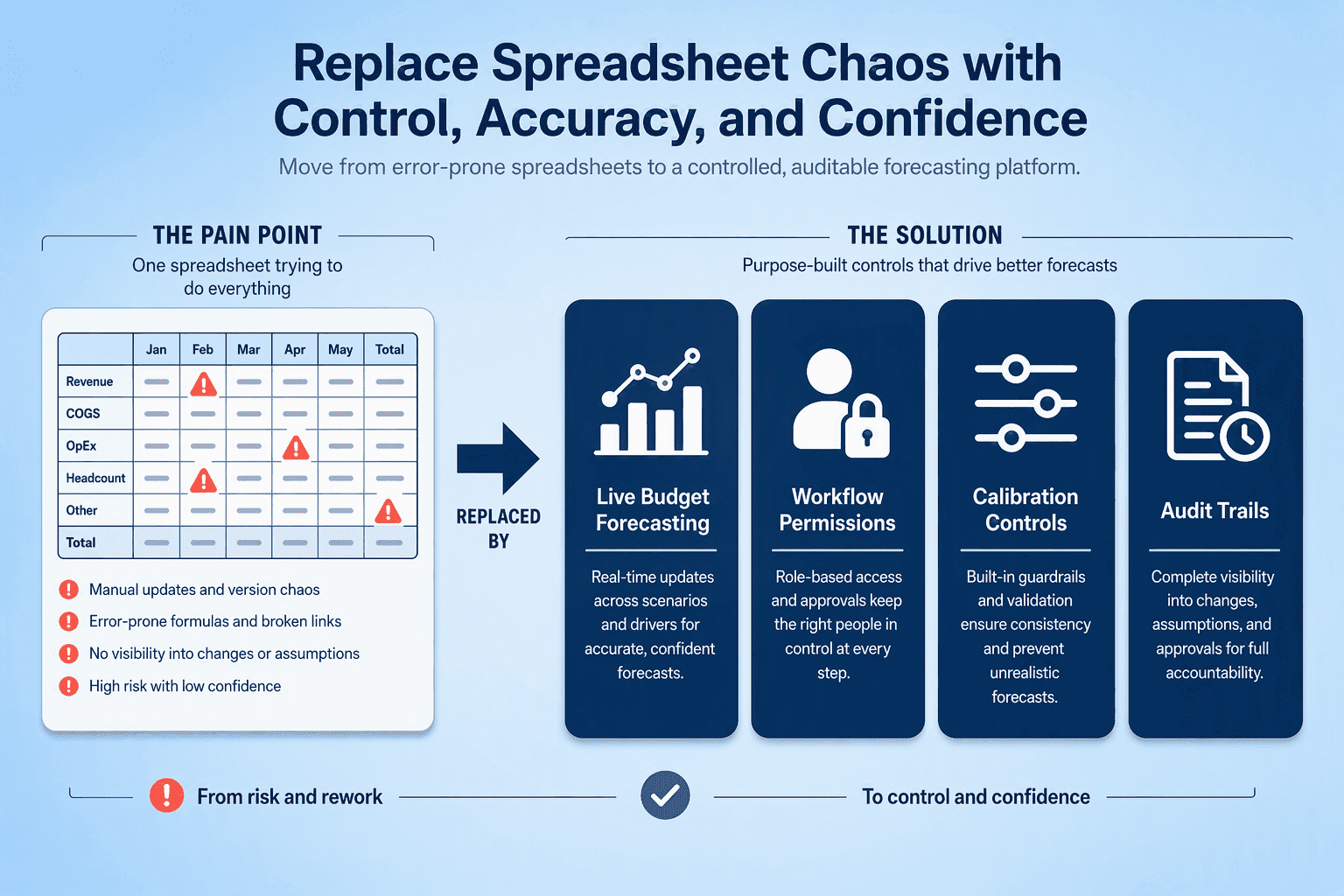
The features that matter aren't theoretical modules on a sales sheet. They're direct replacements for spreadsheets that have already failed.
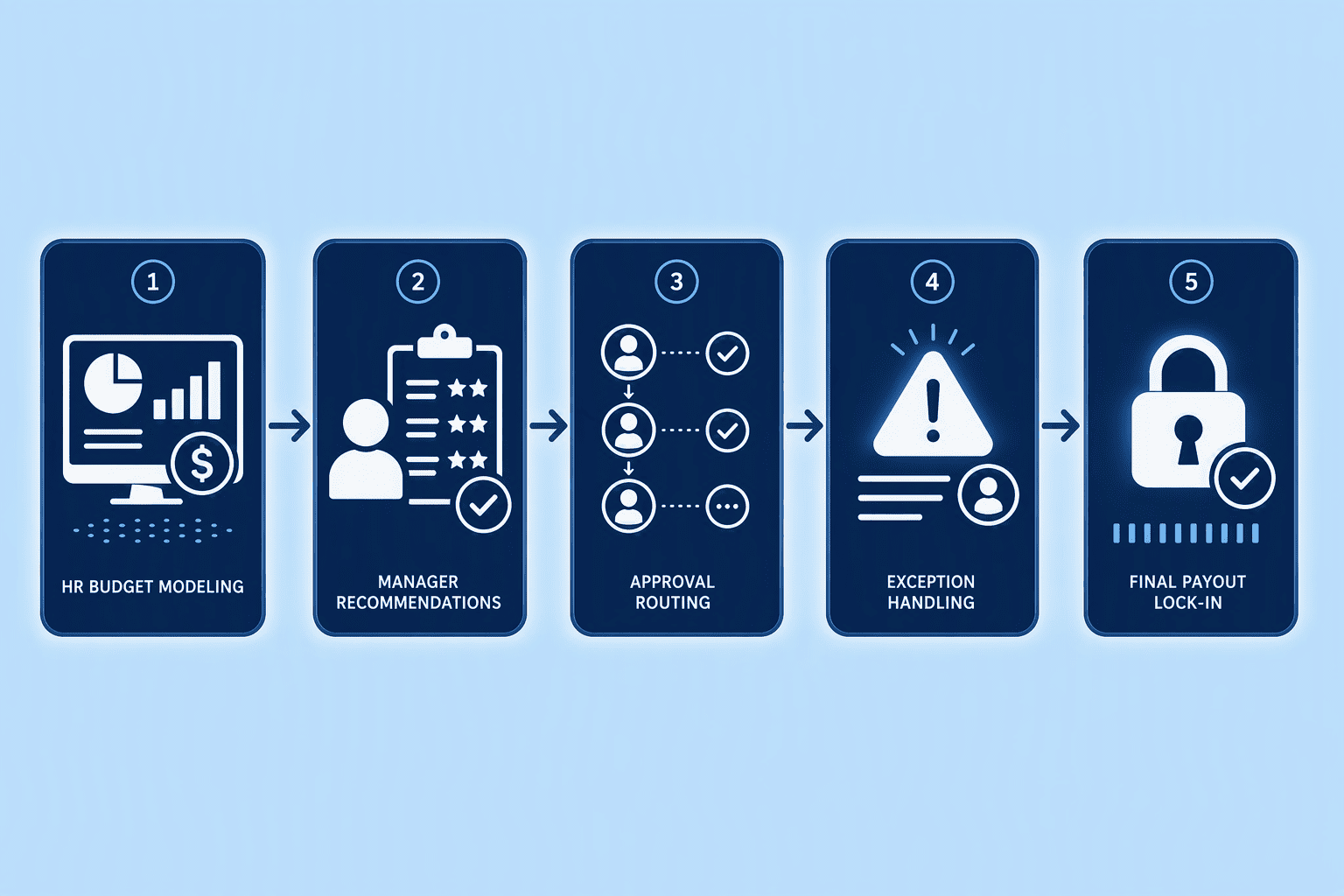
The merit cycle moves from an email-driven scramble to a governed workflow when software replaces the spreadsheet. The process is sequential and deliberate.
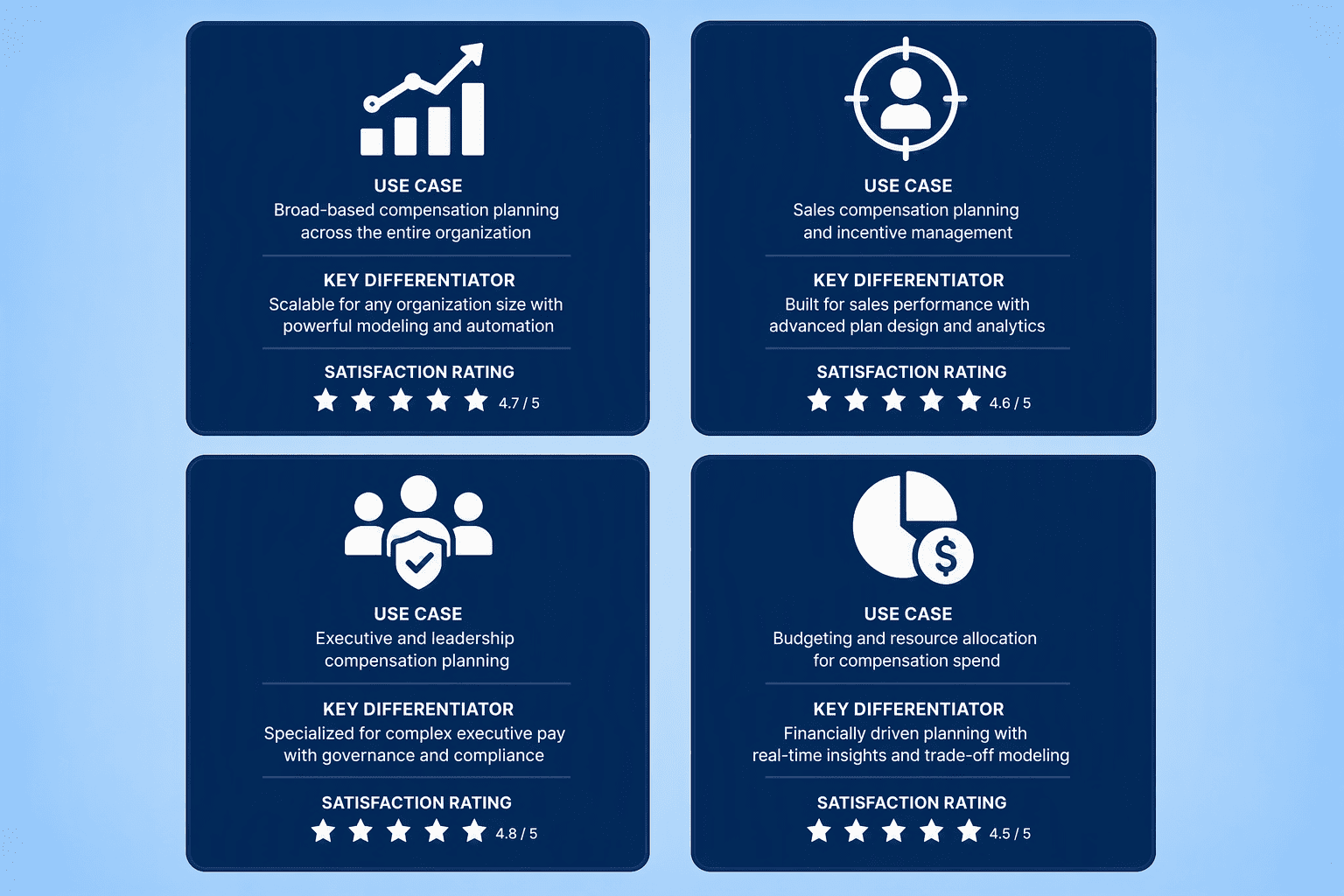
The market has consolidated around a group of focused platforms with high user satisfaction. The table below compares four leading options for the current cycle.
| Platform | Top Use Case | Key Differentiator | 2026 User Satisfaction Rating |
|---|---|---|---|
| HRSoft COMPview | Enterprise-grade merit, bonus, and long-term incentive management | Advanced budget modeling and deep analytics for complex global plans | Highly rated (Gartner peer review market) |
| Aeqium | Growing organizations with complex compensation structures | Streamlines merit, bonus, and equity reviews in one secure, centralized system | 4.9 / 5 |
| beqom | Total compensation and pay equity management | 'Intentional AI' for intelligent pay equity analysis and equity allocation | Highly rated (Gartner peer review market) |
A compensation platform that cannot talk to the HRIS is a second spreadsheet. The integration of compensation management with existing HR and payroll systems streamlines the workflows and is now a non-negotiable baseline. Platforms like CompUp embed this logic: their API integrations with BambooHR, Lattice, and Culture Amp pull in the employee data, salary history, and job architecture that the merit cycle depends on, eliminating manual re-entry and the cascade of errors it causes.
Payroll sync is the closing gate. Once awards are approved, the platform pushes the final figures to payroll automatically.
Performance linkage is where the real lift happens. A tool like beqom connects the compensation module directly to the performance management system so that a 'Meets Expectations' rating triggers a recommended range, and an 'Exceeds' rating opens a higher band, all without a human running a VLOOKUP across two systems.
Without this connective tissue, the platform is a better calculator. With it, the compensation system becomes the operating logic of the talent lifecycle, connecting pay, performance, and market benchmarks on one governed data spine.
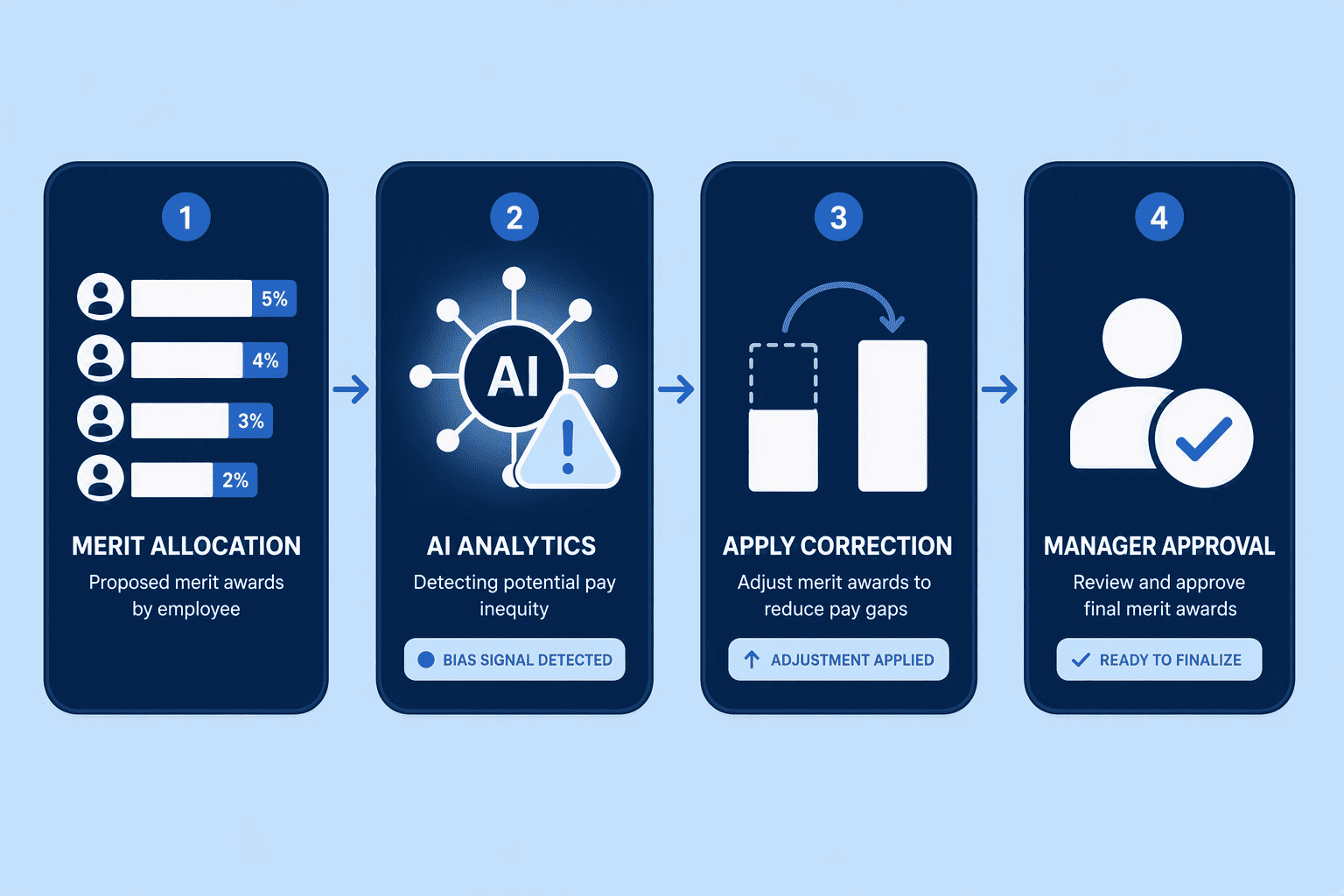
'Intentional AI' has moved pay equity from a post-cycle audit to an in-cycle control. beqom's approach embeds the analysis inside the allocation workflow, flagging bias signals before managers finalize awards, not six months later in a compliance report. This matters for 2026 cycles: you cannot close a pay equity gap you discover after the money is spent. The system detects statistical disparities in merit distribution and equity allocation in real time, pushing a correction opportunity directly into the current approval queue.
Platform architecture is scaling up to match organizational complexity. Aeqium explicitly targets growing organizations with structures that spreadsheets cannot model: multi-country merit pools and equity review cycles that run on a different calendar than base salary adjustments. These platforms support the parallel planning tracks and scenario modeling that a Series-D enterprise with five international subsidiaries now demands, a workload that would vaporize a shared drive full of spreadsheets in a single cycle.
The convergence of AI guardrails and scaled platform architecture defines the 2026 inflection point. Compensation cycles are becoming continuous conversations, fed by performance data and market benchmarks, executed inside governed systems, and explained to employees through personalized total rewards statements. The spreadsheet is not just outdated; it is now actively dangerous in this environment.
Spreadsheet chaos in merit cycles isn't a skills gap. It's a tool gap, and it costs real money: budget leakage, compliance exposure, and the slow erosion of employee trust. A dedicated compensation platform (HRSoft COMPview, Aeqium, beqom) turns the annual scramble into a defensible process where every dollar traces back to a performance decision and a compliance record.
You've now got the feature checklist, the integration requirements, and a view of the current vendor field. The 2026 cycle needs a decision, not version 9 of a broken file. If you're weighing options, CompUp is worth a closer look.
Look for budget modeling with real-time forecasts, rule-based allocation engines that enforce your pay guidelines, performance-integrated recommendations that link ratings directly to merit ranges, and a module that generates personalized online compensation statements at cycle close. These directly replace the manual formulas, email distributions, and broken-version problems of spreadsheet-dependent cycles.
It structures the cycle into a governed sequence: HR models the budget and locks department allocations, the system syncs performance data, managers make award decisions inside hard budget fences, HR reviews recommendations in bulk dashboards, approvals route automatically through configured hierarchies, and the platform publishes personalized Total Rewards statements to employees at cycle close.
Top-rated platforms include HRSoft COMPview for enterprise-grade total compensation, Aeqium for growing organizations with complex structures, beqom for AI-driven pay equity analysis, and Compport for flexible end-to-end lifecycle management. Both Aeqium and Compport hold a 4.9 user satisfaction rating in their category this year.
Enterprise spreadsheet-based cycles suffer from poor version control, error-prone manual calculations, and no defensible audit trail. Nearly half of organizations still run incentive compensation on spreadsheets, exposing themselves to budget leakage, compliance violations during pay equity audits, and employee distrust when pay decisions are perceived as inconsistent or ungoverned.
They use API-based integrations to pull employee records, salary history, job architecture, and performance ratings directly from the HRIS and performance management systems, eliminating manual data entry. Once awards are approved, the platform pushes final figures to payroll automatically, ensuring the data that entered the cycle matches what lands in the employee's paycheck.
Two defining trends are AI-powered pay equity analysis, branded by beqom as 'Intentional AI,' which detects bias signals during the allocation workflow rather than after the cycle closes, and the rise of platforms like Aeqium that support complex structures for high-growth organizations managing multi-country merit pools, equity reviews, and long-term incentives in one governed system.
Community Manager (Marketing)
As a Community Manager, I’m passionate about fostering collaboration and knowledge sharing among professionals in compensation management and total rewards. I develop engaging content that simplifies complex topics, empowering others to excel and aim to drive collective growth through insight and connection.
Revolutionizing Pay Strategies: Don't Miss Our Latest Blogs on Compensation Benchmarking