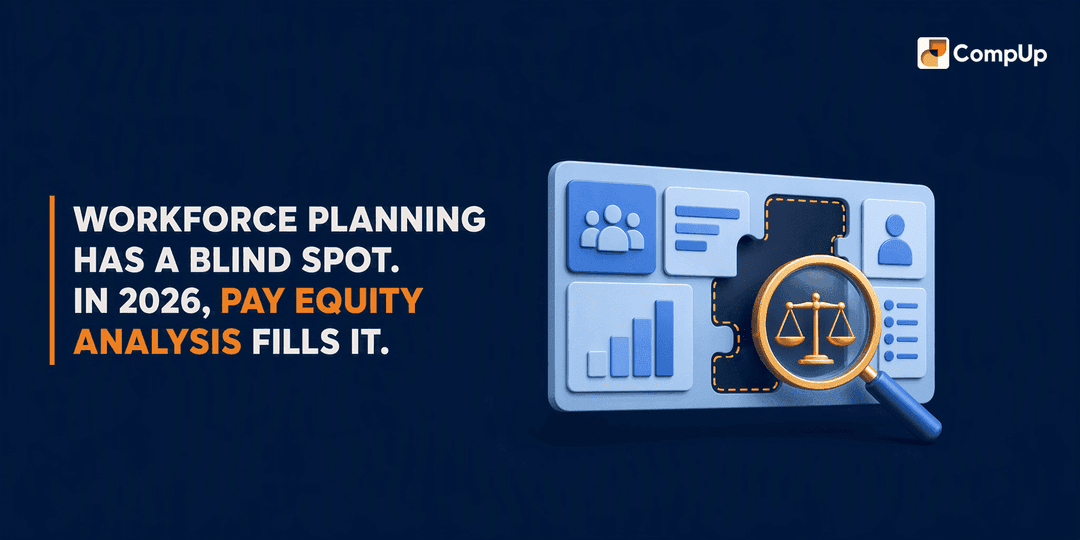

Your compensation committee just approved the Q3 hiring plan. Promotions are locked. Salary bands are set. Buried in the spreadsheet nobody opened is a 7 percent average pay gap for women in mid-level engineering roles, a gap that just widened by $300,000 because three new hires were modeled without an equity check. That gap is a workforce planning failure.
For years, headcount planning and pay equity analysis ran on separate tracks. Scenario modeling lived in Finance or HR ops. Pay audits happened annually, retroactively, inside a siloed compensation review tool.
In 2026, that separation carries legal exposure, talent risk, and a rising compliance burden that retrospective audits can no longer absorb. State pay-transparency laws are multiplying, the EEOC is sharpening enforcement, and investors are scoring compensation fairness as an ESG metric. Keeping workforce planning and pay equity as separate exercises exposes the organisation to legal, financial, and cultural risk.
The answer is workforce planning software with built-in pay equity analysis. These platforms unify headcount forecasting, promotion modeling, and real-time pay-gap detection across gender, ethnicity, and other protected dimensions inside a single planning interface. You model a headcount change, and the system surfaces the projected equity impact before the decision is final. You run a merit cycle, and the audit trail records every adjustment against demographic baselines.
A 2026 comparative review by People Managing People, backed by testing of more than 2,000 HR tools, maps the emerging landscape: dedicated compensation platforms such as Aeqium build equity intelligence directly into scenario workflows, while broader organisational design suites such as Visier and Orgvue layer pay-equity capabilities into their planning engines. This article defines what that category looks like operationally, why 2026 is the year siloed approaches break, and what features separate genuine audit-readiness from surface-level demographic reporting.
Here are the key findings HR and Total Rewards leaders need to absorb before evaluating any platform in 2026:
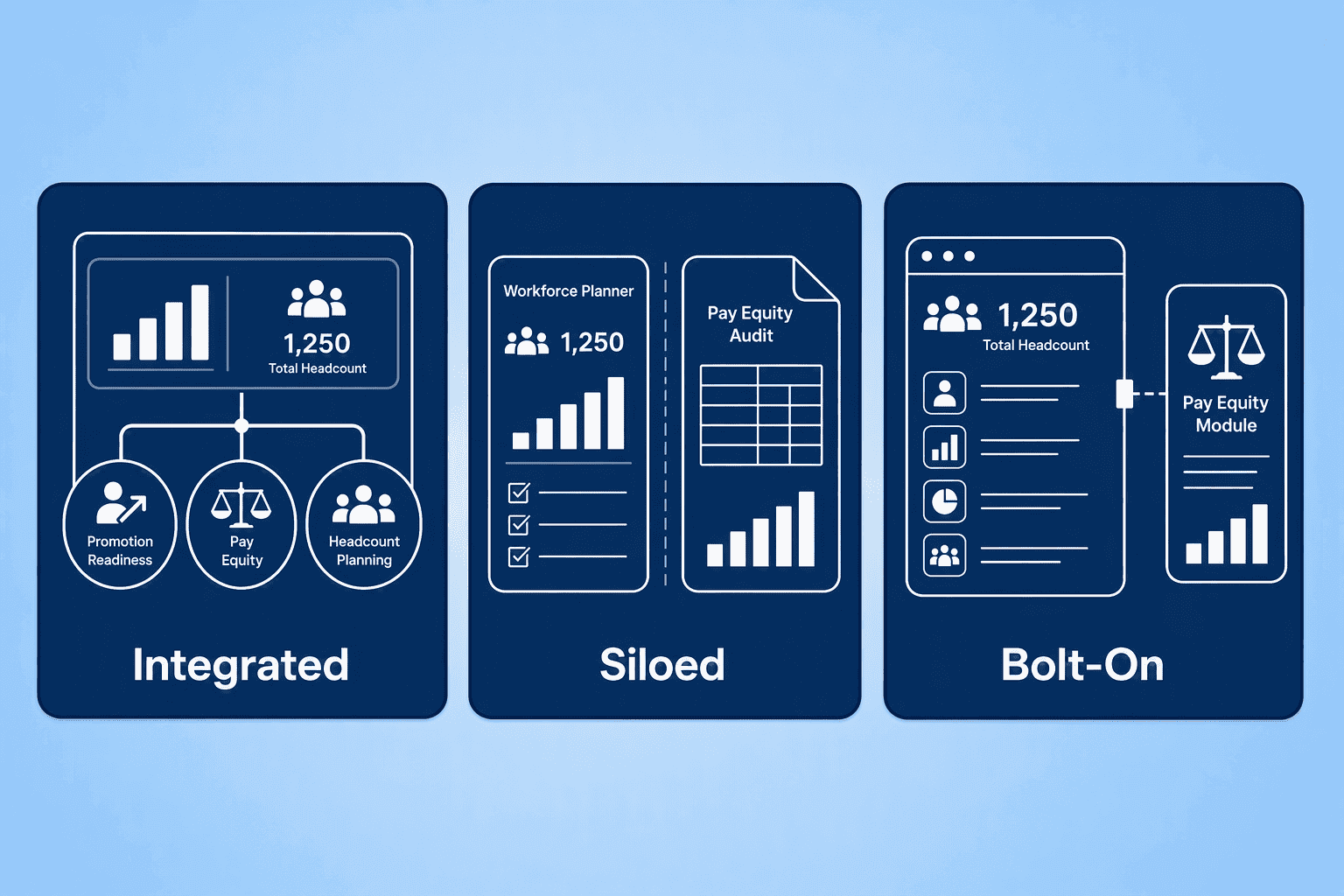
Workforce planning software with pay equity analysis unifies headcount forecasting, promotion modeling, and real-time pay-gap detection inside a single planning environment. You don't run a separate, retrospective compensation audit afterward. The table below compares this integrated approach to the two legacy models it replaces.
| Dimension | Integrated Platform (With Built-In Pay Equity) | Siloed Workforce Planner + Separate Pay Audit | Standalone Pay Equity Module (Bolt-On) |
|---|---|---|---|
| Decision workflow | Equity impact surfaces during scenario modeling, before approvals. | Headcount decisions happen first; pay audit runs weeks later. | Equity check runs post-approval inside a separate UI. |
| Data foundation | Single HRIS-synced dataset feeds both planning and equity engines. | Two disconnected datasets with manual reconciliation. | Separate data extract requires mapping to planning records. |
| Audit trail | One unbroken log spanning headcount change, compensation adjustment, and equity result. | Fragmented logs across Finance and Comp systems. | Partial trail; planning rationale is absent from the equity record. |
| Typical use case | Organisations preparing for EEOC audits or state pay-transparency filings and running frequent scenario cycles. | Companies running annual workforce plans with a separate annual pay audit. | Organisations that added equity compliance after their planning tool was live. |
| Risk profile in 2026 | Lowest; proactive disparity detection with a defensible single-source record. | Highest; lag time between decision and detection creates exposure. | Medium; detection exists but audit trail gaps weaken legal defensibility. |
Practically, these platforms ingest HRIS data continuously so that every modeled headcount addition or promotion triggers a real-time compensation gap calculation. The system flags projected disparities by gender and ethnicity before the budget is locked. The output is a headcount plan with an embedded equity scorecard: a timestamped record of who approved what and what the equity impact was at that moment.
The regulatory calendar has turned 2026 from a compliance concern into an operational deadline.
Three forces are converging and none of them rewards waiting. First, state-level pay-transparency mandates are accelerating and they now demand proactive disclosure, not retroactive justification. Connecticut employers with 50 or more employees must, effective October 1, 2026, create and post a pay code guide explaining every pay differential (shift, on-call, hazard, callback, holiday, weekend, and geographic) in English, Spanish, and the other most common languages spoken by their workforce, with a penalty of $300 per violation for noncompliance.
That is not a filing requirement you can satisfy with last year’s spreadsheet audit. It demands continuous, auditable, current documentation of how and why pay varies across demographic lines. Meanwhile, the 119th Congress has before it bills such as H.R. 8868, the Restoring Overtime Pay Act of 2026, signalling that federal compensation regulation is far from static.
Second, the EEOC has escalated enforcement on compensation discrimination. Its pay equity enforcement priorities demand that organisations produce unified records linking hiring and promotion decisions to compensation outcomes, making a fragmented audit trail across separate planning and pay-audit systems a direct liability. Third, 50% of global organizations report difficulty retaining their best talent, and employees, investors, and ESG frameworks now expect demonstrable, real-time fairness, not an annual compensation philosophy statement.
Retrospective audits carry unacceptable lag time. The moment you lock a headcount decision, your equity exposure is set. The only way to manage it is to see it at the point of decision.
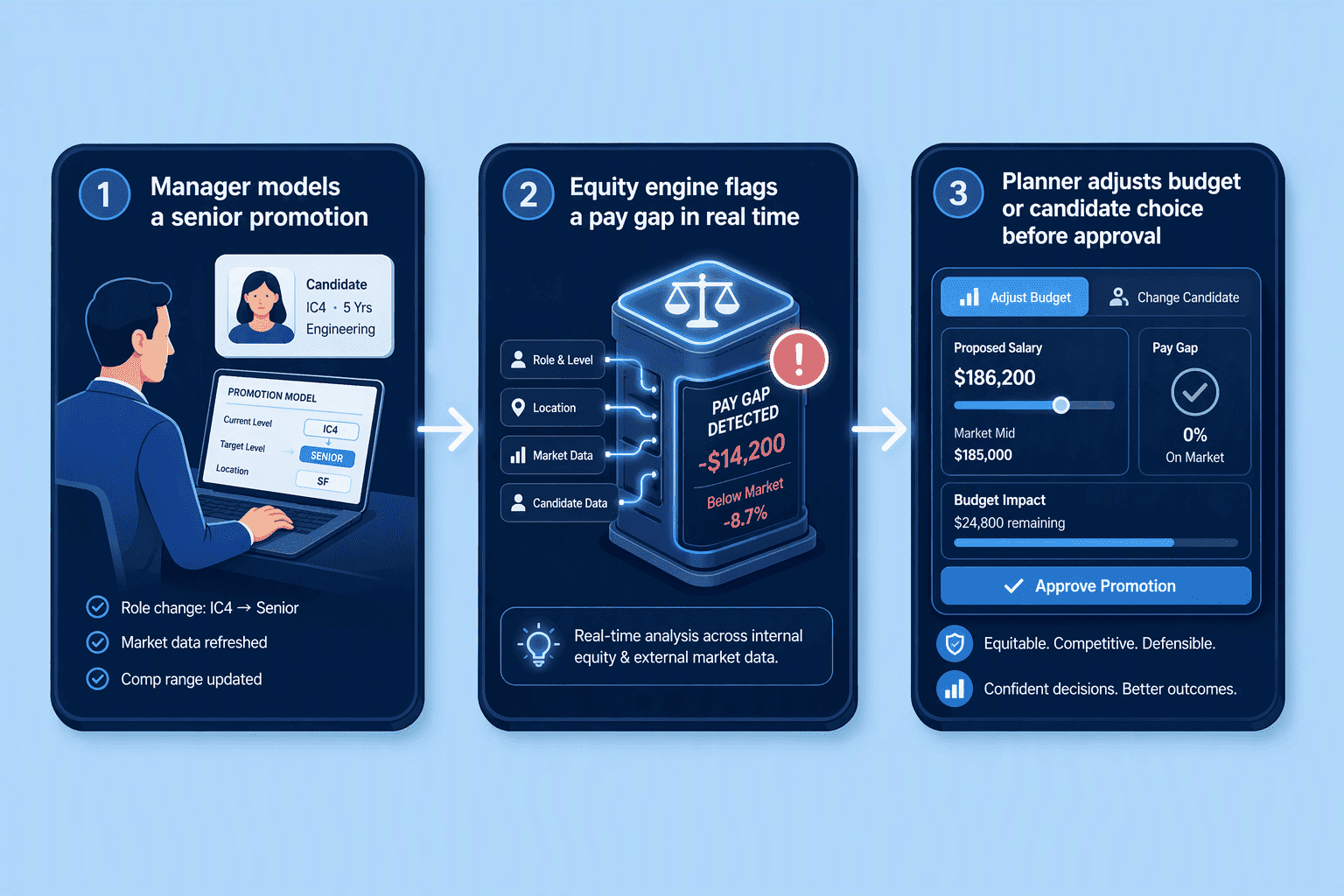
A pay gap that sits invisible until after budgets lock is a liability. Built-in pay equity catches it during planning, before commitments harden.
In a built-in model, the equity engine runs as part of the planning workflow itself. A manager models a senior promotion in a department where women are underrepresented at that grade. The platform immediately projects the group-level compensation impact, flags the disparity, and lets the planner adjust the budget allocation or the promotion candidate pool before the decision reaches the approval queue.
That is a closed loop: model, surface, adjust, lock. The audit trail captures every element in one connected record. A bolt-on module breaks that loop.
The headcount decision gets locked inside the planning platform. Hours or days later, a compensation analyst exports data into the pay-equity tool, runs a gap analysis, and discovers the disparity. By then, budgets are committed, approvals are closed.
Fixing the gap means reopening decisions, eroding trust, and leaving an audit trail that shows the disparity was unknown at approval but existed in the data the whole time. That fragmentation is what a regulator questions. Real-time compensation gap dashboards and scenario-level equity projections are the operational mechanism that turns pay equity from a post-mortem into a pre-decision safeguard.
A dashboard that shows demographic breakdowns of current pay is headcount reporting with a demographic filter. It will not survive an EEOC audit or a state pay-transparency filing.
A pay equity platform must deliver three non-negotiable capabilities to be audit-ready:
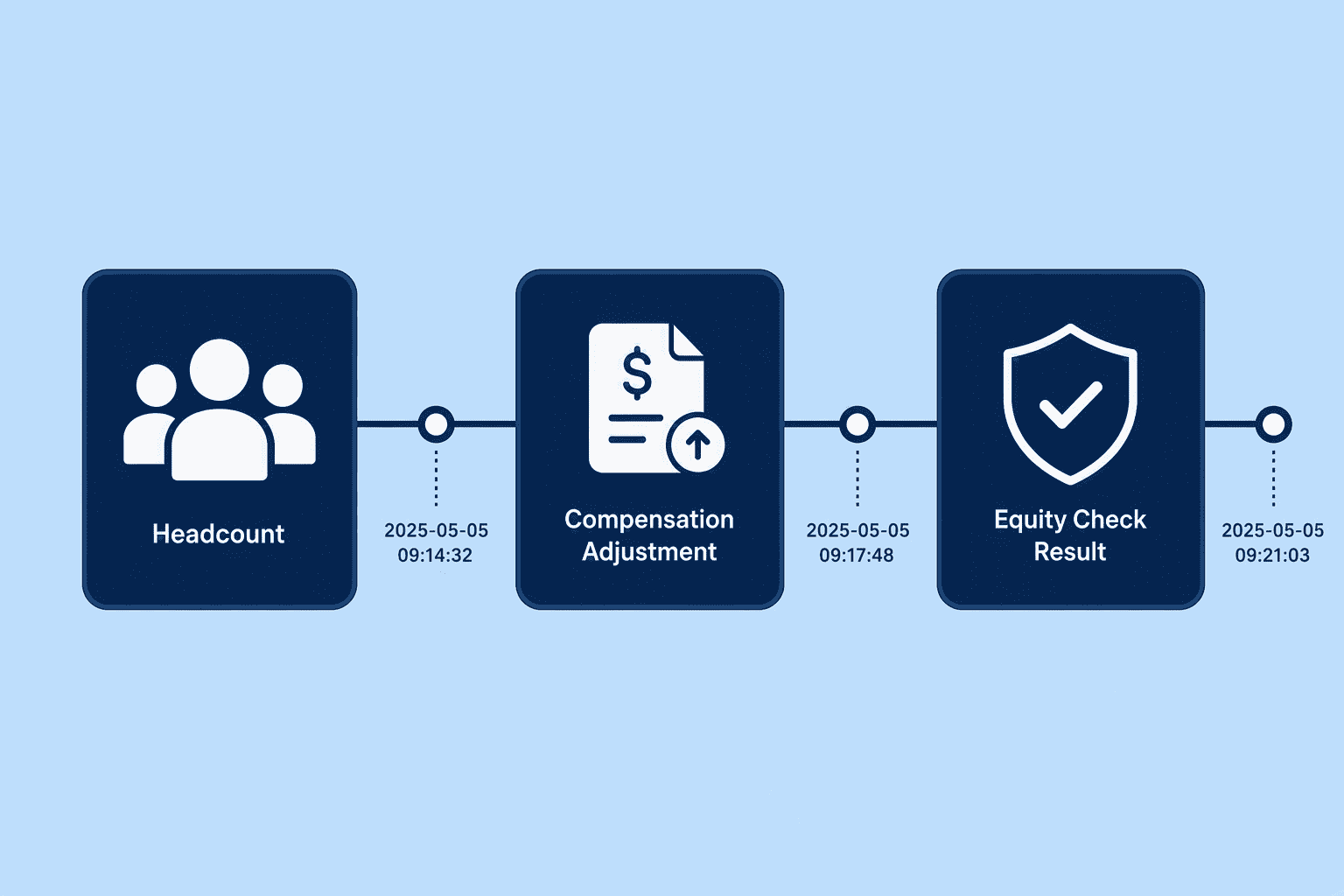
In a pay equity dispute, the question is never limited to what you found. It turns on what you knew, when you knew it, and what you did about it. An integrated audit trail answers all three with a single, date-stamped record. Here is what separates an integrated approach from a bolt-on when regulatory scrutiny arrives:
A bolt-on module creates two log entries in two systems with no connective tissue. That gap is what a plaintiff's attorney or an EEOC investigator will point to. Running the analysis is not enough; you must be able to show that the analysis was part of the decision.
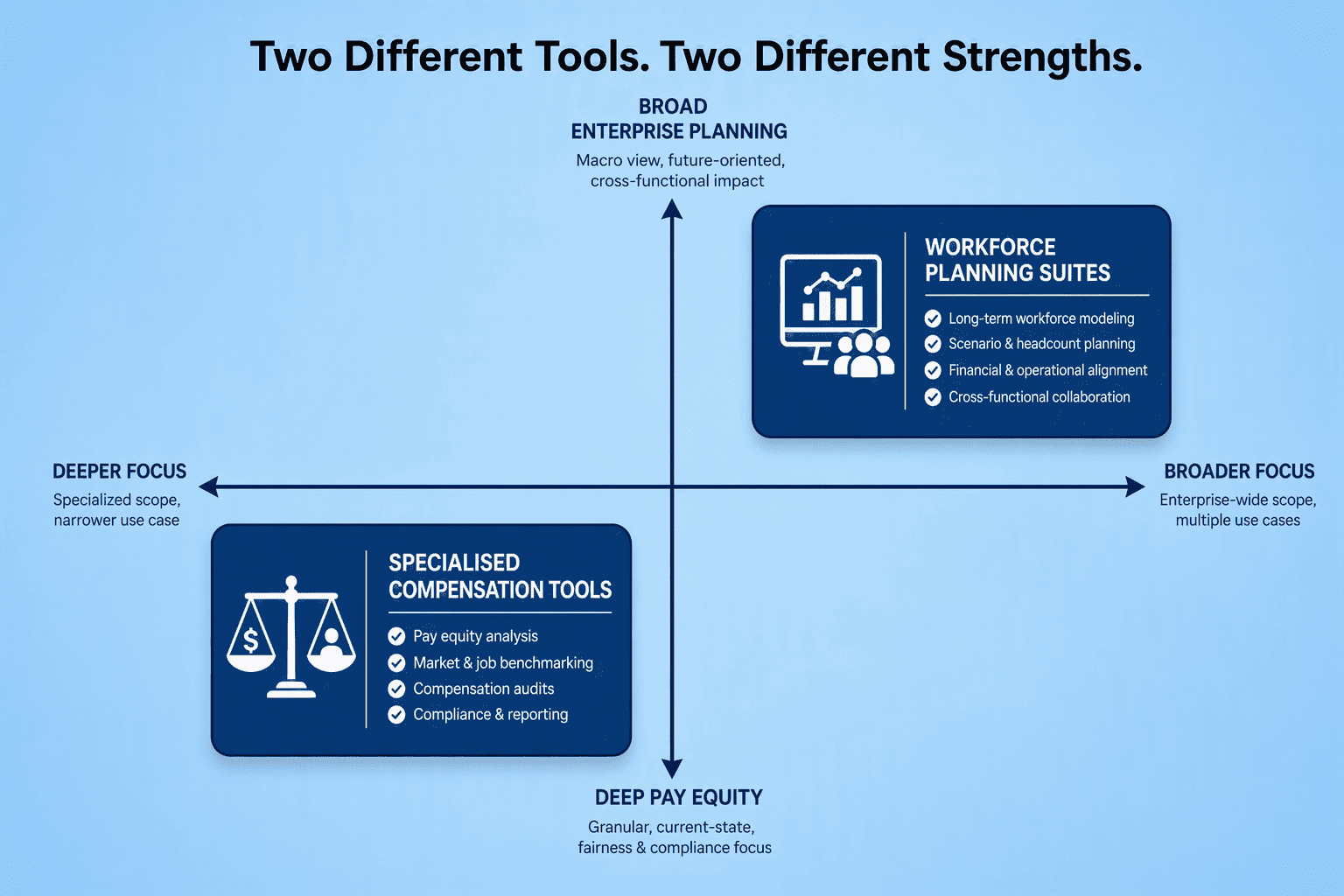
The market has split along one decisive axis: how deep the pay equity analytics go and how broad the organisational planning canvas is. No single tool dominates both axes equally, and the choice depends on whether compensation fairness or enterprise-wide workforce modeling is the more acute need.
On the depth end, dedicated compensation platforms such as Aeqium prioritise granular equal-pay reporting and compensation scenario precision. They model individual adjustments, aggregate the cost, and project the residual gap by demographic slice with detail that a broad suite rarely matches. Aeqium, for instance, is positioned as a dedicated compensation planning platform built for complex pay structures and carries SOC 2 Type 2 certification, which matters when your equity analysis feeds directly into compliance filings. These tools treat pay equity as the primary workflow, not a dashboard within someone else’s planning module.
On the breadth end, platforms such as Visier and Orgvue deliver enterprise headcount forecasting, organisational design modeling, and succession planning in one environment. Visier’s AI-driven workforce planning engine connects labour-cost projections to talent supply and demand, while Orgvue, which achieved ISO/IEC 42001 certification for its Artificial Intelligence Management System in August 2026, emphasises organisational design and AI-led workforce transformation. Their pay equity capabilities are credible but sit as one layer within a broader analytics stack, so the demographic disaggregation and scenario-level gap projection are less granular than what a dedicated compensation tool offers.
The trade-off is sharp. If your dominant pain is preparing for a pay-transparency filing with audit-defensible, line-level equity detail, the specialised tool wins. If your dominant pain is modelling an enterprise reorganisation while still needing to see the equity impact, the suite is the stronger fit.
A 2026 market scan, anchored in testing of more than 2,000 tools for HR management use cases by People Managing People, surfaces a shortlist of platforms where pay equity is either the core strength or a credible integrated feature. Each occupies a different point on the depth-versus-breadth spectrum.
The market scan identifies six major platforms, each with a distinct position on the depth-versus-breadth spectrum:
What this means for buyers is that the market has not produced a single tool that covers both strategic workforce modeling and detailed compensation management with equal depth. The decision is structural: if pay equity depth is the binding constraint, start with a compensation-first platform. If organisational planning breadth is, start with a suite and pressure-test the equity module's granularity against your filing requirements.
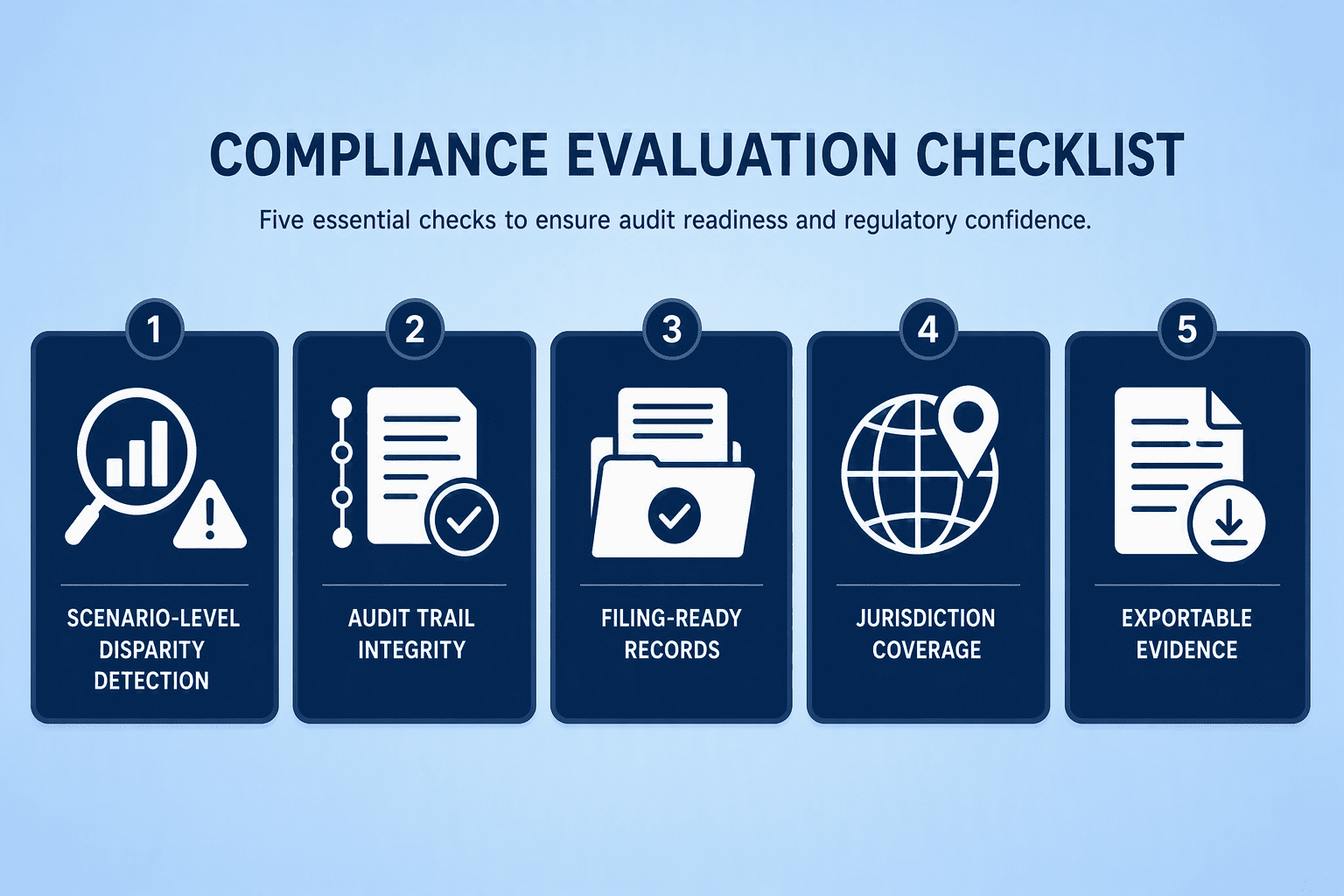
The compliance-first evaluation framework below maps directly to what an EEOC investigator or a state pay-transparency filing will demand from your records. Run every platform against these five criteria:
Workforce planning and pay equity still run on separate software in most organisations, and the annual reconciliation meeting is the only thread connecting them. In 2026, the regulatory calendar, the enforcement posture, and the talent market all point the same way. If the equity check happens after the decision, the organisation is already exposed.
Built-in equity analysis catches disparities before budgets lock. The audit trail that counts records what you knew at the moment of approval. That record exists only when the equity engine lives inside the planning workflow.
Your next step depends on which problem is costing you more right now. If your 2026 priority is a state pay-transparency filing, an EEOC audit, or a compensation cycle where fairness is the board-level metric, choose a compensation-first platform with deep equity analytics and a defensible audit trail. If your priority is an enterprise-wide reorganisation and you need to see the equity scorecard alongside it, pick a workforce planning suite and pressure-test its pay-equity module against the compliance checklist in the previous section. The one path you cannot take: running headcount planning without an equity engine and hoping the annual audit catches what you missed. If you're weighing options, CompUp is worth a closer look.
It is a category of HR technology that combines headcount forecasting and promotion modeling with real-time detection of compensation gaps across gender, ethnicity, and other protected dimensions, all within a single planning interface, so equity issues surface during scenario modeling rather than after decisions lock.
It flags pay disparities at the point of decision, when a manager models a promotion or headcount addition, allowing corrections before budgets are approved. This eliminates the lag and rework of running a separate pay audit after the planning cycle closes.
Three capabilities are key: a real-time compensation gap dashboard disaggregated by gender and ethnicity, scenario modeling that links each headcount change to a projected equity outcome, and bidirectional, continuous HRIS integration to keep the analysis grounded in current data.
Dedicated platforms such as Aeqium or CompUp offer deeper, more granular pay-equity analytics and compensation scenario precision. Suites such as Visier and Orgvue provide broader headcount forecasting and org-design capabilities but typically deliver less detailed equity analytics.
State pay-transparency mandates such as Connecticut’s October 2026 pay code guide requirement, escalated EEOC enforcement on compensation discrimination, and investor ESG pressure are making real-time, integrated pay equity a compliance necessity rather than a periodic HR exercise.
Community Manager (Marketing)
As a Community Manager, I’m passionate about fostering collaboration and knowledge sharing among professionals in compensation management and total rewards. I develop engaging content that simplifies complex topics, empowering others to excel and aim to drive collective growth through insight and connection.
Revolutionizing Pay Strategies: Don't Miss Our Latest Blogs on Compensation Benchmarking