
By the time you finish reading this paragraph, three different versions of your company's headcount will exist inside your organization.
Your FP&A team has one in its forecasting model. HR owns a second for merit cycles. Payroll's actuals tell a third story in a system nobody thought to reconcile until the CFO asked why the board deck numbers don't add up.
This fragmentation is expensive. The reconciliation cycles alone stretch planning horizons by weeks. Data lags bury real-time burn rates. Compensation decisions happen on gut feel because the people making them can't see the full picture.
The market has responded with a new breed of platform built around a single source of truth. These systems unify strategic headcount forecasting, manpower budgeting, and merit-cycle compensation planning in one operating environment. This article evaluates five of them: CompUp, ADP Workforce Now, Workday Adaptive Planning, Anaplan, and Pigment. Each takes a different path toward unification. Your choice turns on a single question: does your organization need native HR-Finance unification, or deep financial modeling that pulls from external HR data?
The platforms profiled here fall into two strategic camps: unified suites where HR and compensation data share a native architecture, and broad financial planning engines that consume HR data through integrations. Your primary decision filter sits there.
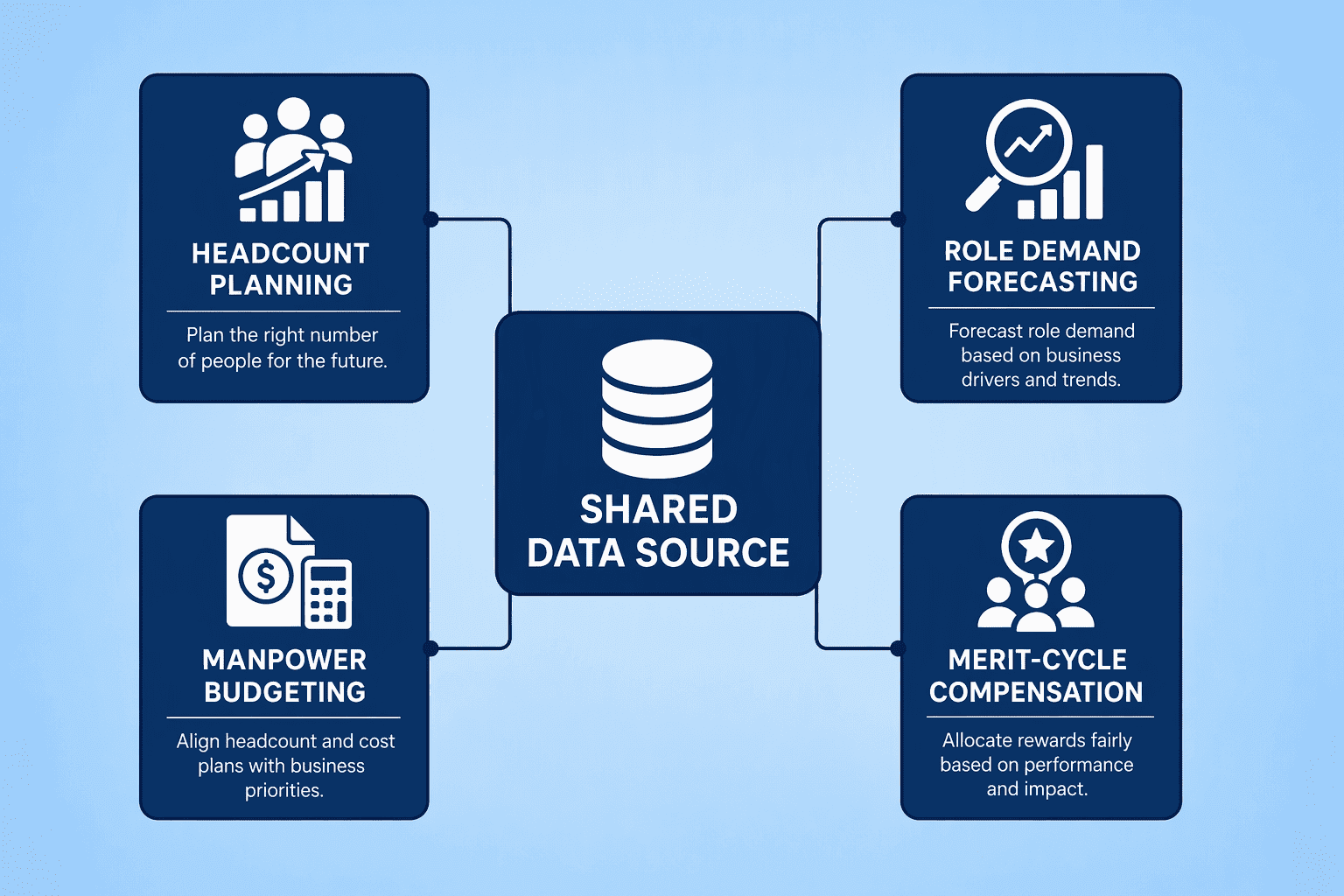
CompUp is the only platform in this evaluation architected from inception to unify workforce planning and compensation management in a single AI-native environment, rather than adapting a financial planning engine or HCM suite to cover both domains.
ADP Workforce Now approaches unification from the opposite direction of CompUp. It starts with operational HR and payroll as the system of record and layers compensation planning and benchmarking on top, drawing from an unmatched dataset that spans more than 39 million workers.
What makes ADP fundamentally different from every other platform in this comparison is the direct line between payroll execution and compensation intelligence. When a merit increase or promotion is planned, the system already holds the actual pay data, tax implications, and compliance rules. There is no integration lag between planning and execution because both functions live in the same architecture. Forrester Research recognized this architectural advantage in Q4 2025, naming ADP Workforce Now a Leader in The Forrester Wave: Human Capital Management Solutions, with the evaluation specifically noting its strength in connecting operational HCM data with compensation decisions.
ADP's AI capabilities now surface unusual payroll changes, explain what shifted, and guide resolution before small anomalies become big problems. Meanwhile, the compensation benchmarking module pulls from monthly pay data across thousands of job titles and industries, giving compensation teams market-rate visibility that standalone planning tools cannot replicate without purchasing third-party data. The trade-off is that ADP Workforce Now is not a dedicated workforce planning engine. Organizations needing complex multi-scenario headcount modeling across business units and geographies may find the planning layer thinner than what CompUp or Anaplan offer.
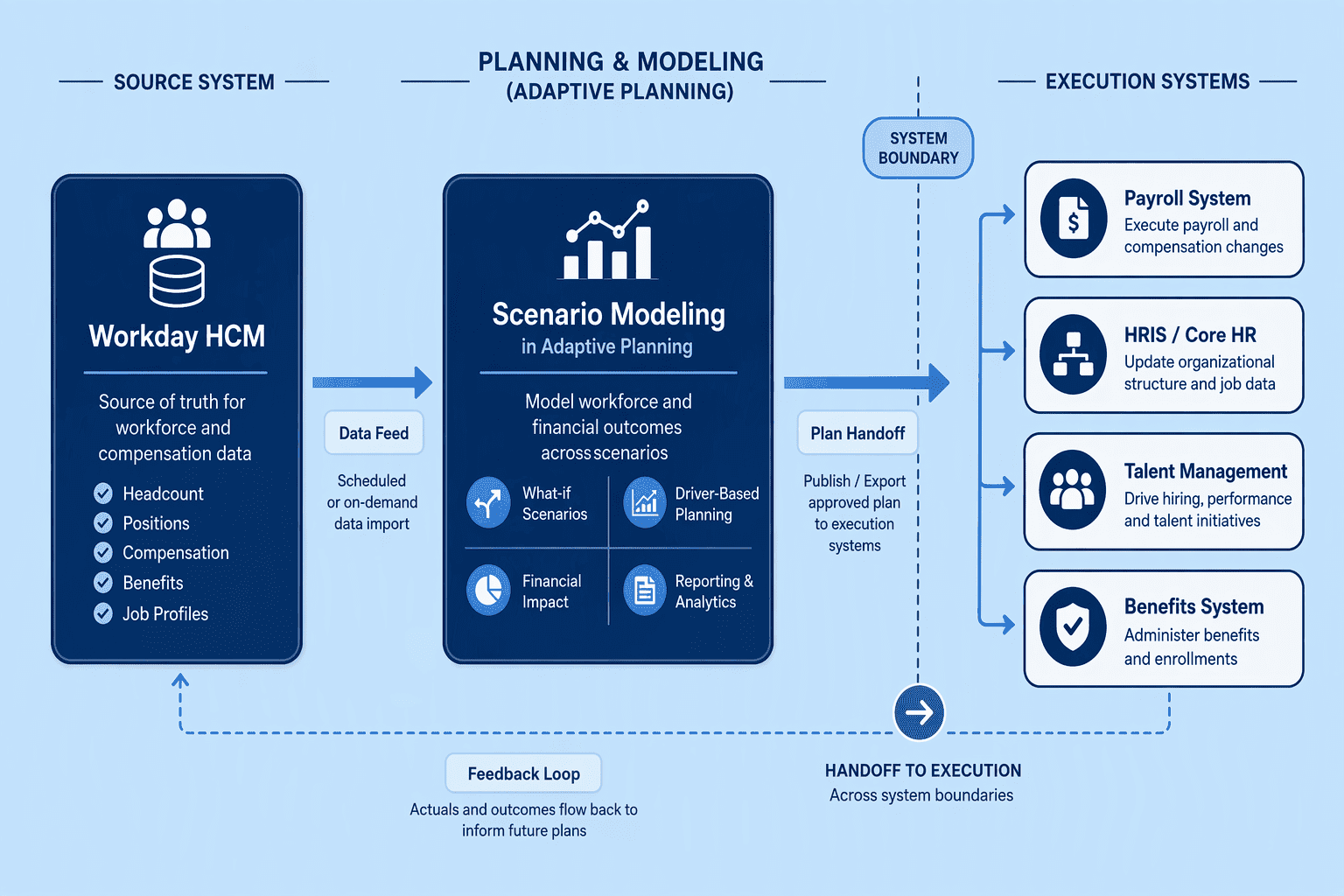
Workday Adaptive Planning is a financial modeling engine that connects to Workday HCM data more tightly than Anaplan or Pigment can. It remains a planning layer, not a single system of record for HR and finance execution. You get sophisticated scenario modeling fed by richer native HR data, with the planning-to-execution handoff still occurring across system boundaries.
| Dimension | Workday Adaptive Planning | CompUp | ADP Workforce Now | Anaplan | Pigment |
|---|---|---|---|---|---|
| Native HR/Finance Single Source of Truth | Planning layer over Workday HCM; execution requires separate HRIS | Unified headcount and comp architecture; not an HCM suite | Full HCM and payroll system of record with planning on top | External planning engine; feeds from separate HRIS via integration | External planning engine; feeds from separate HRIS via integration |
| Compensation Benchmarking Depth | Depends on purchased datasets | Real-time pay equity and compa-ratio tracking | 39 million-worker monthly pay data, native | Requires third-party data integration | Requires third-party data integration |
| Scenario Modeling Complexity | High; multi-scenario workforce and financial modeling | AI-driven what-if across workforce and comp simultaneously | Moderate; compensation-focused scenarios | Very high; multi-dimensional enterprise planning | High; modern data architecture for agile modeling |
| Payroll Integration | Through Workday HCM ecosystem | Not native; integrates with HRIS partners | Fully native payroll execution | None; external dependency | None; external dependency |
| Total Cost Profile | Mid-to-high enterprise; custom pricing | Starts at $3/employee/year | Mid-market packages; three tiers (Select, Plus, Premium) | $50,000 to $150,000+ annually, plus implementation | Enterprise FP&A pricing; implementation-heavy |
Workday lets you evaluate strategic initiatives, changing workforce demand, and organizational design options across multiple scenarios before committing. The platform's workforce planning module helps organizations build strategic workforce plans and adapt continuously with real-time data. The architectural trade-off is clear: detailed compensation cycle automation and pay equity analysis do not live natively within the planning engine. You need either the broader Workday HCM suite or supplemental tools to get them.
Anaplan is the most scalable option for large enterprises that need multi-dimensional, cross-functional modeling. Its connected planning model links workforce, finance, sales, and supply chain plans in a single environment. That makes it a fit for organizations where workforce planning has to feed into revenue forecasting and strategic investment decisions at the same time.
The platform's strength is its model-building flexibility. Anaplan handles complex, layered scenarios that break simpler tools: regional headcount planning with local statutory cost assumptions, department-level attrition modeling with probabilistic scenario branches, and workforce supply-demand analysis pulling from multiple external data sources. For a global enterprise running 50-plus legal entities with different compensation structures, Anaplan's modeling engine is purpose-built for that level of complexity.
Where Anaplan requires honest evaluation is on integration depth. The platform does not contain an HRIS. Workforce data, compensation structures, and payroll actuals must be fed in from separate systems through custom integrations. That introduces both implementation cost and data latency. For a CHRO or CFO whose primary pain point is fragmented workforce and compensation data, adding a sophisticated modeling engine on top of that fragmentation may solve the scenario analysis problem while leaving the underlying data reconciliation problem intact.
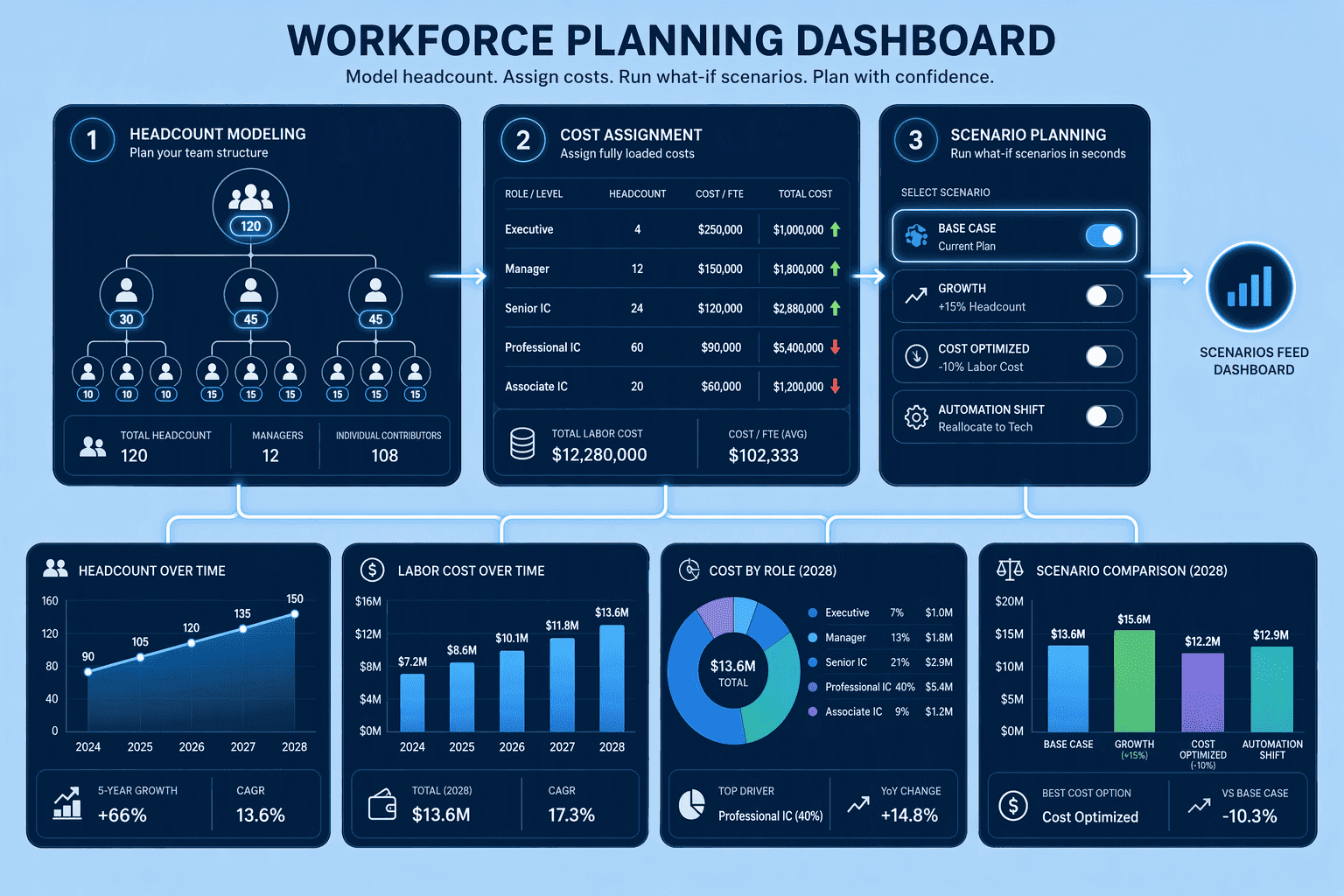
Pigment entered the business planning market with a modern data architecture and an interface that makes complex modeling feel straightforward. FP&A teams tired of planning tools from the previous decade gravitate toward its visual reporting and quick scenario iteration.
The platform handles workforce planning as one module inside a broader business planning suite. You model headcount needs, assign costs, and run what-if scenarios in a UI that is more intuitive than most enterprise planning tools. For finance-led planning teams that need workforce numbers to feed into bigger financial plans, Pigment's architecture supports that flow.
Pigment shares a constraint with Anaplan on workforce and compensation planning. It is not an HRIS, so its workforce planning depends on external HR data sources for employee records, compensation structures, and payroll actuals. The platform models what that workforce data means financially. It does not execute HR actions or maintain a live, single source of truth for both HR and finance data.
Your choice comes down to what you are optimizing for. If agile financial modeling with workforce as an input is the priority, Pigment fits. If you need true workforce-compensation unification with a single operational data source, CompUp or ADP will align more closely.
The distinctions between these platforms become clearest when mapped across the dimensions that drive total cost of ownership, implementation complexity, and planning accuracy. The table in Section 3 above provides the full capability matrix. Here is what the comparison surface reveals when you step back.
The market splits on a single architectural question: does the platform hold a native source of truth for both HR and finance data, or does it model data that lives elsewhere. CompUp and ADP answer yes, each through different architectures. CompUp unifies workforce and compensation planning directly. ADP anchors everything to its payroll and HCM core. Workday Adaptive Planning sits on the boundary, connecting deeply to Workday HCM without collapsing the planning layer into the execution layer.
Anaplan and Pigment answer no by design. They are modeling engines that consume HR data. That is not a weakness when the requirement is enterprise-wide connected planning that spans far beyond workforce use cases. It is a constraint when the requirement is eliminating reconciliation cycles and data lags between workforce planning and compensation execution. Your organization's pain point dictates which camp serves you.
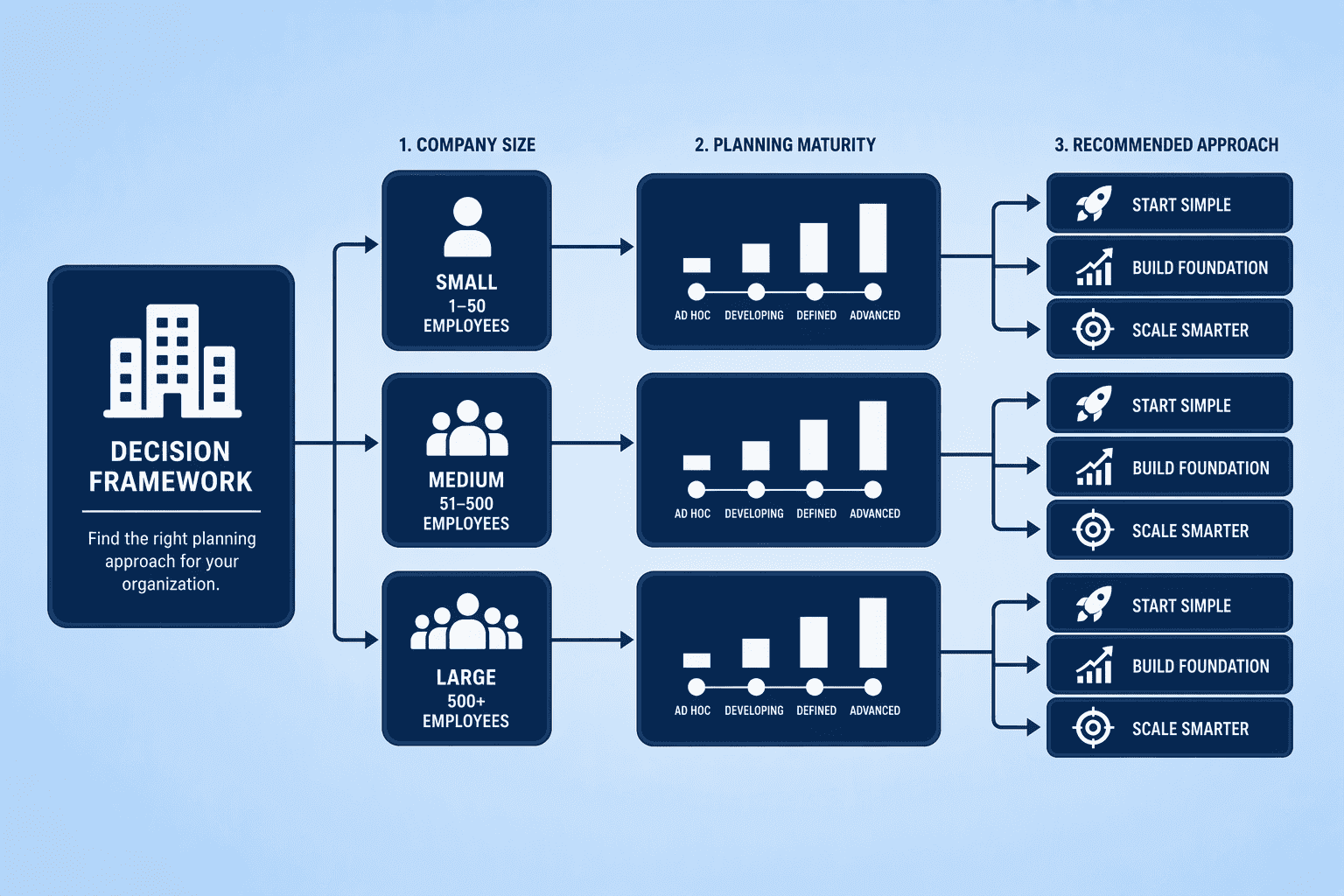
The platform question resolves faster when you stop comparing features and start matching organizational profiles. A 500-person company whose CHRO and CFO share a single planning pain point needs something fundamentally different from a 50,000-person enterprise running multi-region, multi-scenario workforce models.
Mid-market organizations where HR and Finance are tightly coupled should look first at CompUp or ADP Workforce Now. CompUp fits when the primary need is unifying headcount forecasting, manpower budgeting, and merit-cycle planning in a single AI-native environment without replacing the existing HRIS. ADP Workforce Now fits when payroll integration and compensation benchmarking scale are the dominant requirements. Buyers in this segment should scrutinize Anaplan’s implementation complexity and cost profile, which typically exceed what a focused planning initiative justifies.
Large enterprises with mature, multi-dimensional planning needs and dedicated FP&A teams will find Anaplan or Pigment aligned to their complexity requirements. The key filter is whether workforce planning is a standalone priority or one variable within enterprise-wide connected planning. If workforce and compensation planning must operate with the same data fidelity as financial planning, and reconciliation cycles are actively costing the business, the integration dependency of Anaplan and Pigment becomes a genuine limitation. Layering CompUp’s unified workforce-compensation architecture alongside the broader enterprise planning stack may then deliver better outcomes than forcing workforce planning into a general-purpose modeling engine.
Subscription pricing tells only a fraction of the total cost story. Implementation services, data migration from legacy systems, per-user licensing for advanced modules, and ongoing integration maintenance often represent the majority of first-year expenditure.
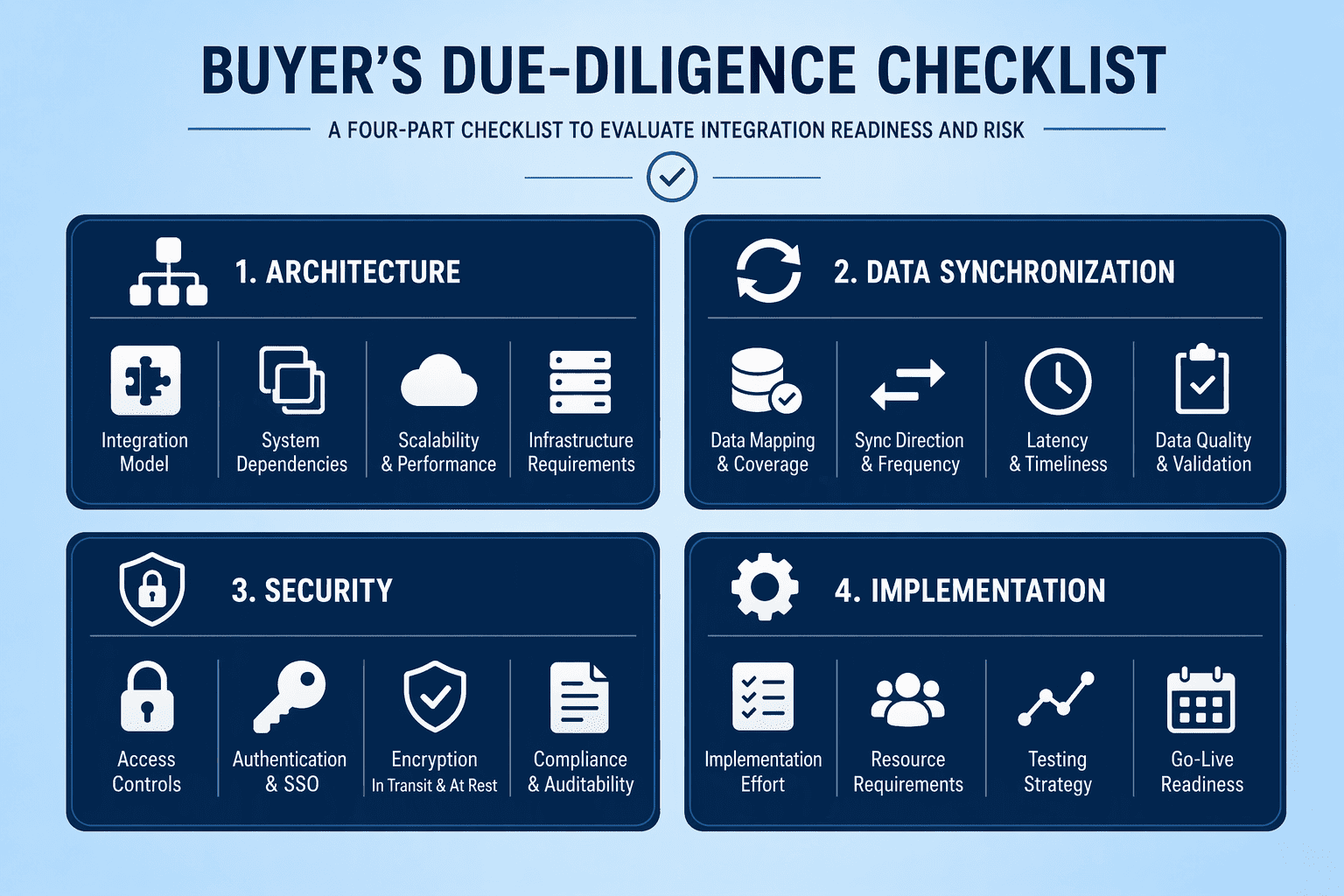
A vendor demo shows you what the platform does well. A due diligence checklist surfaces what the demo leaves out. These 17 questions belong in the follow-up technical session where you put your HRIS architect and your FP&A lead in the same room.
The first block probes architectural integrity.
The second block tests scenario modeling depth.
The third block addresses integration reality.
The best all-in-one platform for workforce and compensation planning is the one whose architecture matches how your organization actually operates. If your primary cost driver is reconciliation work between disconnected HR and Finance data, platforms with a native single source of truth like CompUp or ADP Workforce Now will close that gap faster than a powerful modeling layer bolted onto fragmented source systems.
The platform you pick in 2026 should weigh unification depth at least as heavily as modeling complexity. AI-driven anomaly detection, real-time pay equity analysis, and unified scenario modeling have moved from differentiators to table stakes. The platforms that get there first are the ones with a shared HR-Finance architecture underneath. A good next step is seeing how CompUp puts this into practice.
A true all-in-one platform unifies strategic headcount forecasting, manpower budgeting, and merit-cycle compensation planning in a single system with shared data.
CompUp and ADP Workforce Now offer the deepest native unification, with CompUp built from inception for workforce and compensation planning in one AI-native environment, and ADP anchoring planning to its HCM and payroll core. Workday Adaptive Planning connects tightly to Workday HCM data but remains a planning layer rather than a single execution system.
CompUp unifies workforce and compensation planning natively with AI-driven scenario modeling across both domains simultaneously. Anaplan and Pigment offer deeper multi-dimensional modeling but require separate HRIS integration for workforce data. Workday Adaptive Planning sits between them, with stronger HCM connectivity than the FP&A-first platforms but without fully collapsing planning and execution into one system.
Subscription ranges from $3 per employee per year for focused unified suites up to $50,000 to $150,000+ annually for enterprise FP&A platforms. Hidden costs include implementation services, data migration from legacy systems, per-user licensing for advanced scenario modules, and ongoing integration maintenance, which often exceed the base subscription in year one.
AI surfaces pay equity gaps automatically, flags budget anomalies before payroll runs, provides attrition risk insights, and generates guided recommendations for resolving issues. These capabilities move workforce planning from periodic, backward-looking reconciliation to continuous, forward-looking intelligence that catches cost and compliance risks earlier.
Ask whether the platform provides a single source of truth for HR and Finance data, handles real-time scenario modeling across compensation and headcount, offers implemented integrations or requires custom middleware, includes live AI anomaly detection versus roadmap promises, and can reference a customer similar to your organization's size and tech stack.
Community Manager (Marketing)
As a Community Manager, I’m passionate about fostering collaboration and knowledge sharing among professionals in compensation management and total rewards. I develop engaging content that simplifies complex topics, empowering others to excel and aim to drive collective growth through insight and connection.
Revolutionizing Pay Strategies: Don't Miss Our Latest Blogs on Compensation Benchmarking