

A 6.8% median gender pay gap for full-time workers does not appear by accident. It is the compounded outcome of design flaws baked into how organizations build salary ranges, level jobs, and run offer negotiations.
Most companies treat pay disparities as a cleanup problem, run a regression analysis, adjust a few outliers, and file the report. That approach is expensive, legally vulnerable, and never truly closes the gap. The math is straightforward: remediation costs more than prevention, and regulators are no longer accepting reactive fixes as adequate.
With the UK government's July 2026 consultation proposing mandatory equal pay audits and a new enforcement unit, and US states rolling out salary range disclosure laws, the regulatory clock is ticking. This article maps a six-step framework to architect compensation so disparities never materialize, spanning structured pay bands, bias-proof job leveling, continuous monitoring, and operationalized transparency.
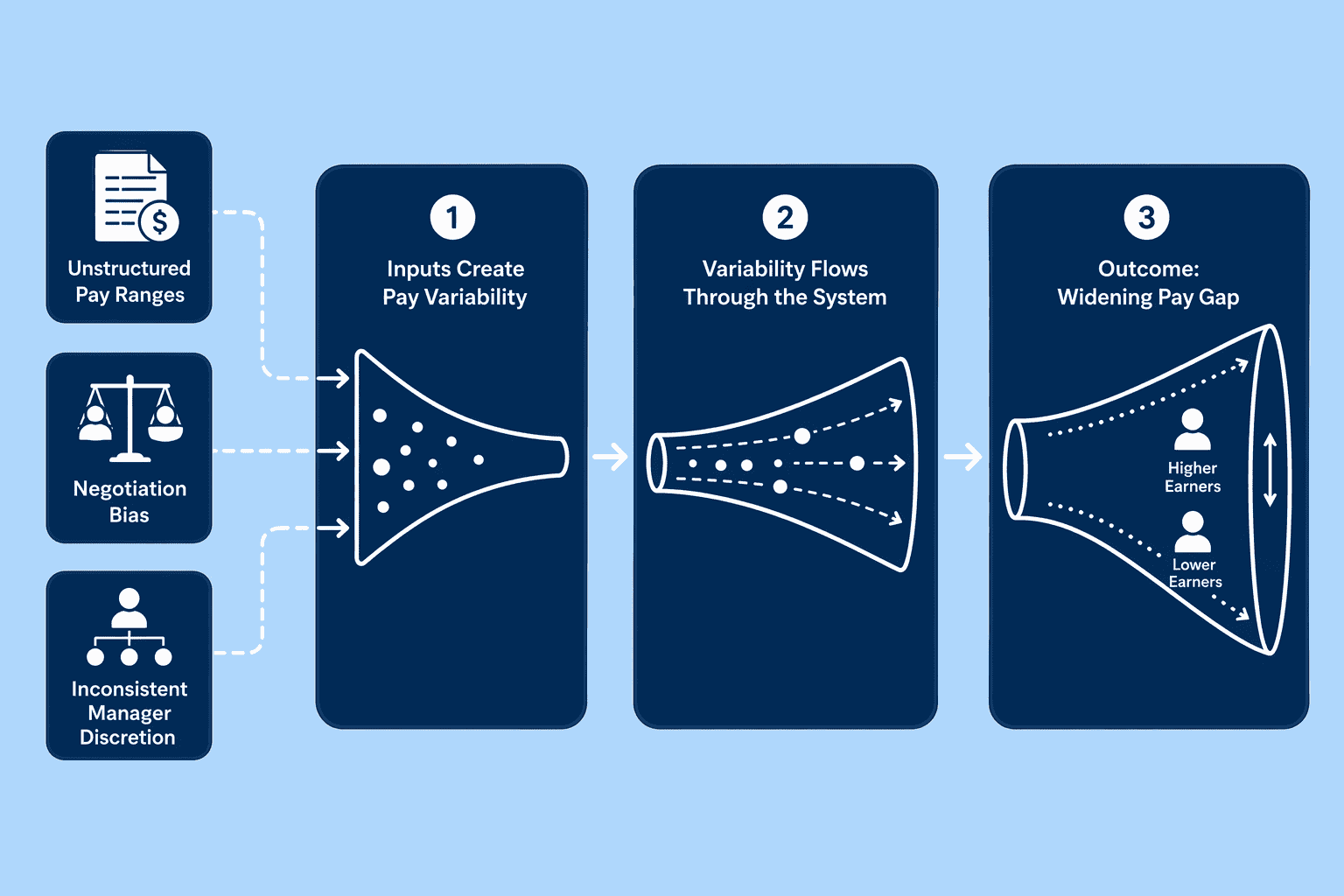
Pay disparities do not begin with a manager's individual decision. They begin inside three structural failure points that most organizations leave unexamined.
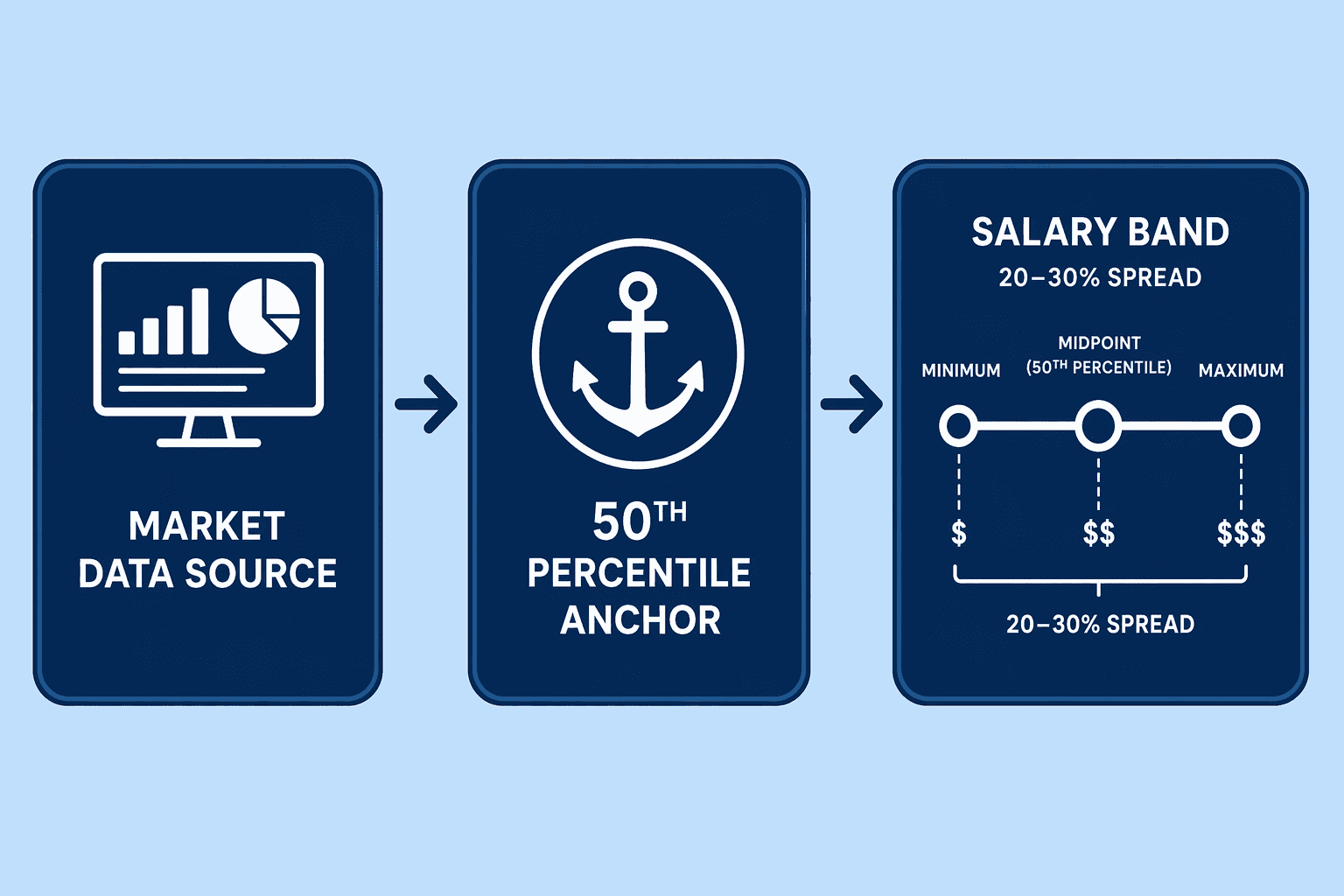
A compensation philosophy is not a mission statement. It is a specific, documented declaration: for example, that base salaries are anchored to the 50th percentile of a named market data source for each role family.
With that philosophy set, build pay bands with 20 to 30% spreads between minimum and maximum. Ranges this tight leave room for tenure and performance differentiation while making unexplained deviations instantly visible. More importantly, every existing employee's salary must be plotted against the new bands immediately. Flagging outliers, people paid below the band floor or above the cap, before any new hiring happens surfaces inequities already embedded in the workforce. Overly wide bands exceeding 50% or retroactively creating bands to justify a negotiated offer codify the very disparities these structures are meant to prevent.
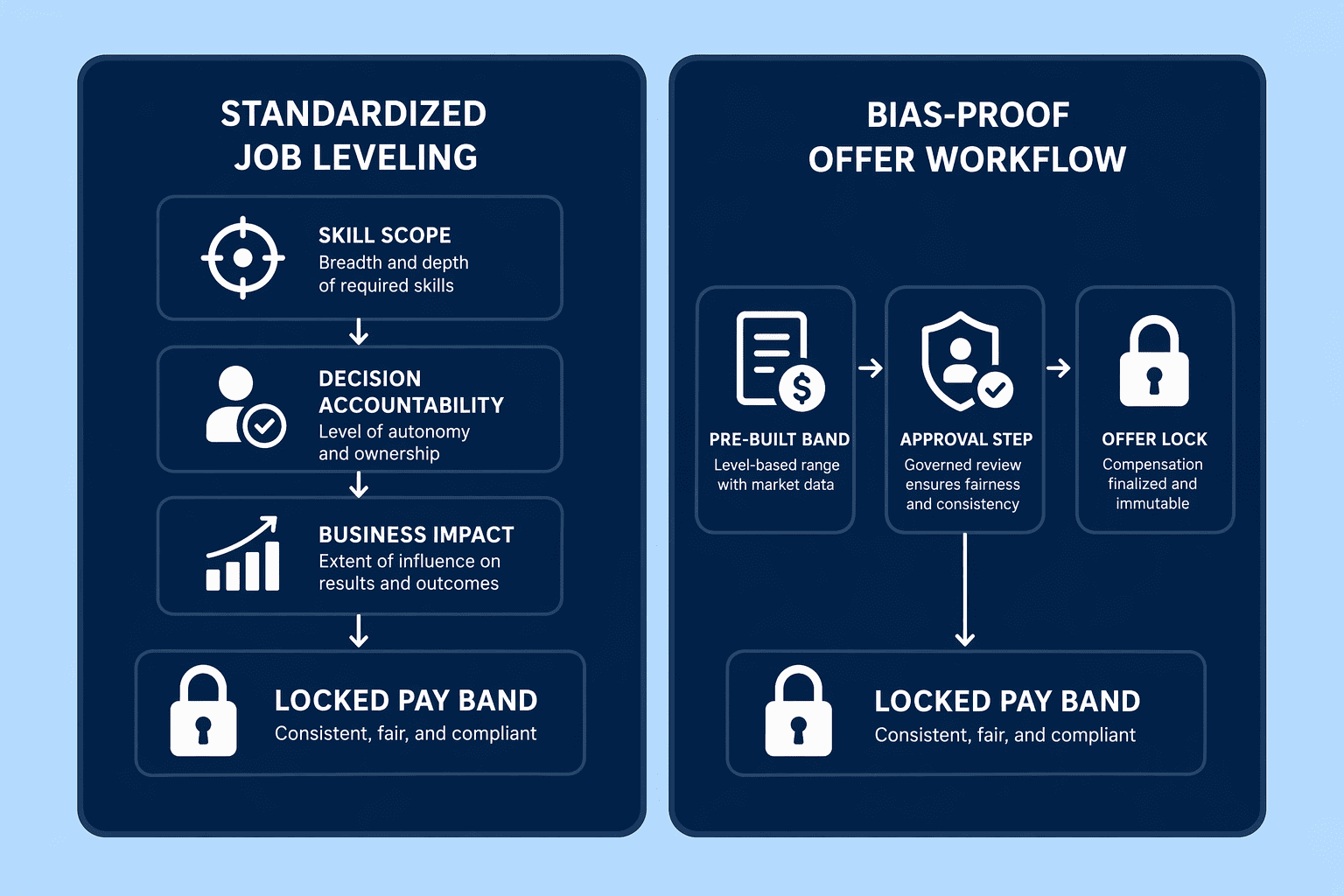
A defined band means nothing if every candidate enters at a different level depending on who made the offer. The operational fix is two-part: lock leveling criteria and strip bias out of the offer stage.
| Dimension | Standardized Job Leveling | Bias-Proof Offer Protocol |
|---|---|---|
| Core Mechanism | Job evaluation scheme with defined, weighted criteria (skill scope, decision accountability, business impact) | Every offer is anchored to the pre-built band; negotiation ranges are eliminated |
| Bias Elimination | Removes manager discretion on level by applying consistent criteria across all candidates | Prohibits salary history questions entirely, in line with EHRC recommendations |
| Regulatory Alignment | Aligns with UK consultation proposals for mandatory job evaluation schemes | Meets Fair Work Act requirements that employers must pay all employees equally for work of equal or comparable value |
| Operational Outcome | Two hires for the same role land at the same level by design, not by luck | The offer number is the band reference point, not the candidate's last paycheck plus 10% |
Standardized leveling converts subjective manager judgment into a repeatable evaluation. The offer protocol then closes the second vector: when no candidate is asked for salary history and no recruiter has a negotiation range to work with, the band becomes the only anchor that matters.
An annual pay equity audit is a rearview-mirror exercise. By the time it flags a disparity, the affected employee may have already been underpaid for 12 months and started interviewing elsewhere.
Continuous monitoring means running regression analyses by protected characteristics at the cadence of business events, every compensation review cycle, every hiring surge, every promotion round. You are looking for drift: a group's compa-ratio slipping quarter-over-quarter, or a pattern of offers landing at lower band penetration for one demographic. The proposed UK Equal Pay Regulatory and Enforcement Unit will have the power to compel disclosure of pay data before a formal investigation even begins, meaning the first time an organization discovers its own pay gap should never be from a regulator's letter.
Catch drift when it is a comp review signal, not a litigation trigger. A compa-ratio that drifts by even two or three percentage points over two quarters can signal a systemic problem forming long before it hits a traditional audit threshold.
One effective approach ties regression analyses directly to the approval workflows managers use during merit cycles, flagging proposed increases that would widen an existing gap before they are finalized. The goal is not to catch every anomaly, it is to make pay equity part of every compensation decision, so the annual audit becomes a confirmation step rather than a scramble.
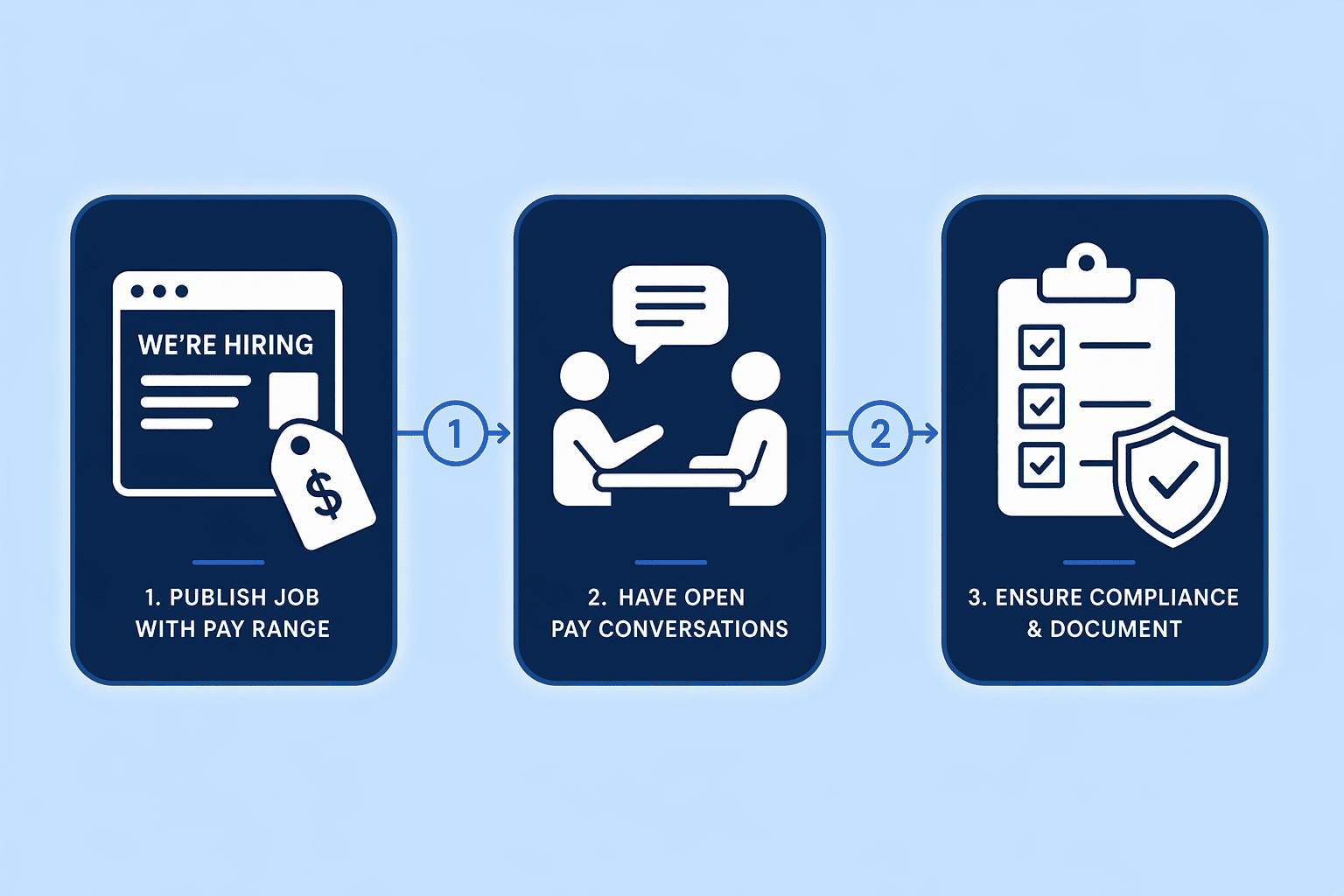
Many organizations fear pay transparency. But opacity is now the bigger legal risk, and the legislative momentum is unmistakable. Implement a transparency roadmap in this sequence:
This sequence transforms transparency from a feared disclosure into the organization's strongest legal shield.
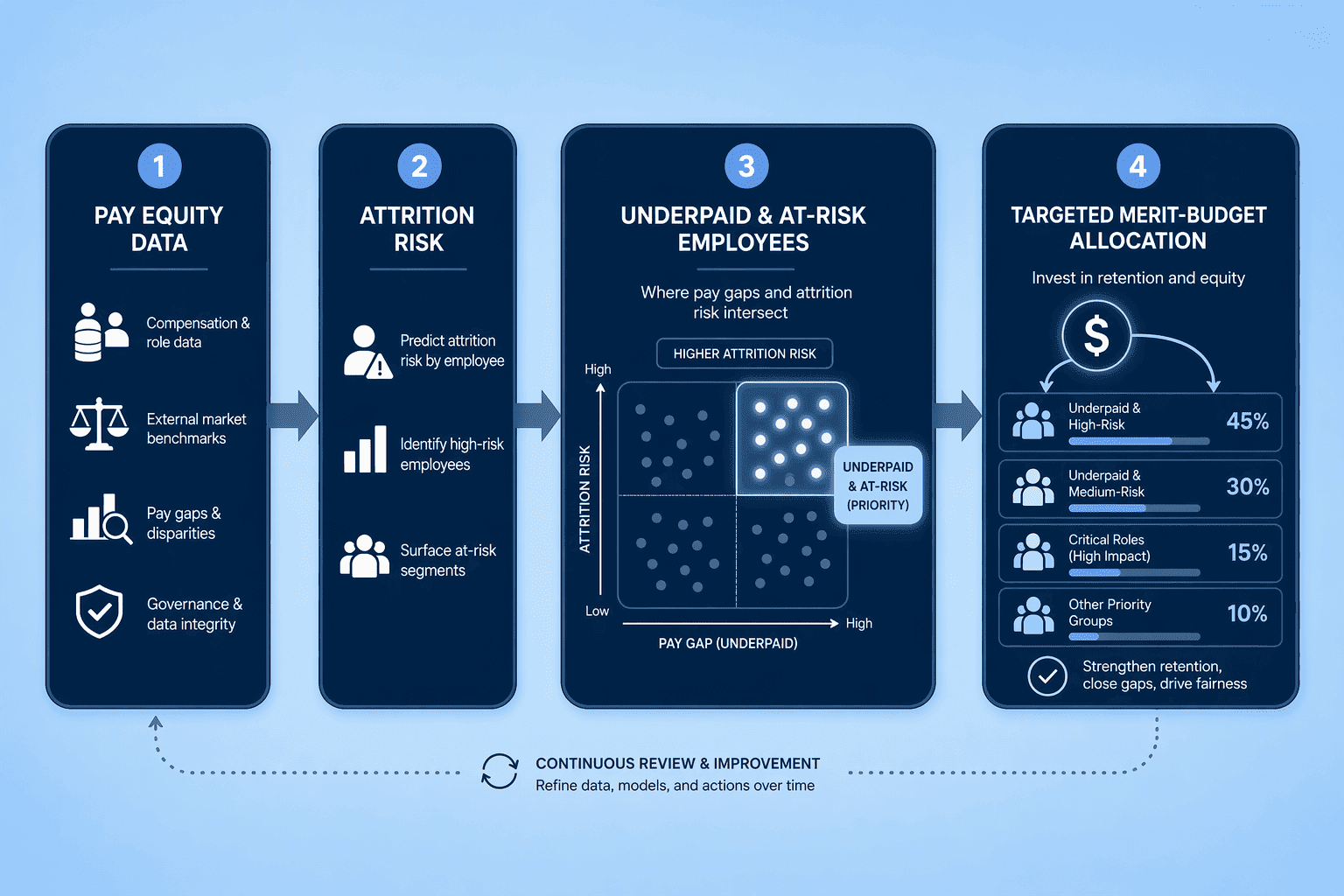
Pay equity data is one of the most underused signals in workforce planning. When analyzed by protected characteristics alongside attrition patterns, it reveals precisely where retention risk is concentrated and what it will cost to fix.
Consider the typical merit cycle: a 3.5% budget spread thinly across the entire workforce. Without equity intelligence, that budget lands evenly and preserves existing gaps. With it, the same 3.5% becomes a precision instrument, directed first to employees whose pay sits below the band midpoint, who belong to underrepresented groups, and whose attrition would cost 1.5x to 2x their annual salary to replace.
You can use a platform like CompUp to link workforce cost visibility with pay equity analytics, surfacing which business units are accumulating attrition risk through pay drift and where headcount budget should be reallocated to preempt turnover.
This reframes pay equity from an HR compliance metric into a CFO-level strategic input. The question stops being "Are we compliant?" and becomes "Where is every compensation dollar actually buying retention, and where is it subsidizing future replacement costs?"
Pay gaps don't emerge from market forces alone. They're built into the system, through vague salary bands, inconsistent leveling, hiring rules that carry old assumptions forward, and audits that happen only after the damage is done.
Regulators are moving faster than most companies realize. The UK is consulting on a new Fair Work Enforcement Unit. Several US states already mandate pay-range disclosure. The EHRC has recommended giving UK workers the legal right to know what colleagues earn. Each of these shifts turns pay equity from an HR aspiration into a compliance requirement.
That changes the math. Waiting until a gap appears and then defending it in a filing or a news cycle is far more expensive than preventing it. The organizations that will fare best are building the scaffolding right now: structured salary bands, offer processes that strip out negotiation bias, continuous pay monitoring, and transparency rules that work in practice, not just on paper.
Design the disparities out at the system level. You won't have to clean them up later. If you're weighing options, CompUp is worth a closer look.
Pay disparities stem from three design flaws:
Organizations can identify them by mapping current salaries against structured bands and running regression analyses before any hiring cycle begins.
Document a specific compensation philosophy, for example, anchoring base pay to the 50th percentile of a named market data source. Then follow these steps:
Pay transparency eliminates the information asymmetry that allows disparities to persist. In the US, California's SB 1162 and other state laws now require salary range disclosure on job postings, forcing internal alignment before candidates see the numbers. Organizations that adopt transparency proactively reduce both legal exposure and cultural friction.
Continuous monitoring replaces annual audits by running regression analyses at the cadence of business events, every compensation review, hiring surge, and promotion cycle. Teams flag compa-ratio drift by protected characteristic and investigate before the gap widens, rather than discovering it 11 months later in a compliance report.
Strategic workforce planning ties pay equity data to attrition risk and headcount forecasting. Instead of spreading a flat merit budget across all employees, organizations direct dollars first to underrepresented groups below band midpoint where turnover cost is highest, making equity a retention and cost intelligence lever.
The framework follows six sequential steps:
Community Manager (Marketing)
As a Community Manager, I’m passionate about fostering collaboration and knowledge sharing among professionals in compensation management and total rewards. I develop engaging content that simplifies complex topics, empowering others to excel and aim to drive collective growth through insight and connection.
Revolutionizing Pay Strategies: Don't Miss Our Latest Blogs on Compensation Benchmarking