
The workforce planning software market reached $9.76 billion in 2026, growing at a 4.3% CAGR. Yet for many HR and finance leaders, that headline growth masks a daily frustration: the tools they rely on for enterprise planning were never built to handle their most expensive line item with precision. Headcount comprises as much as 80 percent of annual company expenses, but the dominant platforms often treat compensation as a derived data point you adjust after the real planning is done.
Workday Adaptive Planning provides a broad, cross-functional foundation. It connects data from any ERP or HCM system through its Elastic Hypercube Technology. But when it is time to run a detailed merit cycle, model equity grants against dilution targets, or automate variable pay allocations, the platform falls silent.
Those workflows demand custom configuration, separate add-on modules, or clumsy spreadsheet imports that break the real-time model. FP&A owns the strategic plan.
HR executes compensation operations. The two rarely meet inside the tool.
The market is responding. A new category of AI-native, compensation-led platforms has emerged to close this gap. Tools like CompUp prioritize the compensation cycle as the core planning object, embedding merit, equity, and variable pay directly into headcount models. This shift means your organization no longer has to choose between the breadth of a suite and the depth of a specialist. The 2026 alternatives to Workday break down into three distinct camps: the compensation-first specialist, the cross-functional modeling powerhouse, and the agile mid-market disruptor.
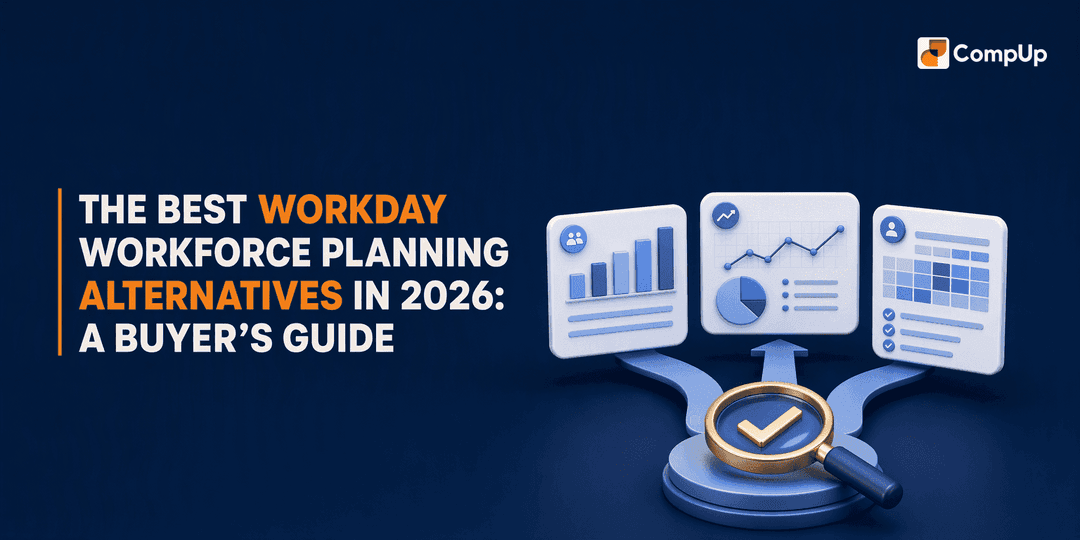
This buyer's guide compares four platforms across the dimensions that matter most: core planning strength, deployment speed, compensation depth, and ideal fit. We examine CompUp, Anaplan, Pigment, and Workday Adaptive Planning itself to give you a decision framework grounded in capability, not marketing copy.
Each platform profiled below targets a distinct planning pain point. Your choice hinges on whether compensation automation, cross-functional modeling, or speed of deployment is your primary constraint.
CompUp is the best overall alternative for organizations where compensation-led headcount planning is the operating constraint. It earns this position because the compensation cycle is the native core of the model. Merit pools, equity grant budgeting, and variable pay forecasting execute inside the same engine that generates headcount scenarios. For HR and Total Rewards teams that have spent years patching together FP&A outputs with standalone comp tools, this architecture removes the heaviest integration tax.
Anaplan remains the top choice for large enterprises running complex, multi-departmental scenarios across sales, supply chain, and finance. It is the cross-functional FP&A powerhouse that Workday Adaptive Planning users often migrate toward when they outgrow the suite's modeling flexibility.
Pigment takes the mid-market crown for agility. Its interface demands less dedicated admin overhead than Anaplan or Workday, and its deployment cycles are measured in weeks, not months. For a high-growth company with 500 to 2,000 employees that needs a planning platform to keep pace with organizational change, Pigment hits a spot the other three do not.
Workday Adaptive Planning remains a viable, broad-based suite, but its 2026 position is as the incumbent that enterprises supplement with specialist tools, particularly for compensation automation. Its deployment timeline of 6 to 16 weeks and dedicated admin requirements mean it is most defensible in organizations already deeply embedded in the Workday HCM and Financials ecosystem.
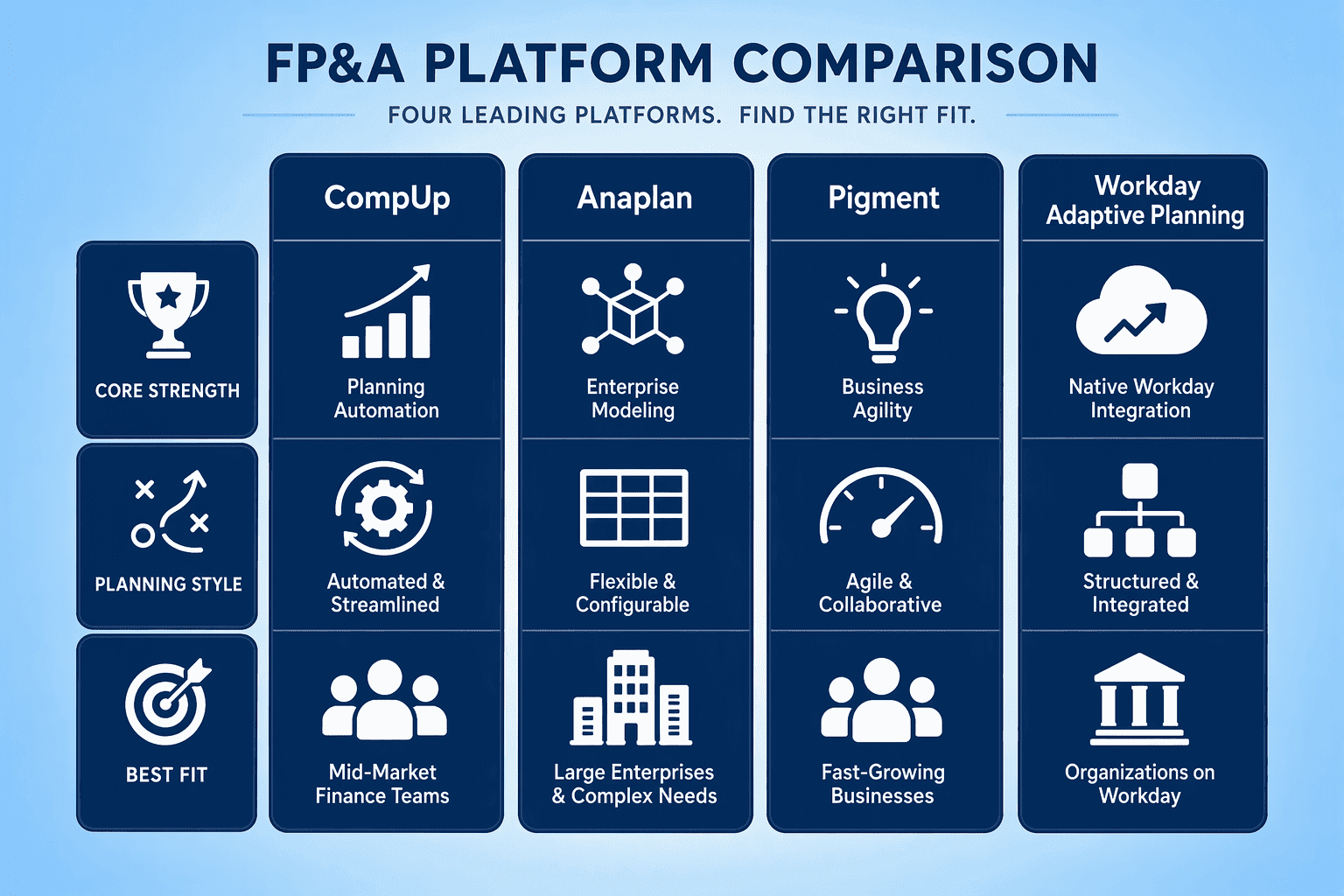
The table below breaks down the four platforms across the dimensions that drive purchase decisions for most HR and finance leaders.
| Dimension | CompUp | Anaplan | Pigment | Workday Adaptive Planning |
|---|---|---|---|---|
| Core Strength | Compensation-led headcount planning with native merit, equity, and variable pay modeling | Cross-functional FP&A with powerful scenario modeling across departments | Agile, drag-and-drop modeling for high-growth mid-market teams | Broad FP&A suite with aggregate headcount budgeting and HCM sync |
| Compensation Planning Depth | Deep: embedded merit cycles, equity grant modeling, real-time budget simulation | Moderate: requires custom configuration; headcount and payroll dashboard available | Light to moderate: not a compensation-first architecture | Low: no native compensation cycle automation; relies on add-on modules |
| Deployment Time | Rapid SaaS, weeks-based | Months, with dedicated admin resources | Weeks; rapid deployment for mid-market | 6 to 16 weeks; dedicated admin overhead |
| HCM Integration | Integrates with BambooHR, Lattice, Darwinbox, Workable, others | Native integrations with 10+ business applications; broader partner ecosystem | Natively integrates with over 30 business applications including HRIS and ERP | Out-of-the-box integration with any ERP, HCM, CRM; native Workday sync |
| Ideal Company Size | Mid-market to enterprise (200+ employees seeking comp-led planning) | Large enterprise with dedicated FP&A and admin resources | High-growth mid-market (500 to 2,000 employees) | Enterprise embedded in Workday ecosystem |
| G2 Rating | 4.9/5 | Competitive in enterprise FP&A cohort | Strong in mid-market FP&A cohort | Scores higher than Oracle, Anaplan, Planful, and IBM in service and support, integration and deployment, and evaluation and contracting |
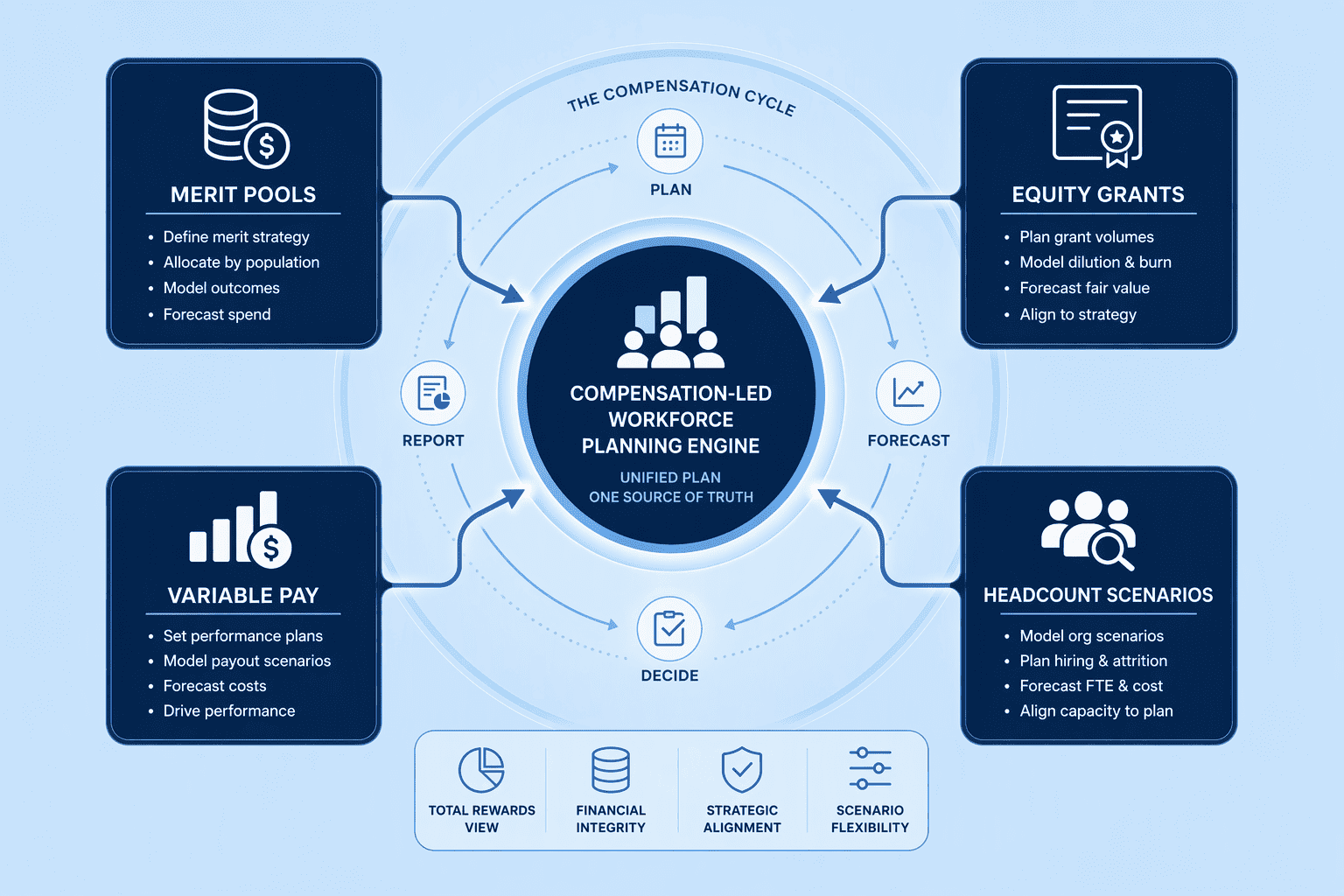
CompUp is an AI-native workforce planning platform built for HR and Total Rewards teams. Its core architecture makes the compensation cycle the organizing logic of the plan. The platform runs merit cycle modeling, equity grant forecasting, and variable pay allocations inside the same forecasting engine, rather than generating a headcount figure and deriving cost as a secondary output. A CHRO can model a 4 percent merit pool against a 1,200-person organization, layer in restricted stock vesting schedules, and see the real-time budget impact across business units without exporting a file to a spreadsheet or asking FP&A for an offline reconciliation.
What distinguishes the platform from broader FP&A suites is its compensation depth. It provides real-time pay equity analysis, compa-ratio tracking, and compliance automation alongside headcount forecasting and scenario modeling. For organizations where headcount cost drives the P&L, this dual capability eliminates the manual bridge work that teams running Workday Adaptive Planning or Anaplan typically perform between cycles. Potential buyers comparing these platforms find that evaluation breaks cleanly along a fault line: cross-functional modeling breadth versus compensation execution depth.
CompUp is not an enterprise HCM suite, and it does not attempt to be one. It integrates with existing HRIS platforms such as BambooHR, Lattice, Darwinbox, and Workable to pull workforce data into the planning model. For organizations that have already invested in a core HCM but need deeper headcount and compensation planning than their suite provides, this architecture fits a targeted gap.
Deployment is rapid, SaaS-based, and starts at $3 per employee per year. With a 4.9/5 G2 rating and over 200 global companies on the platform, CompUp has established itself as the specialist alternative for teams prioritizing compensation automation over suite breadth. It does not offer the multi-departmental FP&A modeling depth of Anaplan or the easy drag-and-drop interface of Pigment, but for the specific problem of running a compensation cycle inside a workforce plan, it is purpose-built.
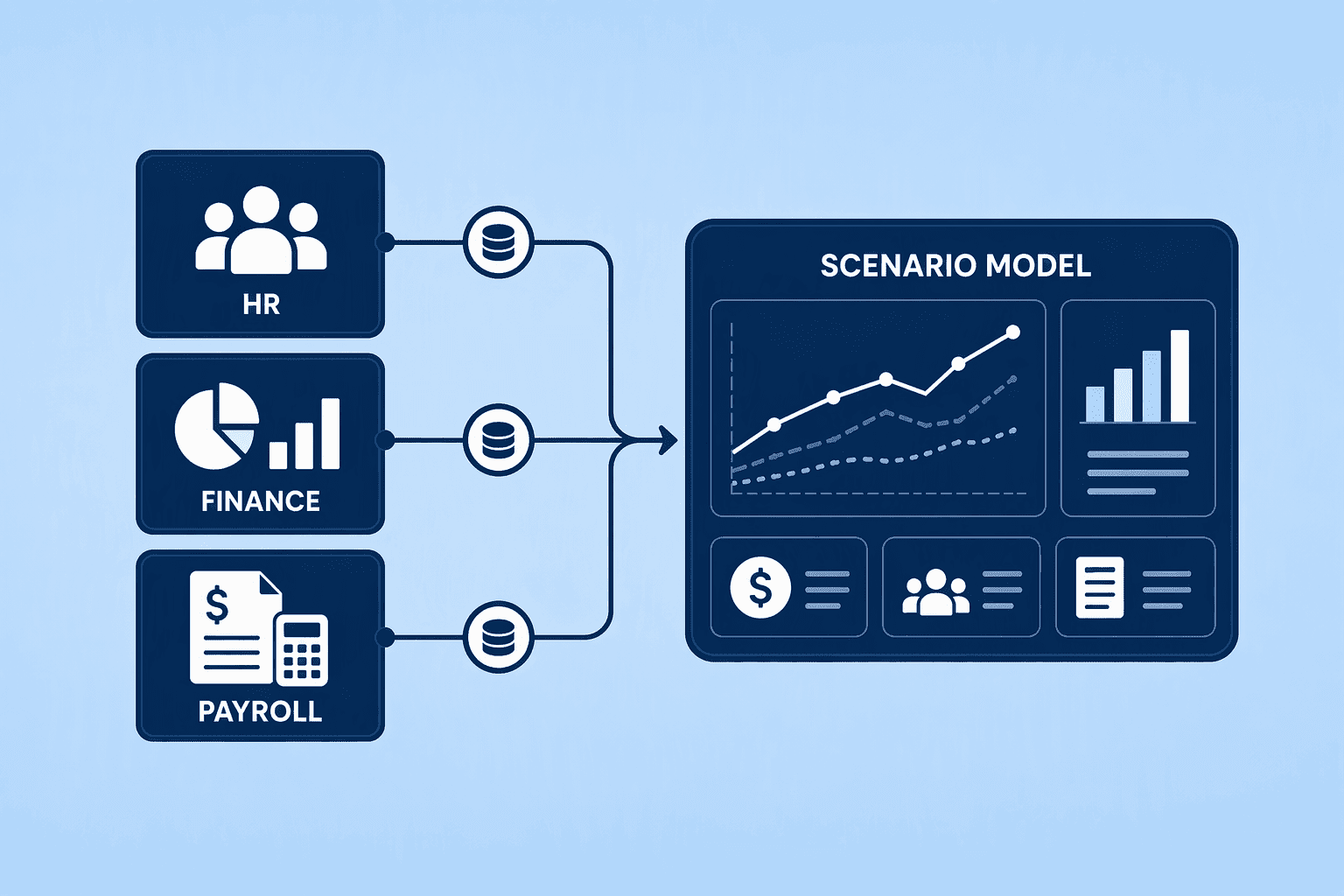
Anaplan takes the headcount and payroll planning process out of spreadsheet silos and puts it into one dashboard, enabling finance and HR to track actual and forecasted headcount in a unified model. Its strength is cross-functional scenario modeling at enterprise scale.
The Polaris engine has no storage capacity limit, which makes Anaplan suitable for organizations running complex, interconnected models across sales, supply chain, marketing, and workforce planning. The top-down strategic phase begins by feeding in financial and HR system information and modeling what-if changes in location, salaries, and benefit assumptions. The bottom-up operational phase layers in requisitions, hires, leavers, and joiners for each department and cost center.
Where Anaplan falls short of specialist tools is compensation depth. It natively integrates with over 10 business applications, but detailed merit cycle modeling, equity grant forecasting, and variable pay automation require custom configuration. The platform prioritizes modeling flexibility over embedded domain logic.
Anaplan is a large-enterprise tool with the dedicated admin resources and implementation timelines to match. If your primary need is a single source of truth for cross-functional planning that includes workforce as one dimension among many, it is a strong fit. If your constraint is fast, accurate compensation cycle execution, you will likely supplement Anaplan with a specialist tool like CompUp.
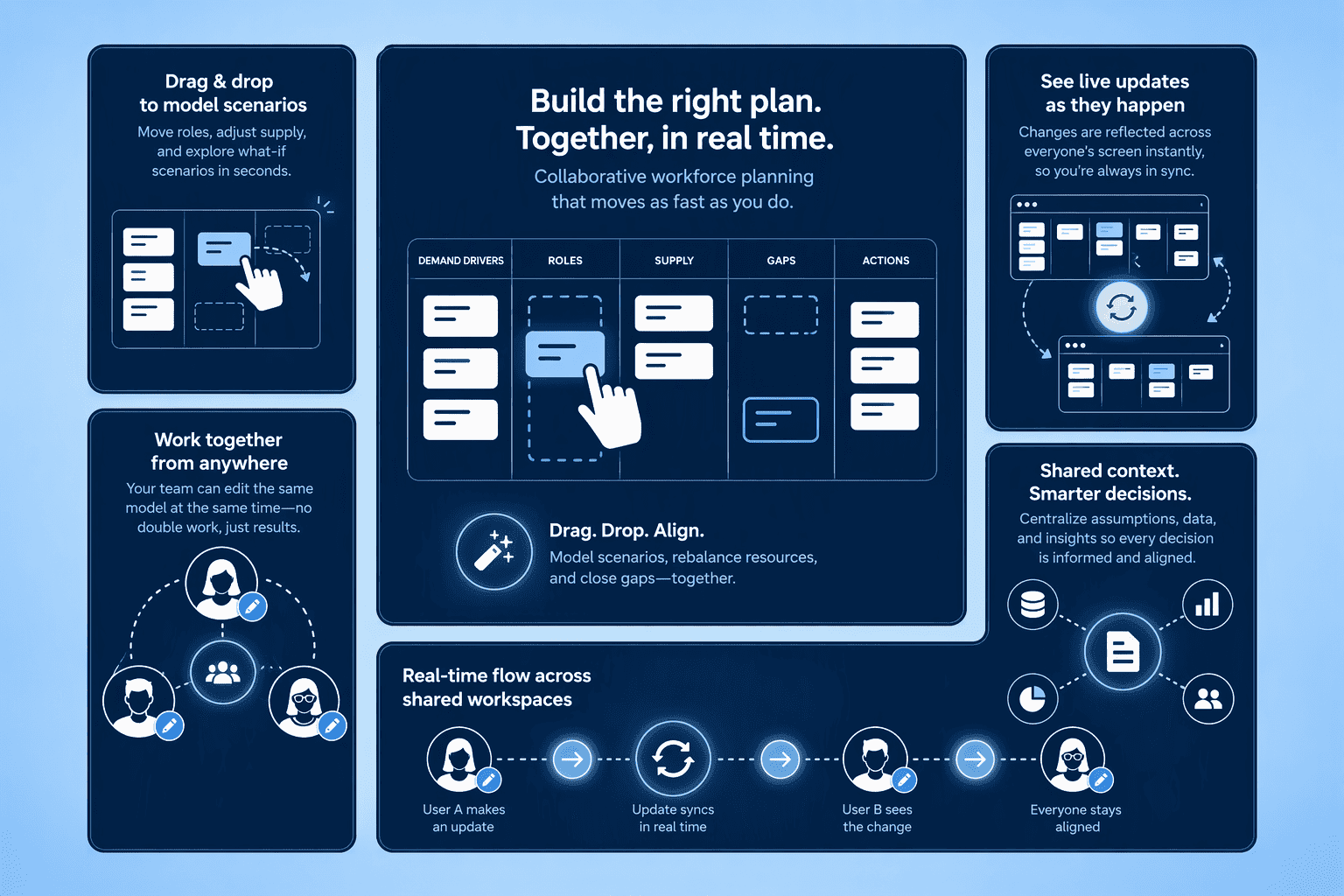
Pigment is the agile alternative for high-growth companies that need planning sophistication without enterprise deployment timelines. Its drag-and-drop modeling interface lowers the technical barrier for business users, and deployment is measured in weeks. The platform operates a single engine with workspaces not limited in storage capacity, and end users are not required to refresh their pages to see the effect of data updates by other users while working in the same model. Pigment natively integrates with over 30 business applications spanning ERP, CRM, HRIS, and BI solutions, giving it broad connectivity without a full-suite migration.
What Pigment trades away is multi-entity consolidation depth. For large organizations with complex intercompany structures and statutory reporting requirements, Pigment's consolidation capabilities are lighter than Anaplan or Workday's. But for a 500-to-2,000-employee company that is scaling fast and needs a planning platform that can keep pace with organizational change, this trade-off is often the right one. Pigment's headcount planning is strong for aggregate budgeting and scenario modeling, but detailed merit cycle and equity grant management will typically require custom modeling or a supplementary tool.
If your organization values speed and ease over deep multi-entity FP&A muscle, Pigment is the most direct alternative to Workday Adaptive Planning's deployment complexity.
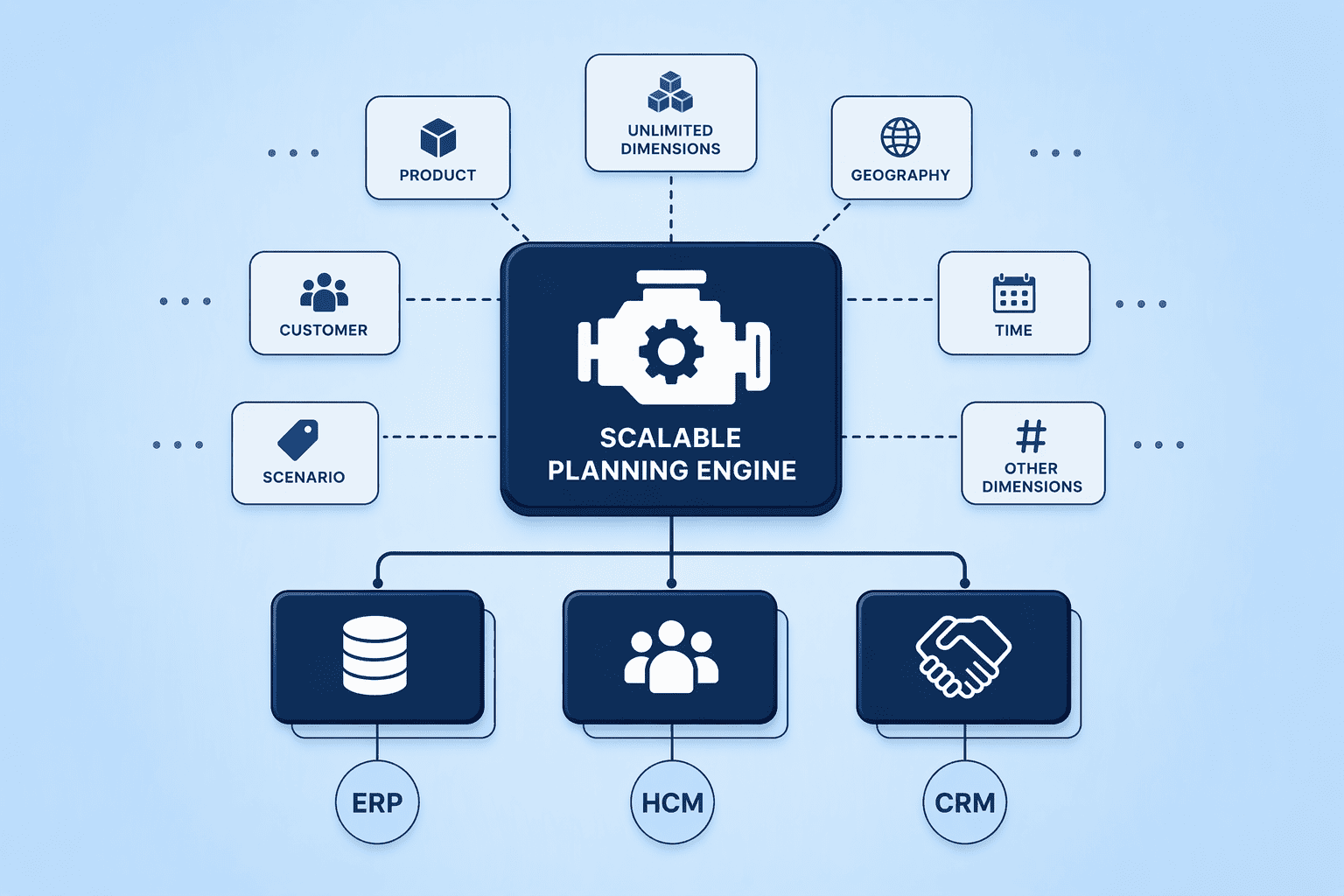
Workday Adaptive Planning is the suite most organizations are evaluating against, and it earns that role on the strength of integration. Powered by Elastic Hypercube Technology, the platform enables companies to manage large, data-intensive models with a flexible, scalable engine that supports unlimited dimensions and versions. It connects to data from any ERP, HCM, or CRM system with out-of-the-box integration, requires no third-party tools, and supports planning via web, mobile, and Excel. Across Gartner Peer Insights reviews, Workday Adaptive Planning scored higher than Oracle, Anaplan, and Planful in service and support, integration and deployment, and evaluation and contracting.
But the platform's broad coverage creates exposure at the edges, particularly for compensation. Workday Adaptive Planning supports dynamic headcount and skills-based plans and includes what-if scenario modeling capabilities for multiple departments. Yet workforce planning tools typically lack detailed compensation cycle automation. Running a merit cycle, modeling equity grants, or automating variable pay allocations inside Workday requires custom configuration that strains the model, or a separate compensation tool outside the Workday environment. For HR teams coordinating annual cycles, this means bridging the FP&A model with standalone comp spreadsheets at exactly the moment real-time accuracy matters most.
Deployment is enterprise-grade. Workday Adaptive Planning requires dedicated admin resources and timelines of 6 to 16 weeks. Data imports demand creating Workday credentials, configuring data sources, and setting up security. The Workforce Planning Configuration Manager handles those connections, but the process is administrative and manual. SSO and user sync are supported via SAML, which streamlines access once the foundational setup is complete.
Workday Adaptive Planning is strongest where the organization is already embedded in the Workday HCM and Financials ecosystem and where compensation cycle automation is handled through a supplementary specialist. As a standalone workforce planning platform, its gap in native compensation depth is a structural weakness that AI-native alternatives are exploiting in 2026.
Most teams lose the bulk of their planning hours to one bottleneck. Figure out which one is yours, and the platform choice becomes obvious.
The workforce planning market's $9.76 billion size and 4.3% growth in 2026 reflects a structural shift, not a cyclical one. Organizations are moving away from treating compensation as a downstream output of the planning process and toward platforms where merit cycles, equity grants, and variable pay are the native modeling objects. This is the year that the manual bridge between FP&A models and HR compensation execution becomes a competitive liability, not an operational inconvenience.
CompUp leads this shift as the highest-rated specialist, with a 4.9/5 G2 score earned by embedding the full comp cycle inside the workforce plan. Anaplan remains the enterprise cross-functional standard, and Pigment delivers rapid deployment for mid-market agility. Your choice hinges on a single question: is your primary constraint modeling breadth, deployment speed, or compensation execution accuracy? Once you answer that, the platform decision becomes clear. A good next step is seeing how CompUp puts this into practice.
CompUp (4.9/5 G2) leads for compensation-led headcount planning, Anaplan excels at cross-functional FP&A scenario modeling, and Pigment provides agile drag-and-drop modeling for high-growth mid-market companies. Each targets a different constraint: comp depth, modeling breadth, or deployment speed.
AI-native platforms embed the compensation cycle (merit, equity, variable pay) directly into the forecasting engine. Traditional tools like Anaplan and Workday require custom configuration or separate modules for detailed comp management, creating a manual bridge between FP&A models and HR execution.
Most are cloud-based SaaS. CompUp starts at $3 per employee per year with rapid deployment. Pigment deploys in weeks. Anaplan and Workday Adaptive Planning require dedicated admin resources and longer timelines, with Workday's deployment ranging from 6 to 16 weeks.
Prioritize headcount planning depth, native compensation cycle support (merit, equity, variable pay), scenario modeling flexibility, deployment speed, and HCM/ERP integration. Gartner reviewers compare vendors across evaluation and contracting, integration and deployment, service and support, and specific product capabilities.
Yes. Pigment integrates with over 30 business applications, Anaplan with over 10, and Workday connects to any ERP, HCM, or CRM out of the box. CompUp integrates with BambooHR, Lattice, Darwinbox, and Workable, pulling HRIS data into the planning model.
Many organizations supplement rather than replace. Workday's suite strength is cross-functional modeling and HCM integration. Adding a specialist tool like CompUp for compensation cycle automation bridges the platform's primary gap without requiring a full migration.
Community Manager (Marketing)
As a Community Manager, I’m passionate about fostering collaboration and knowledge sharing among professionals in compensation management and total rewards. I develop engaging content that simplifies complex topics, empowering others to excel and aim to drive collective growth through insight and connection.
Revolutionizing Pay Strategies: Don't Miss Our Latest Blogs on Compensation Benchmarking