
Your last compensation cycle probably started in a spreadsheet. Different versions flew between HR, finance, and department heads. Version-control nightmares, formula breaks, and a creeping suspicion that pay gaps were hiding in plain sight. If that sounds familiar, 2026 is the year you stop managing compensation like it’s 2016. Dedicated compensation management platforms have turned a compliance chore into a strategic lever.
This isn’t about swapping one tool for another. It’s about replacing guesswork with market data, manual rule-checking with automated equity flags, and chaotic email threads with a structured pay review. Across 2,220 verified reviews, users rate the value for money of leading platforms at 4.68 out of 5, signaling that the category has matured. Pricing spans a wide band, from entry-level plans at $5 per employee per month to mid-tier options at $19 to $29, and bundled models like Gusto’s $49 base plus $6 per person.
In this guide, we compare the top platforms, break down pricing, and give you a realistic implementation roadmap so you can pick a system that matches your headcount, complexity, and pay-equity goals.
These are the bottom-line findings from our evaluation of 20+ compensation platforms and pricing from vendors including Deel, Gusto, Lattice, CompUp, and CaptivateIQ.
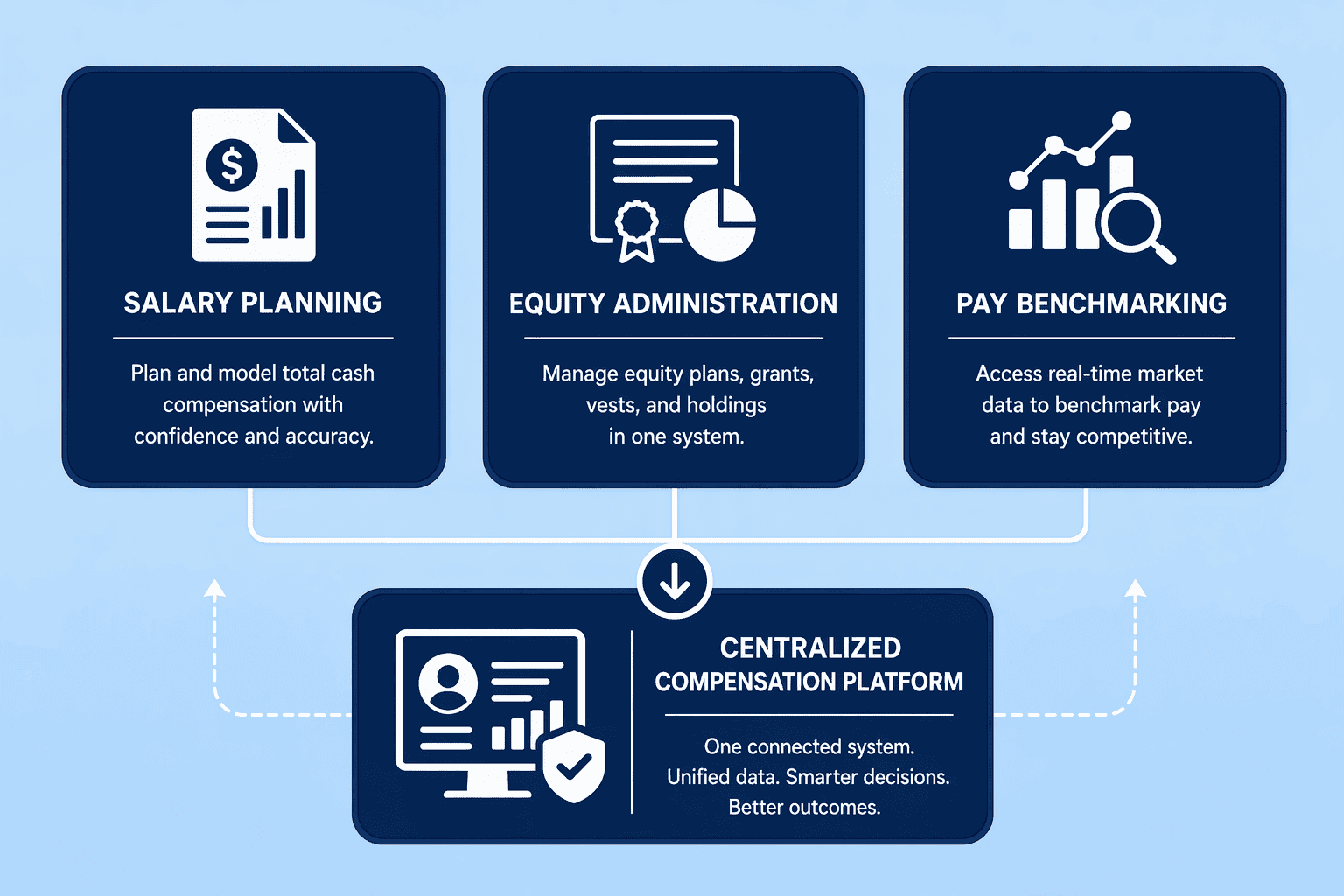
At its core, a compensation management platform automates the three activities that break spreadsheets: salary planning, equity administration, and pay benchmarking. Instead of a finance team pulling market data from PDF surveys and an HR team maintaining a separate band spreadsheet, a single system enforces policies in real time, flags employees who are below range, and models the cost of proposed adjustments before you commit them.
The shift from a general-purpose tool is bluntly practical. A spreadsheet cannot tell you it’s about to create a pay gap; a platform like Lattice can, because it layers compensation cycle management, analytics, and market benchmarks on top of your employee data. GoCardless, for example, moved its review participation rate from 62% to 100% after adopting Lattice, a jump no shared Excel file could produce.
In short, a compensation platform turns pay from an annual fire drill into a year-round, data-driven process.
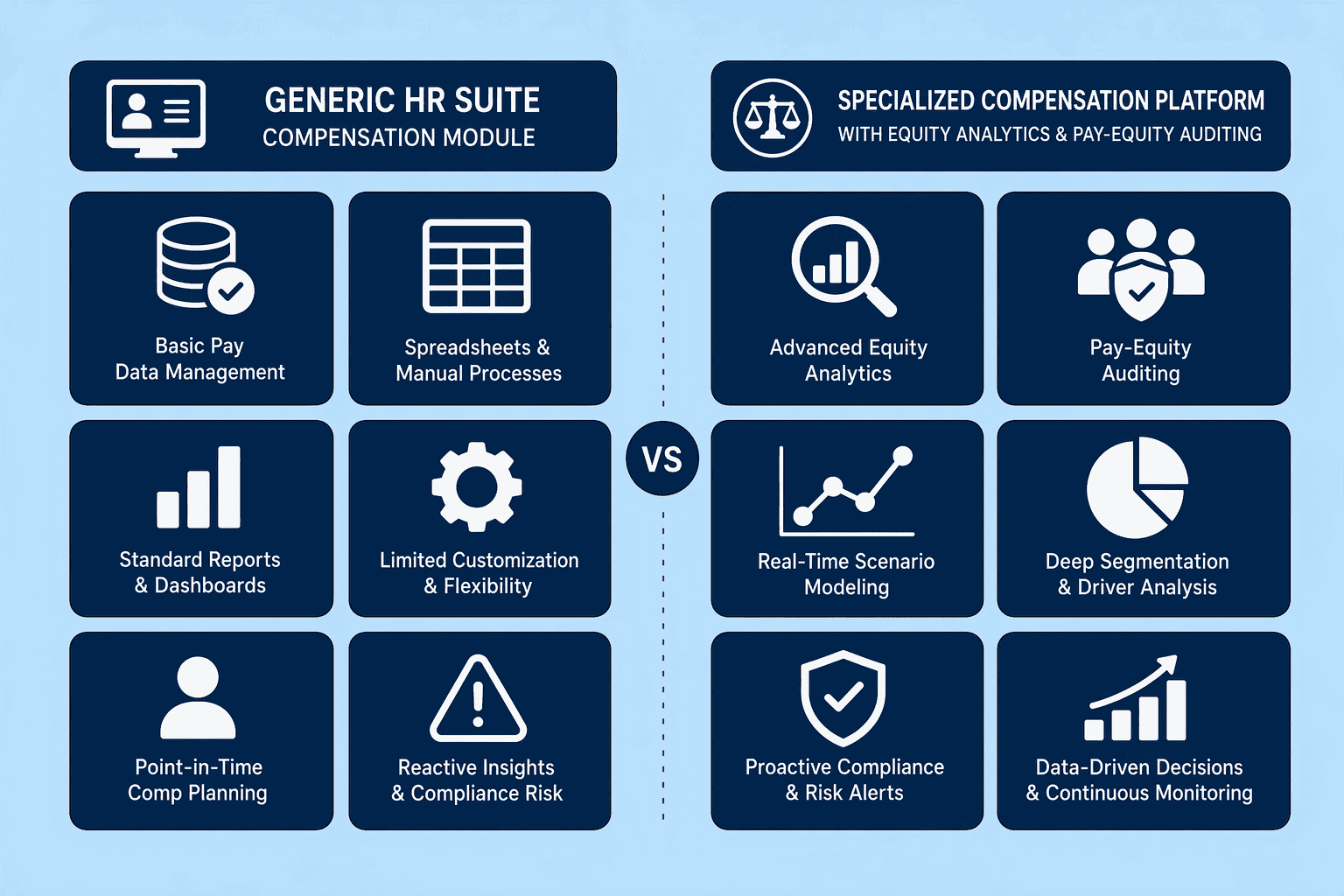
Most HR suites bundle compensation as a module, and that module usually handles basic pay-change approvals well. The trouble starts when you need advanced equity analytics or pay-equity auditing. BambooHR, for instance, integrates Mercer market data into its Compensation Benchmarking feature and lets you define job levels and salary bands. But if your organization grants option pools or RSUs, you’ll quickly hit the module’s ceiling. A FreeFlight Systems coordinator praised BambooHR’s benchmarking as “quick and easy,” yet companies with equity-heavy total rewards often find themselves exporting data to a specialist anyway.
The dividing line is headcount and complexity. When compensation structures involve multi-country equity plans or complex commission calculations, tools like Ledgy or CaptivateIQ fill gaps that HRIS suites ignore. CaptivateIQ’s platform, for example, models variable compensation scenarios that a generic module would simply reject.
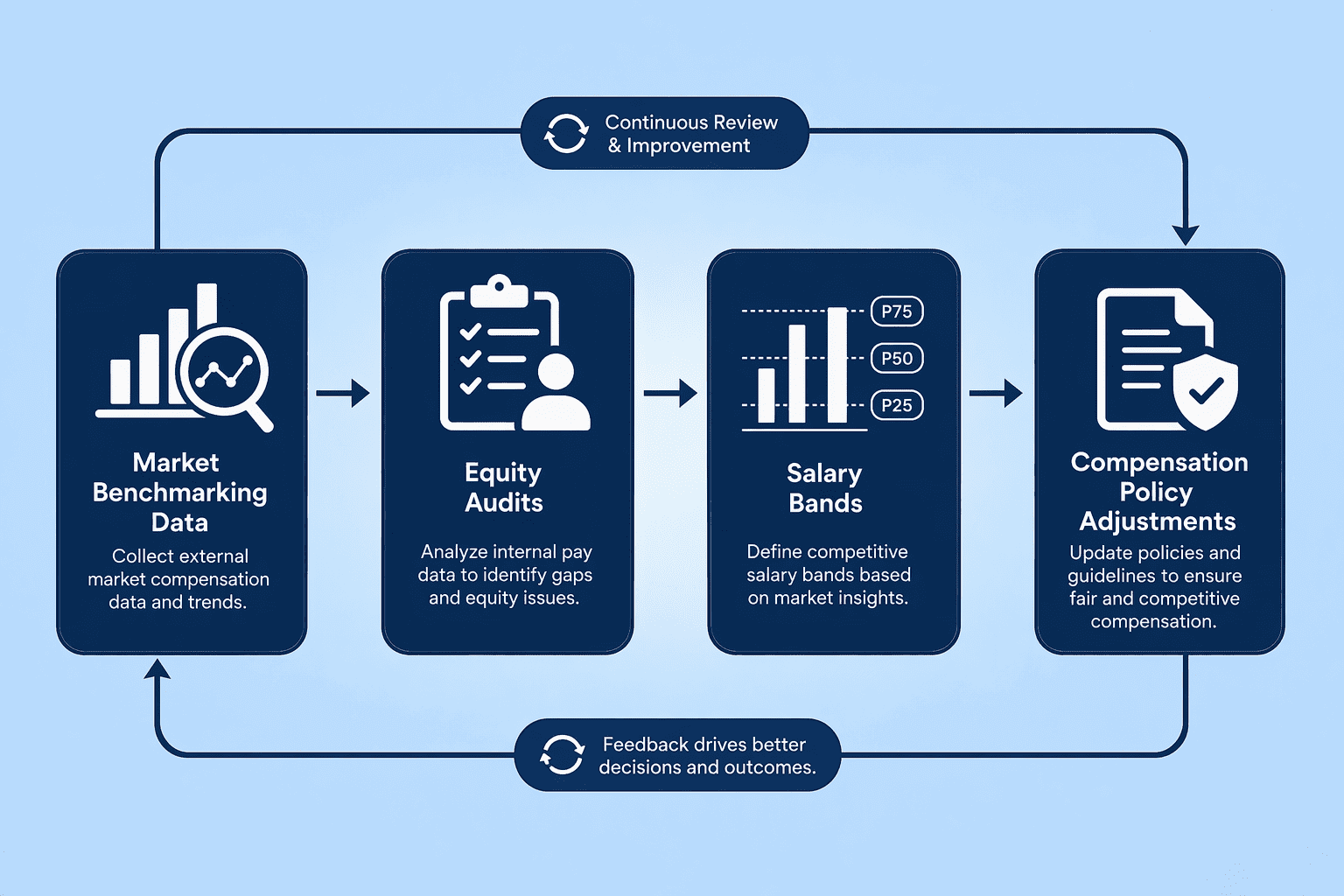
Raw benchmarking data is not a strategy. If you import market medians and adjust everyone to the 50th percentile, you have replicated the market’s existing pay gaps. Ravio notes this plainly: "benchmarking alone cannot fix systemic undervaluation without policy changes."
A platform lets you layer internal equity audits on top of external data. Ravio combines real-time global total compensation benchmarking with salary band management and equity compliance tools. Those tools identify pay gaps, calculate remediation costs, and generate reports for regulations like the EU Pay Transparency Directive.
That depth of analytics shifts organizations from reactive spreadsheet fire drills to proactive pay structuring.
Compensation management software generally follows one of three pricing structures: per-employee, base-plus-per-person, or flat annual plans. The table below breaks down how major vendors price their platforms so you can forecast costs as headcount grows.
| Pricing Model | How It Works | Example Vendors & Costs | Notes |
|---|---|---|---|
| Per-employee per month | Flat rate multiplied by headcount | Entry-level: from $5/employee/month. Deel mid-tier: $19 to $29/employee/month. | Predictable scaling; some vendors add platform fees. |
| Base fee + per person | Fixed monthly platform fee plus a per-employee add-on | Gusto: $49 base + $6/person/month. | Good for small teams; costs rise with headcount. |
| Annual flat plans | Single annual price regardless of employee count (often with feature tiers) | Ledgy: free cap-table plan; paid starts at €5,000/year, with financial reporting add-ons at €3,000, €5,000/year. CompUp starts at $3/employee/year. | Best for stable headcount; add-ons can increase cost. |
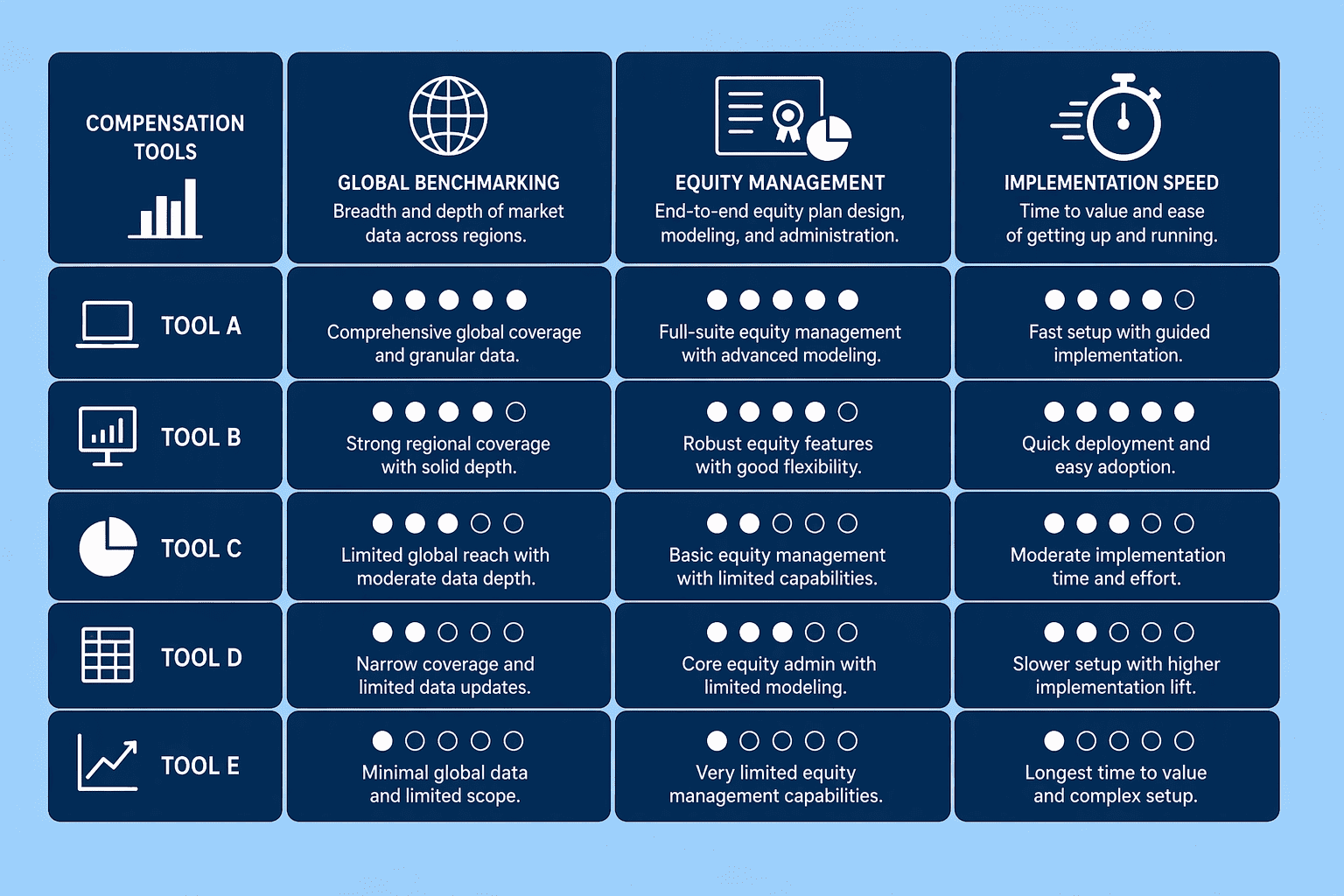
Across 2,220 verified Capterra reviews analyzed for this guide, users rated value for money at 4.68 out of 5. The specific platform that fits depends heavily on whether you need global benchmarking, equity management, or a quick start.
If equity is a meaningful slice of your total comp, Pave ties salary, equity, and performance data together, though its benchmark coverage outside North America is considerably thinner. For teams scaling globally, Ravio provides particularly deep European data and offers a free trial with instant sample data.
CompUp offers a different tack. At $3 per employee per year, it is a price-aggressive, specialized compensation platform rated 4.9 on G2 and trusted by 100+ companies across 140+ countries. It integrates with BambooHR, Lattice, Darwinbox, and Workable, and automatically generates Total Rewards Statements at the close of a pay review. For organizations that need to move fast without an enterprise procurement cycle, a demo-first approach that produces results in weeks rather than months can appeal strongly.
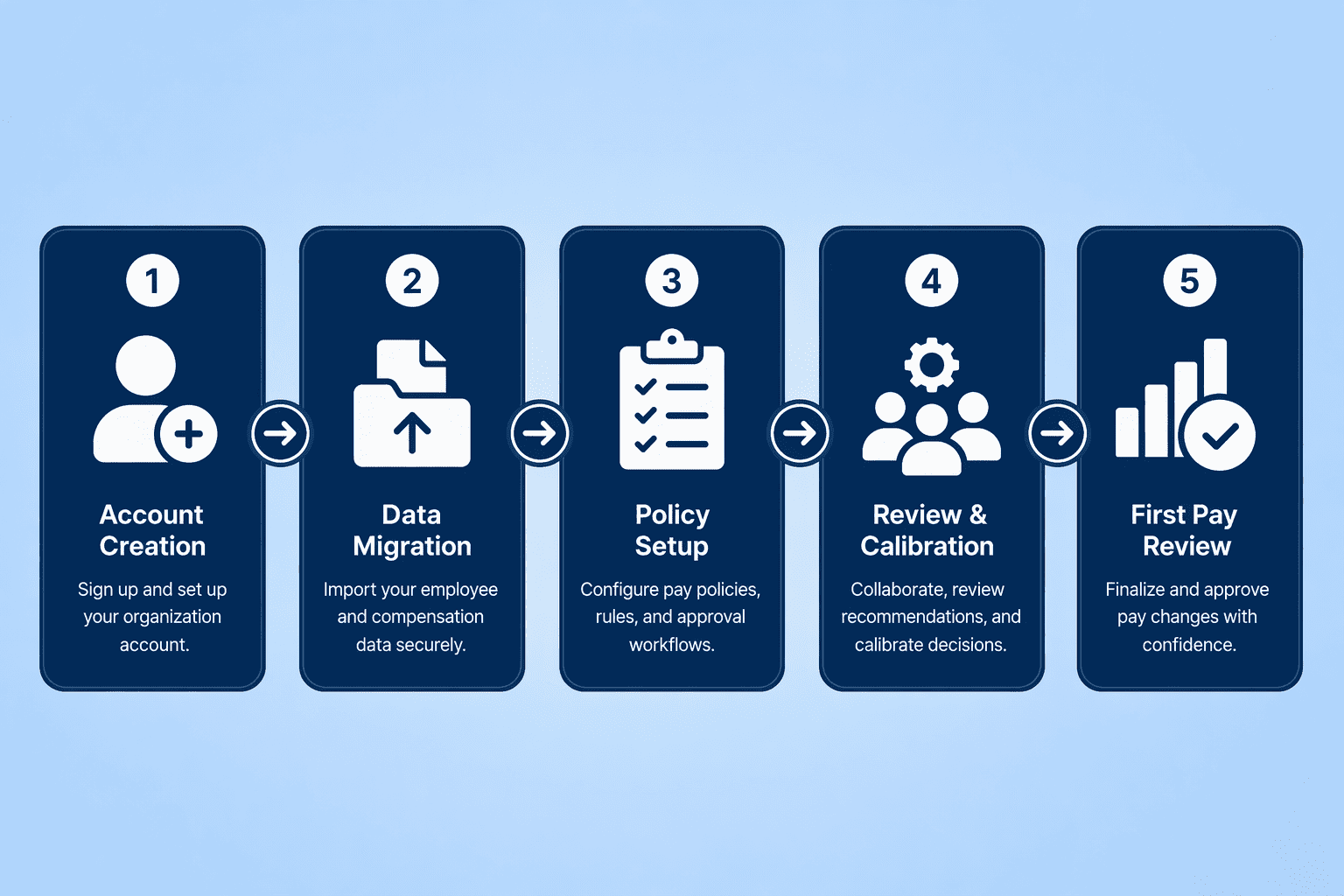
Dedicated per-employee platforms often go live in two weeks; enterprise suites with custom integrations stretch into several months. The steps below outline a typical path for dedicated tools.
The compensation management platform category has matured enough that the question is not whether to adopt one, but which matches your structure. Per-employee models scale predictably; base-plus-per-person plans suit small teams. The non-negotiable is pay equity functionality baked in from day one. With overall user satisfaction at 4.68 out of 5, the data says that teams which switch don’t look back.
Start by auditing your headcount growth, equity complexity, and compensation review pain points, then choose a platform that turns pay from a reactive HR chore into a strategic, data-backed function, and if your first structured pay review takes only two weeks from sign-up, even better. If you're weighing options, CompUp is worth a closer look.
A compensation management platform automates salary planning, equity management, and pay benchmarking while enforcing compensation policies. Core features to prioritize: market data integration, compensation band management, pay equity analytics, approval workflows, and total rewards statement generation.
Match the platform to your headcount and complexity. Under 100 employees with standard pay structures? A per-employee tool like CompUp ($3/person/year) or Gusto works. Equity-heavy or global teams should consider Pave or Ravio. Evaluate pricing scalability and pay equity features.
Top-rated platforms include Lattice (performance-linked comp), Ravio (real-time global benchmarking), CompUp (starts at $3/employee/year, 4.9 G2 rating), Pave (equity analytics), and CaptivateIQ (commission modeling). Pricing ranges from $3 to $49/person/month plus base fees.
Specialized platforms offer advanced equity management, pay gap analytics, and complex commission modeling that generic HR modules lack. They also update faster for regulatory changes and provide deeper benchmarking, making them key for companies with complex total rewards.
Platforms like Ravio and CompUp flag internal pay gaps against external market data, calculate remediation costs, and generate compliance reports for regulations. They replace manual spreadsheet audits with automated, continuous equity monitoring across protected categories.
Implementation usually involves: sign-up, data migration, band configuration, equity audit setup, testing, and a first pay review cycle. Cloud-native tools like CompUp can go live in two weeks; enterprise suites with custom integrations may take several months.
Community Manager (Marketing)
As a Community Manager, I’m passionate about fostering collaboration and knowledge sharing among professionals in compensation management and total rewards. I develop engaging content that simplifies complex topics, empowering others to excel and aim to drive collective growth through insight and connection.
Revolutionizing Pay Strategies: Don't Miss Our Latest Blogs on Compensation Benchmarking