

Creating and reviewing employee pay and benefits takes careful planning. Companies need to find the right balance between what they can afford and what employees expect. A good pay and benefits package helps bring in skilled workers, keeps current employees happy, and supports the company's financial goals and place in the market.
As of December 2024, total employer compensation costs for private industry workers averaged $44.67 per hour worked, with wages and salaries averaging $31.47 per hour and accounting for 70.5% of employer costs. You can also develop and evaluate compensation packages that are fair, competitive, and matched with your organization's goals. This approach helps attract and retain talent and contributes to a motivated and engaged workforce.
This blog will explore the latest compensation package statistics, including salary increase trends, employee satisfaction, and benefits offerings.
An employee compensation package is everything a worker gets in return for doing their job. It’s more than just a paycheck. It includes salary, benefits, bonuses, and other rewards contributing to an employee's overall compensation. The compensation package design aims to attract, retain, and motivate employees by matching their contributions with organizational goals.
A full compensation package usually includes:
Offering a competitive and fair compensation package is vital for several reasons:
Developing and evaluating employee compensation packages requires a strategic approach, considering various components and their impact on the organization and its employees.
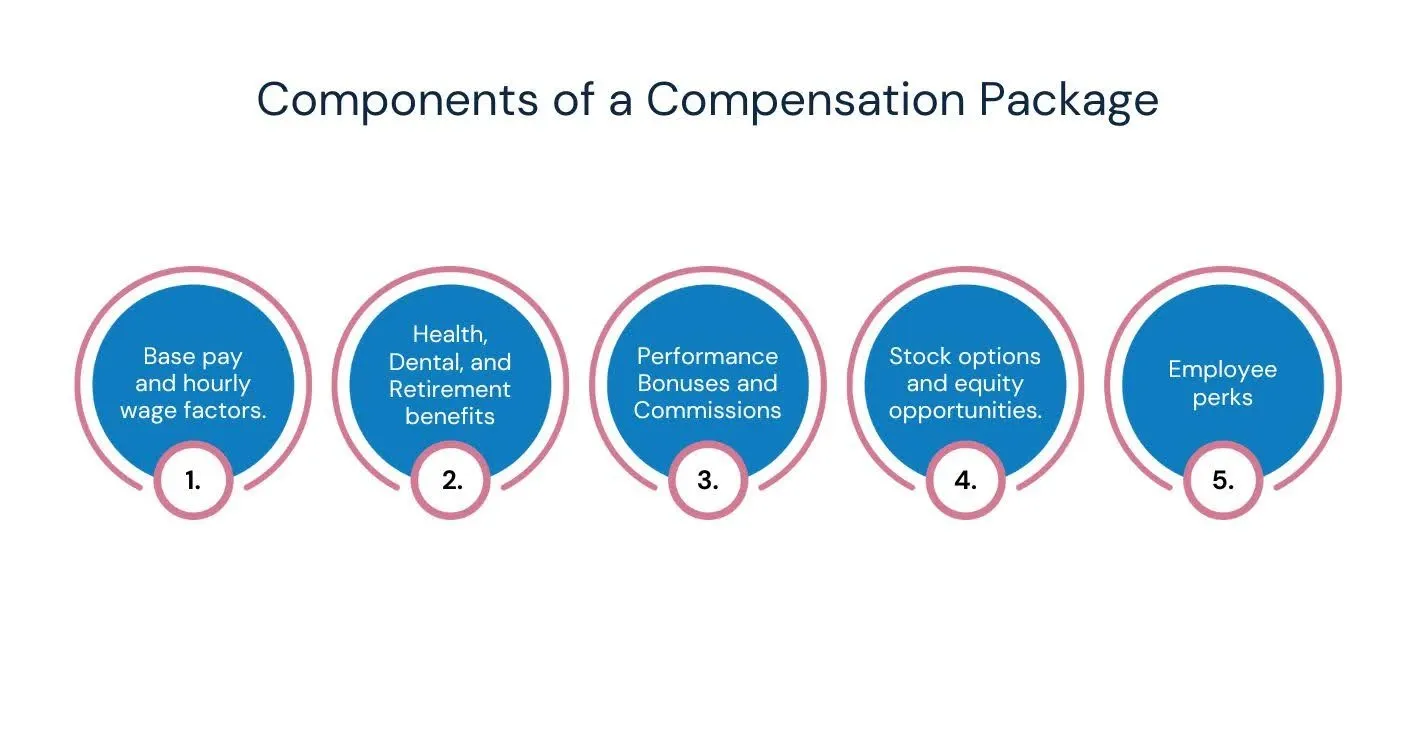
An employee compensation package is everything a worker receives in return for doing their job. It includes their pay, benefits, rewards, and other extras. Companies use these packages to attract good workers, keep them happy, and encourage them to do their best. Here's a breakdown of what these packages usually include:
A base salary is the regular amount someone earns in a year or per hour. It depends on things like their job, experience, education, and what’s normal in the industry. Some workers are paid hourly, meaning they earn money based on how many hours they work. These pay rates should be reviewed regularly to make sure they match the employee’s performance and contribution.
Benefits are things workers get besides their pay. This can include health insurance, dental and vision coverage, money for retirement (like 401(k) plans), and paid time off. These benefits help employees stay healthy, plan for the future, and feel more satisfied at work. A good benefits package can also help a company attract great employees.
Performance incentives are additional financial rewards employees receive based on their individual or team performance. Some companies give extra money to employees who do a great job. This could be a yearly bonus, a reward for meeting goals, or commissions for making sales. These incentives encourage workers to do their best and help the company succeed. It’s important for companies to clearly explain how these rewards are earned so things stay fair.
Equity compensation involves offering employees ownership interest in the company, typically in the form of stock options or restricted stock units (RSUs). Some companies give employees a chance to own part of the company by offering stock options or shares. This means that if the company does well, the employees can benefit too. It helps workers feel more connected to the company’s success. This kind of reward is especially common in newer or fast-growing companies.
Perks are extra bonuses that make work more enjoyable. These can include free gym memberships, company cars, flexible work schedules, wellness programs, and chances to take extra training. While they’re not the same as money, perks can make a big difference in how happy employees feel at work.
A well-structured compensation package goes beyond base salary to include a mix of financial rewards, benefits, and perks that meet employees' diverse needs.
A well-structured compensation package is more than just a paycheck; it's a strategic tool that reflects your organization's values and priorities. To craft a package that attracts, retains, and motivates talent, consider the following components:
Incentive-based compensation, such as performance bonuses or commissions, can drive motivation and match individual goals with organizational objectives. Clearly defined criteria for earning these incentives help maintain transparency and fairness. For instance, companies like Amazon have adjusted their pay structures to reward consistently high-performing employees, demonstrating a shift toward performance-based compensation models.
A comprehensive benefits package is crucial for employee well-being and satisfaction. This may include:
A strong benefits package supports employees' health and financial security and enhances job satisfaction and loyalty.
Non-monetary perks can significantly enhance the attractiveness of a compensation package. These may include:
Tailoring perks to the preferences and needs of your workforce can improve employee satisfaction and retention.
Regularly reviewing and adjusting the package in response to employee feedback and market trends ensures its continued effectiveness.
Employee compensation and benefits are integral to creating a workplace where individuals feel valued, supported, and motivated. These offerings go beyond mere financial remuneration; they encompass various elements contributing to an employee's overall well-being and job satisfaction.
A competitive compensation package is often decisive for candidates evaluating job offers. Offering benefits attracts top talent and retains employees. Employees who perceive their compensation and benefits as fair and generous are more likely to remain with an organization, reducing turnover rates and the associated costs of hiring and training new staff.
Beyond financial compensation, benefits such as health insurance, paid time off, and wellness programs contribute significantly to an employee's physical and mental well-being. For instance, health-related benefits are considered "very important" or "extremely important" by 88% of employers, according to a survey by the Society for Human Resource Management.
Employees who feel supported in their health and personal lives are more likely to be engaged and productive at work. This engagement leads to higher job satisfaction, improved performance, and a positive organizational culture.
A well-structured compensation and benefits package reflects an organization's commitment to its employees. When employees perceive that their employer cares about their well-being, they are more likely to feel a sense of loyalty and belonging. This loyalty can translate into increased motivation, reduced absenteeism, and a more substantial match with the organization's values and goals.
Employee compensation and benefits are not merely expenses but strategic investments in an organization's most valuable asset, its people. Organizations can attract and retain top talent by offering competitive and comprehensive packages.
In the context of employee compensation packages, it's important to distinguish between compensation and benefits, as they collectively form the total rewards offered to employees.
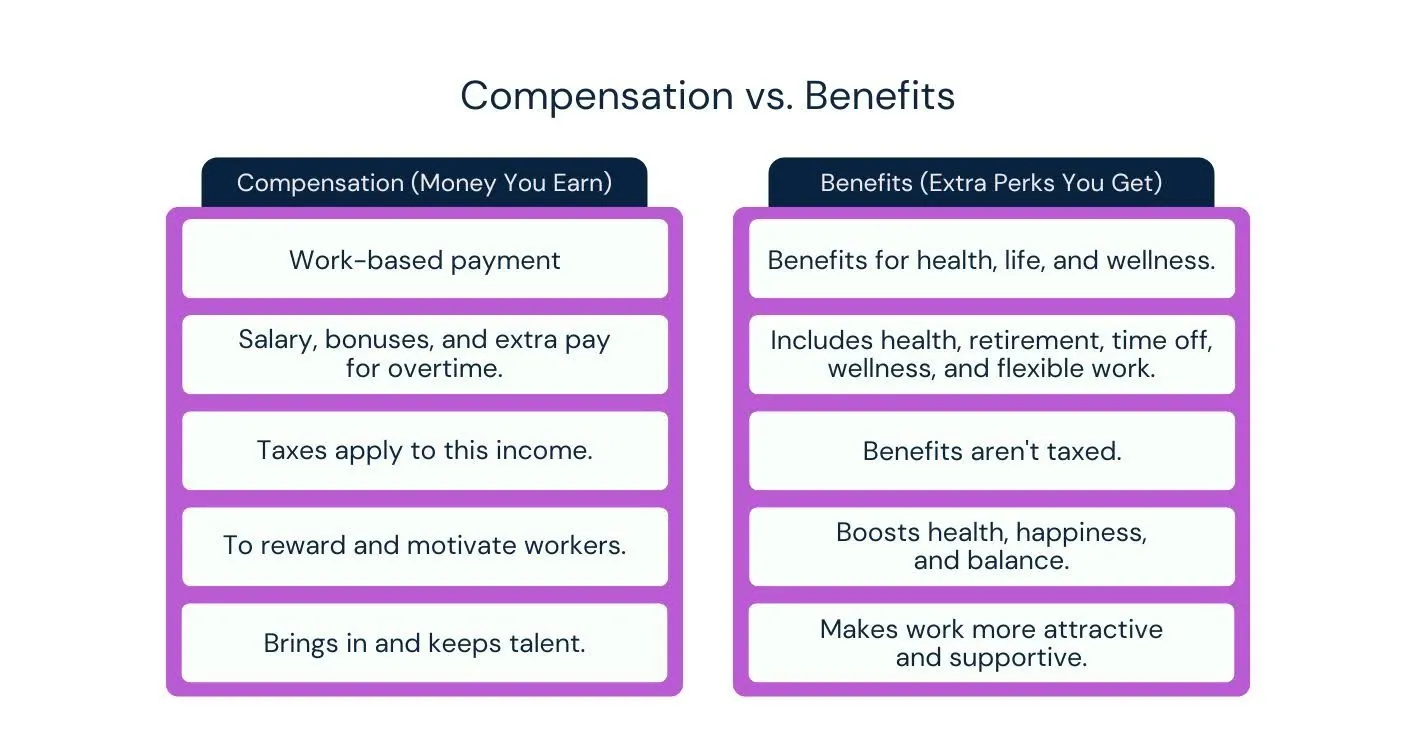
Compensation (Money You Earn) | Benefits (Extra Perks You Get) |
Direct payment for the work you do | Non-money rewards that help with health, life, and well-being |
Conmpensation comprises of base salary or hourly wage, bonuses and commissions, and overtime pay | Benefits comprises of health insurance, retirement plans (like 401(k)), paid time off (vacation, sick days), wellness programs (gym, mental health help), and flexible work hours or remote work |
You pay taxes on this money. | Usually no, most benefits are not taxed as income |
The purpose is to reward work and motivate employees | It supports employees’ health, happiness, and work-life balance |
Compensation helps attract and keep talented workers | Benefits make the workplace more supportive and attractive to employees |
Together, compensation and benefits form a comprehensive employee value proposition. While compensation provides immediate financial rewards, benefits contribute to long-term security and satisfaction. A well-rounded package that balances both elements can help organizations attract and retain skilled employees.
Also Read: What is Annual Compensation?
By understanding the distinct roles of compensation and benefits, you can better appreciate how each contributes to your total rewards and make informed decisions about your employment options.
When structuring employee compensation packages, it's important to understand the various types available, each catering to different roles, industries, and organizational goals. Here's an overview of the main types:
A base-pay package involves a fixed salary or hourly wage paid to employees for regular work hours or project-based tasks. This structure is common across various industries and provides employees with predictable income. For instance, a company might offer a base salary of $60,000 annually for a full-time position, regardless of individual performance metrics.
These compensation packages are prevalent in sales and client-facing roles. Employees earn a percentage of the sales or deals they close, directly linking their earnings to their performance. For example, a salesperson might receive a 10% commission on each sale, incentivizing them to increase sales volume. Some organizations may offer a combination of a lower base salary and higher commission rates to motivate employees.
Equity compensation involves offering employees ownership stakes in the company, often through stock options or restricted stock units (RSUs). This approach matches the interests of employees with the company's long-term success. For instance, a startup might grant employees stock options that vest over several years, encouraging them to contribute to the company's growth and remain with the organization.
Beyond direct compensation, benefits attract and retain employees. A comprehensive benefits package may include health insurance, retirement plans, paid time off, wellness programs, and other perks. These benefits contribute to an employee's overall well-being and job satisfaction. For example, offering a 401(k) plan with company-matching contributions can help employees plan for their future.
Bonuses are additional financial rewards given to employees based on individual, team, or company performance. They can be structured as annual bonuses, signing bonuses, or performance-based incentives. For instance, a company might offer a year-end bonus equivalent to 10% of an employee's annual salary if the company meets its financial targets. Bonuses serve to recognize and reward exceptional performance and can be a powerful motivator.
By strategically combining these elements, you can create a compensation package that attracts top talent, motivates performance, and supports long-term organizational success.
To calculate your total compensation package, it's essential to account for both direct and indirect forms of compensation. Here's how you can approach this:
This includes all monetary payments you receive directly from your employer:
Add these figures to determine your total direct compensation.
These are non-monetary benefits provided by your employer, which contribute to your overall compensation:
To quantify these, estimate the annual value of each benefit. For instance, if your employer contributes $5,000 annually to your health insurance, include that amount.
Once you've determined the values for both direct and indirect compensation, sum them up:
Total Compensation = Direct Compensation + Indirect Compensation
This total gives you a detailed view of your earnings and benefits, providing a clearer picture of your overall compensation package.
Your total compensation is vital for job offers, career planning, and financial management.
Evaluating a compensation package involves thoroughly assessing tangible and intangible elements to determine if the offer matches your professional goals, personal needs, and ethical standards. Here's how you can approach this evaluation:
Begin by researching industry standards for the role in your geographic area. Websites like Glassdoor, Payscale, and LinkedIn Salary Insights can provide valuable benchmarks. Compare the offered salary to these benchmarks, considering factors such as experience, education, and specialized skills. For instance, if the market rate for a position is ₹1,200,000 annually and the offer is ₹1,000,000, this may indicate a need for negotiation or reconsideration.
Workplace flexibility has become increasingly important. Assess the company's policies on remote work, flexible hours, and work-life balance. According to a survey by Visier, 76% of workers desire more flexibility regarding where they work, and 93% want more flexibility regarding their work times. Evaluate how these policies match with your personal preferences and commitments.
Beyond salary, consider the additional incentives and perks offered:
Determine standard offerings and which may be negotiable based on your needs.
Research the company's reputation regarding pay equity, transparency, and ethical practices. Look for information on whether the company conducts pay audits, has policies to address pay disparities, and maintains transparency in compensation decisions. Companies that prioritize ethical compensation practices often experience higher employee engagement and retention.
By systematically evaluating these aspects, you can understand the compensation package that matches your professional and personal objectives.
A fair and competitive compensation strategy is vital for attracting and retaining top talent while matching with your organization's objectives. Here's how you can approach this:
Begin by evaluating your existing compensation structure. Identify any disparities or areas lacking transparency. This assessment will provide a baseline for necessary adjustments. For instance, consider conducting a salary audit to ensure internal equity and compliance with legal standards.
Engage with your employees to understand their perspectives on compensation. Use surveys, one-on-one meetings, or focus groups to collect insights. This feedback can highlight areas for improvement and help tailor your compensation strategy to meet employee expectations.
Establish a clear compensation philosophy that reflects your organization's values and objectives. Decide whether you aim to lead, match, or lag behind the market in terms of pay. This philosophy will guide your compensation decisions and communicate your approach to employees.
Create a structured pay system with defined salary ranges for each role. Incorporate factors such as experience, education, and performance into these ranges. This structure promotes fairness and transparency in compensation decisions.
To reward high achievers, incorporate performance-based incentives, such as bonuses or commissions. Ensure these incentives are clearly defined and attainable, motivating employees to excel.
Review your compensation strategy regularly to ensure it remains competitive and matched with organizational goals. Adjust as needed based on market trends, employee feedback, and business objectives.
These steps can develop a compensation strategy that is both fair and competitive, matching with your organization's goals and meeting the needs of your employees.
Determining and adapting compensation packages requires a strategic approach that considers market trends, internal equity, and organizational growth. Here's how you can navigate this process:
Develop a benefits package that promotes workplace equality by addressing diverse employee needs. Inclusive benefits, such as flexible work arrangements, healthcare, and support for various family structures, demonstrate a commitment to all employees. For example, companies like Cisco have implemented flexible work policies and diversity talent accelerators to attract many employees and maintain low attrition rates.
Use a structured pay system that defines salary grades and increments based on factors like job responsibilities, experience, and performance. This approach ensures internal equity and provides a clear pathway for employee progression. For instance, Amazon has revamped its pay structure to prioritize and reward consistently high-performing employees, linking compensation to performance history.
Review and adjust compensation packages regularly to reflect company growth and changing market conditions. This includes considering inflation rates, cost-of-living adjustments, and industry salary trends. Companies that fail to adjust compensation in real-time risk losing talent, while over-adjusting can strain budgets.
Also Read: How To Conduct Fair Employee Performance Reviews?
By systematically assessing and adapting your compensation packages, you can create a fair and competitive strategy that attracts and retains top talent while matching with your organization's goals.
Managing global compensation packages presents several challenges that require strategic approaches to ensure fairness, compliance, and competitiveness. Here's how you can handle these complications:
When money values (currency exchange rates) go up and down between countries, it can affect how much employees are really earning, especially for people working outside their home country. One way to fix this is by using a “balance sheet” method, which adjusts salaries based on cost of living and exchange rate changes. This helps employees keep the same buying power, no matter where they are.
Every country has different laws about work, taxes, and benefits. To stay out of trouble, companies have to regularly check and update how they pay people to make sure they are following the rules. Talking to local experts can help companies understand these laws better and avoid mistakes.
Cultural differences can influence employees' expectations regarding compensation and benefits. It's essential to tailor compensation packages to respect cultural norms and values, ensuring they resonate with the local workforce. For instance, offering benefits that match local holidays, family structures, and social expectations can improve employee satisfaction and retention.
Determining appropriate pay levels across different regions means that employees may get paid differently depending on where they live. This is because things like the cost of living, local job markets, and the economy vary from place to place. While some companies adopt location-based pay models, others use global pay scales to maintain equity. For example, companies like Reddit and Airbnb decided to pay everyone the same, no matter where they live. This is called a geo-agnostic pay policy. It sounds fair, but not all companies do this because hiring people in lower-cost areas can be more expensive and remove some of the savings they get.
The rise of remote work has introduced complications in determining compensation. Balancing fair pay with business viability requires clear policies considering location-based pay models and addressing legal and practical challenges. Companies should establish transparent guidelines to manage remote work compensation.
You can develop a global compensation strategy that is fair, compliant, and matched with your organization's objectives.
CompUp offers a wide suite of tools designed to assist organizations in managing employee compensation. Here's how CompUp can support you:
CompUp's pay equity analysis tools enable HR teams to conduct regular equity audits, identifying and addressing any disparities in compensation distribution. This proactive approach helps maintain a fair and transparent compensation structure.
CompUp provides tools to benchmark your compensation practices against industry standards. This allows you to gain insights into market trends and stay competitive, helping to attract and retain top talent. The platform enables you to create customized peer baskets, ensuring the pay data is highly relevant to your specific industry.
CompUp's platform helps create total rewards statements, helping employees understand the value of their compensation and how it contributes to their overall rewards package.
CompUp integrates employee compensation data into your overall strategy. You can create an outlook of your total rewards package with salary structures, bonuses, and other benefits. This integration ensures that compensation is matched with organizational goals and employee expectations.
CompUp empowers organizations to manage employee compensation effectively, ensuring it is a valuable component of the total rewards strategy.
When creating and reviewing employee compensation packages, it's important to approach the process thoughtfully and based on data. A compensation package should reflect your company's values and support its long-term goals. To build a good compensation package, start by defining a compensation philosophy.
This explains how pay is decided and helps employees understand why their compensation is structured in a certain way. A good package includes a balance of salary, performance-based rewards (like bonuses), and benefits to meet the different needs of employees.
CompUp is a compensation management platform that offers several tools designed to streamline and enhance compensation planning processes. Trusted by over 200 global brands, CompUp provides solutions for pay equity analysis, compensation planning, total rewards communication, and survey management.
Our key features include customizable compensation bands, budget simulations, appraisal management, and compensation analytics, all of which promote fairness and transparency in compensation practices. Our high user satisfaction rating of 4.9 out of 5 on G2 reflects our effectiveness in addressing complex compensation challenges. Schedule a free demo today.
1. How do you determine the right balance between salary, bonuses, and benefits in a compensation package?
Determining the right balance requires understanding your employees’ preferences and the nature of your business. Conduct surveys or focus groups to gather feedback on what employees value most, whether a higher salary, performance-based bonuses, or additional benefits like health insurance and retirement plans. Additionally, consider industry standards and adjust based on the company’s financial health and compensation philosophy.
2. How often should compensation packages be evaluated and updated?
Compensation packages should be evaluated at least annually to reflect changes in the job market, company performance, and employee needs. However, adjustments may also be necessary when economic shifts, industry standards, or organizational goals exist. It may be time to review if you notice trends like turnover rates or difficulty attracting talent.
3. What are some hidden costs in employee compensation packages that organizations often overlook?
Beyond the obvious salary and benefits, organizations sometimes overlook the full cost of compensation packages. For example, taxes and employer contributions to Social Security, Medicare, and unemployment insurance can add costs. Equity-based compensation, like stock options or profit-sharing plans, can have long-term financial implications. Offering wellness programs, education stipends, and retirement contributions also contribute to the total cost but may be underappreciated in budgeting.
4. How do you evaluate the effectiveness of a compensation package?
To evaluate effectiveness, you should regularly assess employee satisfaction through surveys and conduct exit interviews to understand why employees may leave, whether due to compensation or other factors. Compare compensation trends against industry standards and track the company's ability to attract and retain talent. Metrics like employee performance, productivity, and engagement can also indicate how well your compensation package motivates employees.
5. How do you balance internal equity with external competitiveness in compensation packages?
Balancing internal equity (fairness within the organization) and external competitiveness (what other companies offer) can be tricky. You need to ensure that employees in similar roles are paid fairly within your company and that your compensation offers are competitive enough to attract top talent. Regular benchmarking against industry standards and conducting internal pay audits can help maintain this balance.
Customer Success Manager - Team Lead
Led by a vision to transform the landscape of total rewards with an innovative mindset and technological advancements.
Revolutionizing Pay Strategies: Don't Miss Our Latest Blogs on Compensation Benchmarking