
Pay equity audits are no longer optional. Organizations face legal mandates, talent-retention pressures, and growing transparency requirements that demand systematic approaches to identifying and remedying compensation gaps across demographic groups.
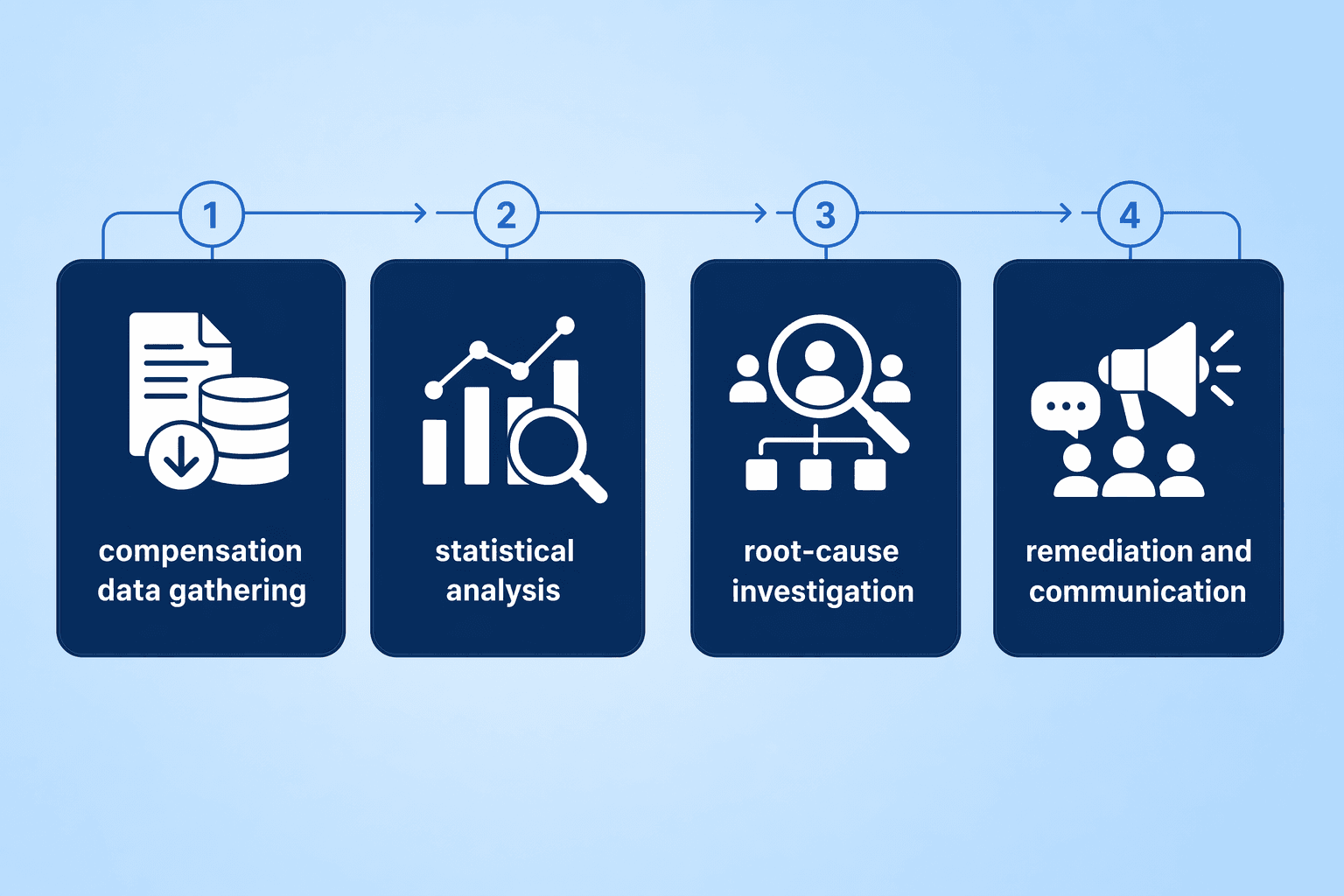
To identify and fix pay disparities across your organization, follow four steps: gather thorough compensation data from HRIS and payroll systems, run statistical analysis to detect unexplained wage gaps by protected class, investigate root causes through manager interviews and policy review, then execute remediation plans with budget allocation and transparent communication. This workflow surfaces inequities before they escalate into legal claims or attrition.
While legal risk drives many initial audits, the retention and employer-brand dimensions are equally urgent in 2026. Recent data shows that 88% of U.S. Employers believe they demonstrate care for employees, yet only 60% of employees feel cared for —and pay fairness sits at the heart of that perception gap. When employees discover inequitable pay, they disengage or leave, raising turnover costs and damaging hiring competitiveness. Conversely, organizations that address wage gaps voluntarily protect their reputation and reduce litigation exposure, transforming compliance from a checkbox into a strategic advantage.
Achieving pay equity is not a one-time effort. Market shifts, promotions, and new hires introduce drift that erodes fairness over time. Continuous monitoring—whether through automated platforms like CompUp or scheduled annual audits—ensures that the four-step workflow becomes a repeating cycle rather than a singular project. Organizations that embed pay equity into compensation planning sustain fairness and avoid the reputational and legal risks that arise when inequities resurface unnoticed.
Building the business case for pay equity begins with assembling the right data foundation.
Before running any statistical model, validate that your dataset meets minimum quality and coverage standards. Incomplete or skewed data will produce misleading results.
A strong pay equity audit requires both compensation and demographic fields. At a minimum, collect:
| Variable | Why It Matters | Example Values |
|---|---|---|
| Base Salary | Primary compensation benchmark | $85,000 |
| Bonus/Incentive Pay | Total cash compensation component | $10,000 annual bonus |
| Role/Job Family | Defines similar-work cohorts | Software Engineer, Data Analyst |
| Level/Grade | Controls for seniority | IC3, Manager II |
| Tenure | Proxy for experience | 3.5 years |
| Location | Adjusts for cost-of-labor differences | San Francisco, Austin |
| Gender | Protected class per federal law | Female, Male, Non-binary |
| Race/Ethnicity | Protected class per federal law | Asian, Black, Hispanic, White |
Run these validation steps before analysis:
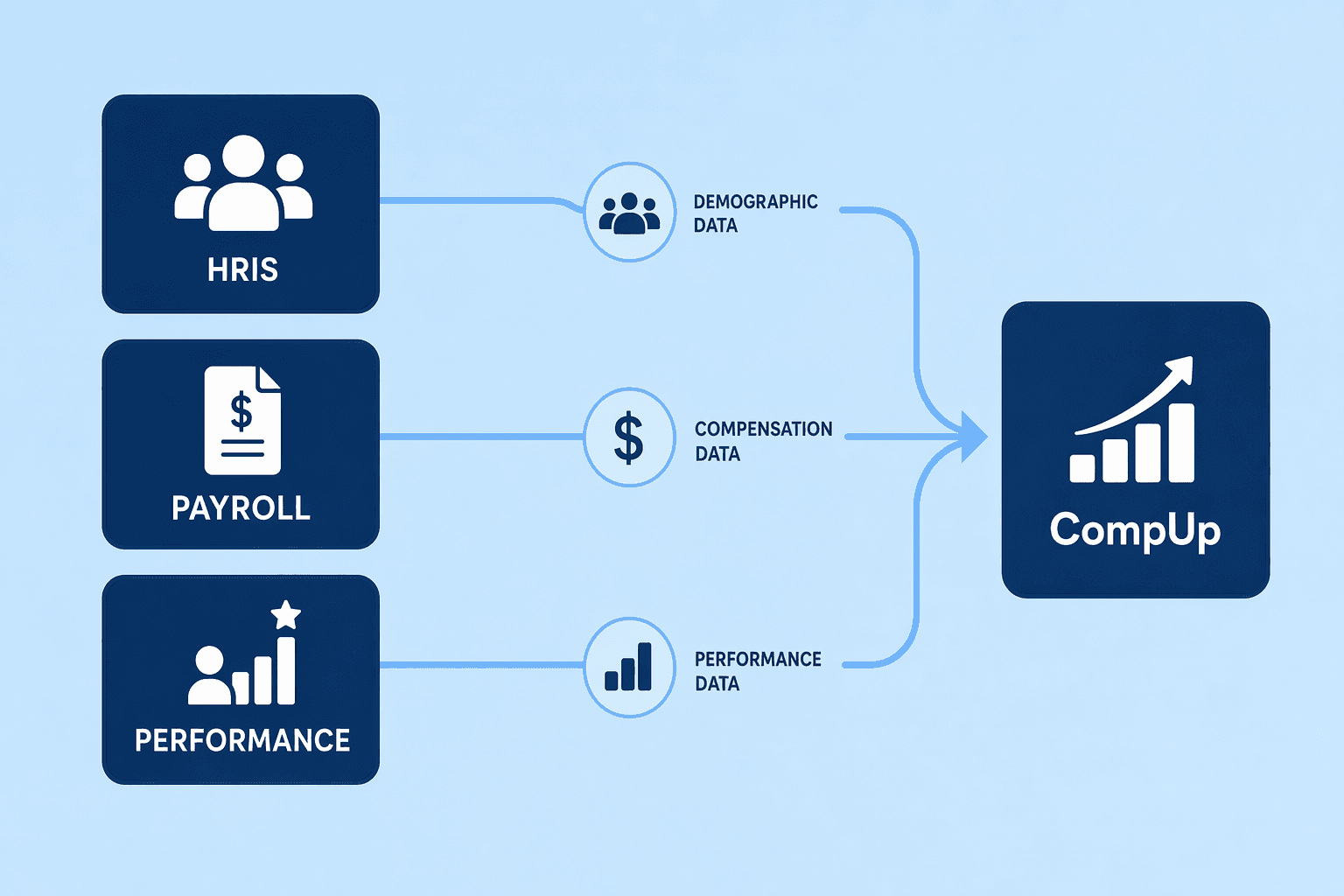
Modern platforms simplify this step. For example, CompUp integrates with HRIS, payroll, and performance management systems, automatically aggregating compensation and demographic data to reduce manual entry errors. Other tools on the market offer similar real-time data pipelines and audit trails — choose one that matches your HRIS stack.
Suggested Read: Step 2: Run Statistical Pay Equity Analysis
With validated data in hand, you can now apply statistical methods to isolate unexplained compensation gaps.
Most organizations start with simple cohort comparisons: calculate the mean salary for women versus men in the same role or level, then measure the gap. This method is fast and intuitive, but it ignores legitimate pay drivers like tenure, education, location, and performance ratings. Multiple linear regression addresses this by building a statistical model that predicts salary based on non-discriminatory factors — role, level, years of service, geography, then isolates the residual 'unexplained' gap associated with gender, race, or other protected characteristics. If the model shows that women are paid 5% less than men after controlling for all legitimate factors, that residual is the disparity requiring investigation.
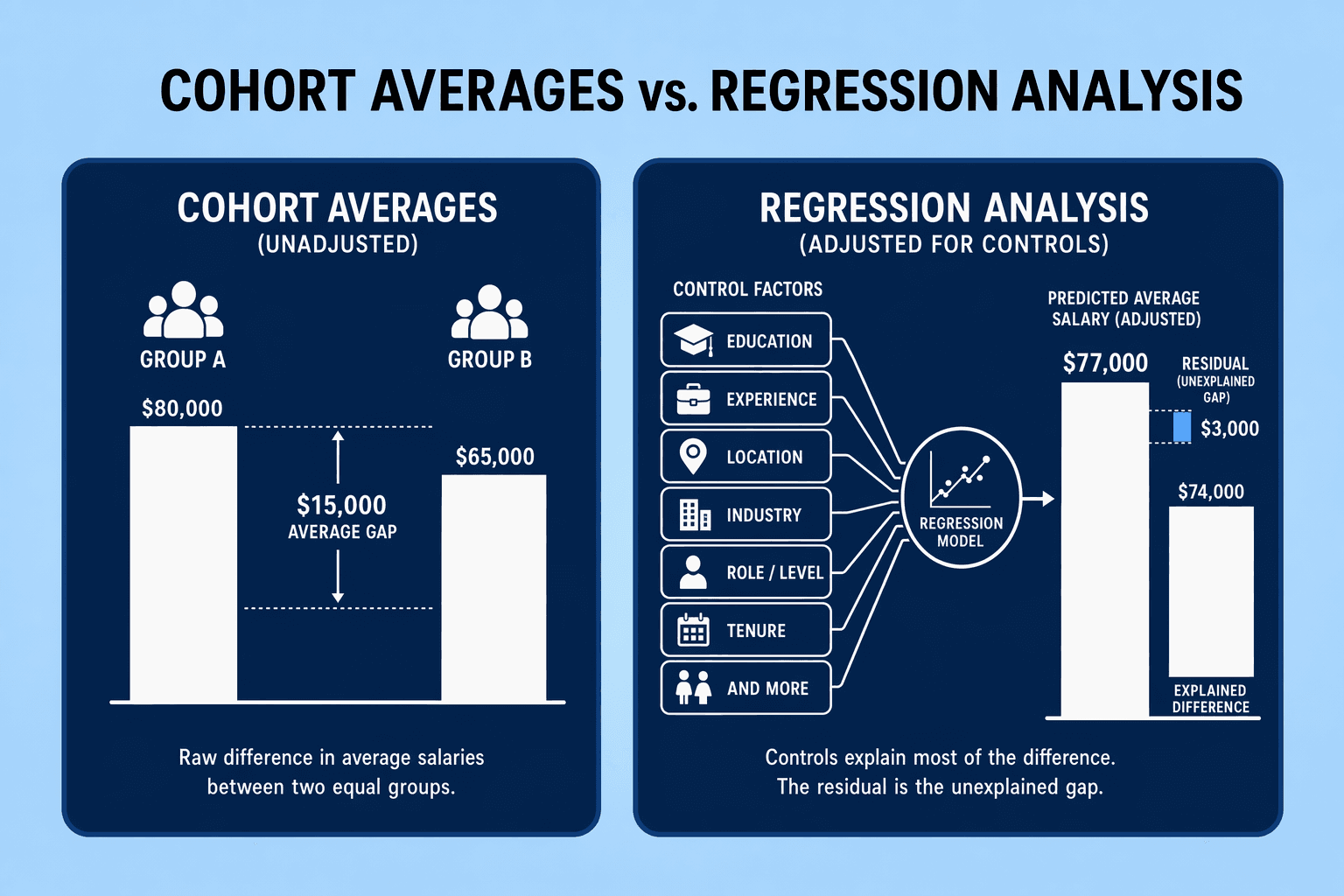
Use regression models when you have diverse roles, varied tenure, and multiple pay drivers across the workforce. Use cohort comparisons when your population is small (<50 employees per group) or when job families are highly standardized with minimal variation in pay factors. The U.S. Department of Labor's 2022 pay equity audit directive now requires federal contractors to conduct annual in-depth compensation analyses, signaling that regression-based methods are becoming the compliance standard.
Most guides tell you to 'fix disparities,' but they never define how large a gap matters. Here is the 3-tier framework employment-discrimination consultants use to triage findings:
CompUp's AI-powered analytics conduct automated pay equity audits, identifying disparities across gender, race, and role classifications, surfacing results in a dashboard so HR teams can apply these thresholds without exporting data to external statistical tools.
Running separate analyses for 'women' and 'people of color' misses compounded disadvantages for employees who hold both identities. A woman of color may face larger pay gaps than either white women or men of color. To detect intersectional disparities, add interaction terms in your regression model (gender × race) or run stratified cohort analyses for each intersectional group. If your sample size is too small for statistical power, flag intersectional groups for qualitative review, examine promotion velocity, starting-salary offers, and manager discretion patterns. CompUp streamlines the entire pay equity audit process, enabling teams to segment by multiple demographic dimensions and surface intersectional gaps that aggregate-level reports obscure.
Statistical outputs reveal where gaps exist, but they don't explain why, that requires targeted root-cause investigation.
Once you have identified pay gaps, the next step is to determine where and why they emerged. A root-cause investigation framework helps you distinguish between hiring inequities, promotion pattern gaps, and merit allocation inconsistencies. Think of this as a decision tree: if disparities are largest among new hires, investigate hiring and offer practices. If disparities grow with tenure, examine promotion rates and merit cycles. If disparities concentrate in specific roles or locations, audit your market benchmarking sources.
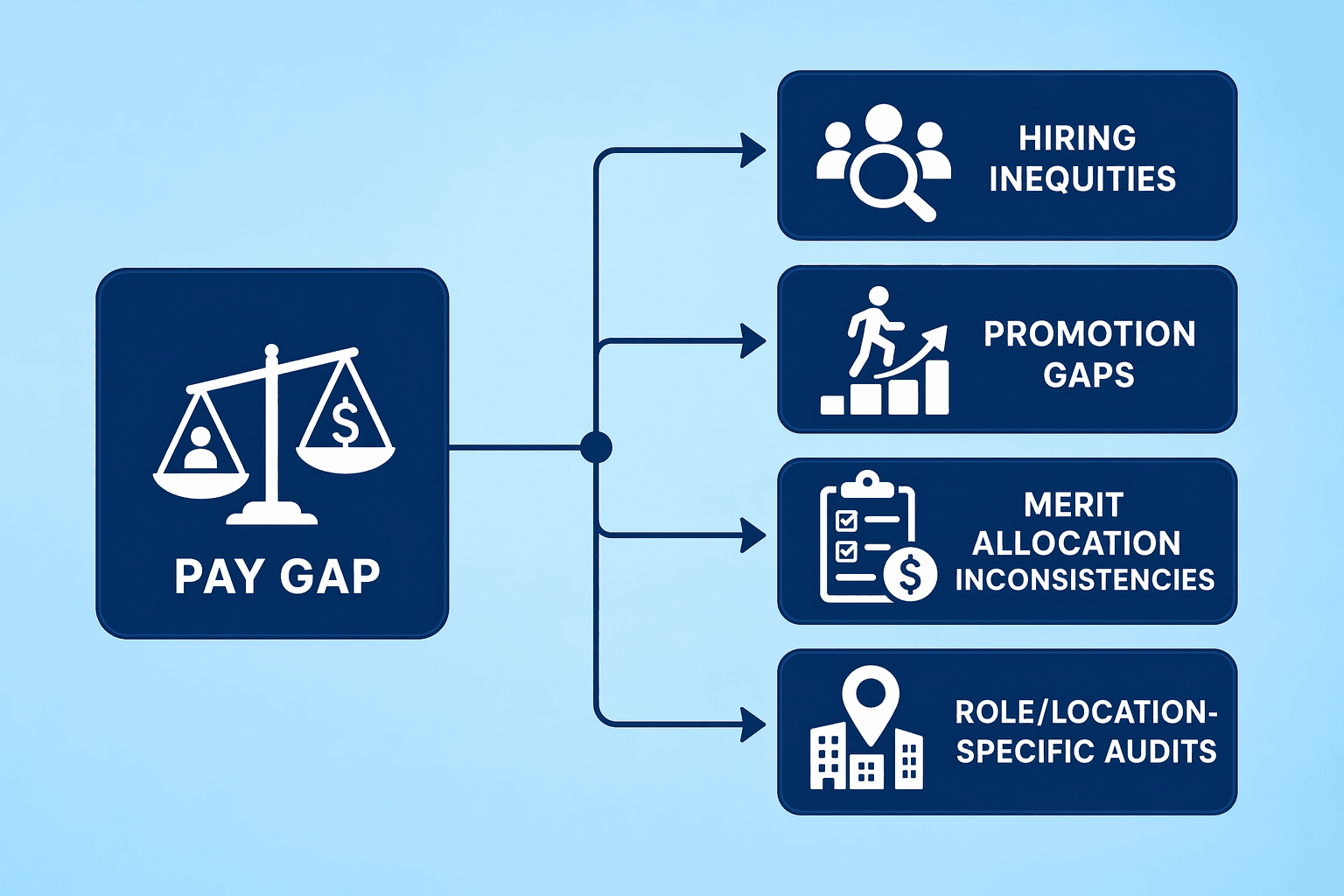
Begin by analyzing offer data by protected class. Compare starting salaries for candidates in similar roles, with similar experience, hired in the same time window. Look for negotiation gaps: do certain demographic groups accept offers closer to the minimum of the range, while others cluster near the top? Review whether hiring managers apply different criteria or approval thresholds when negotiating with different candidates. Platforms featured in compensation management software roundups often include offer-tracking dashboards that flag these patterns before they compound across hiring cycles.
If disparities widen over time rather than appearing at hire, separate promotion-rate gaps from merit-allocation inconsistencies. First, calculate promotion rates by demographic group at each level. Are certain groups advancing more slowly despite similar performance ratings? Then audit merit increase distributions: within each performance tier, are raises uniform or skewed? CompUp's platform surfaces merit-increase patterns by demographic group, helping HR spot inconsistencies before they accumulate. This diagnostic layer is the missing piece in many equity audits, most tools say 'address disparities' but never specify how to distinguish a hiring bias from a promotion gap from a merit-allocation problem.
Sometimes pay gaps originate not from internal decisions but from the market data you rely on. If benchmark sources reflect historical occupational segregation, certain roles dominated by one demographic group paid below others, anchoring to those benchmarks will perpetuate the external disparity inside your organization. Investigate whether disparities cluster in roles where your market data comes from skewed or outdated sources. Balance external benchmarking with internal equity lenses: even if the market pays Role A less than Role B, does that difference reflect actual skill and impact, or does it reflect legacy bias? Adjust your compensation philosophy to address both competitiveness and fairness.
Root-cause findings set the stage for remediation, but execution requires clear decision frameworks and stakeholder alignment.
Once you've identified pay disparities, translating findings into action requires a structured decision framework. Pay equity studies are modeling exercises designed to identify areas needing further examination, not automatic mandates for wholesale salary revisions.
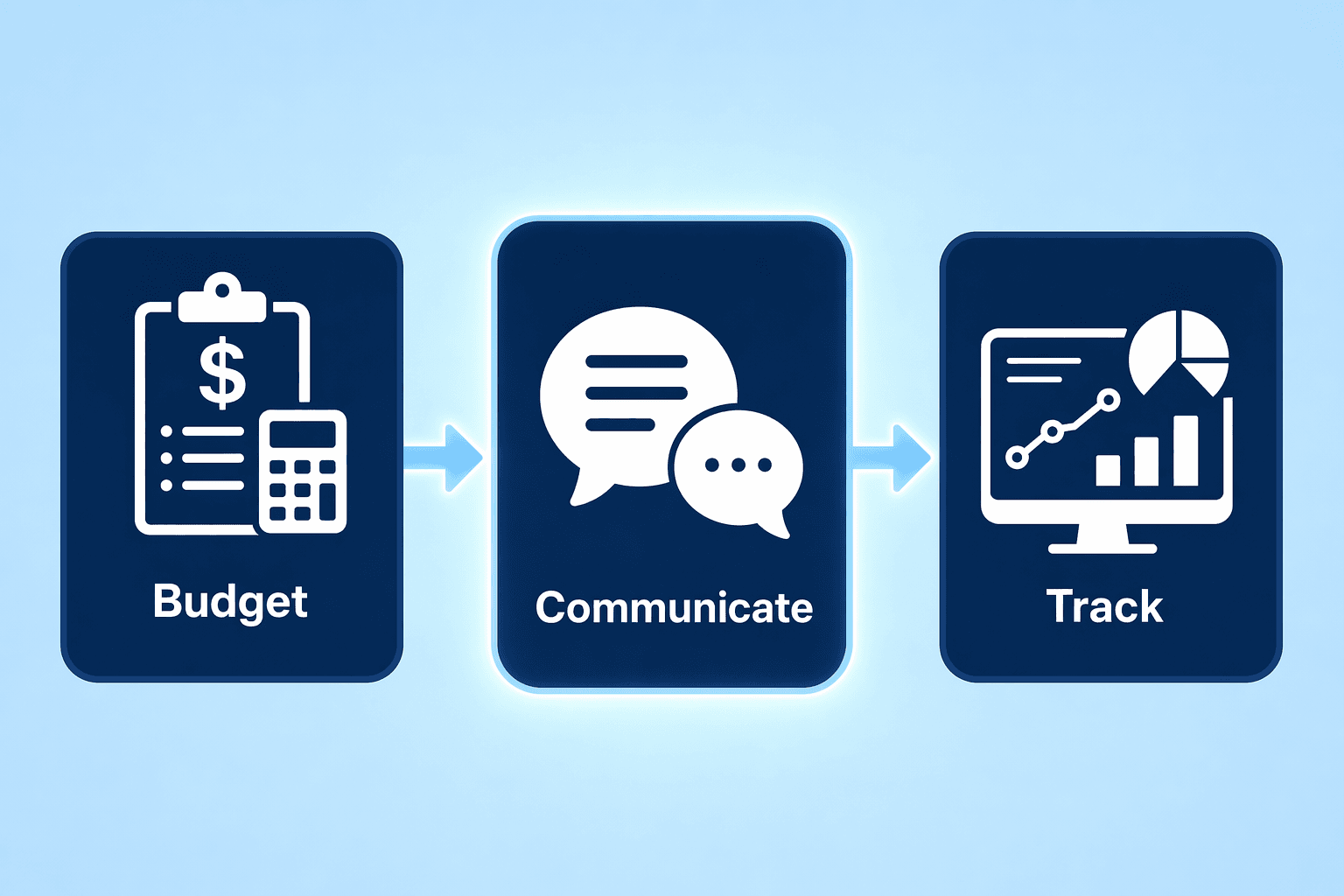
Apply this three-branch logic to every flagged disparity:
Separate your messaging into two audiences:
Leadership briefing template, Frame remediation as risk mitigation: "Analysis identified [N] employees with unexplained pay gaps ≥5%. Immediate remediation cost: $[X]. Multi-year back-pay liability if challenged: $[Y]. Proposed timeline: Phase 1 (high-risk cases) complete by [date], Phase 2 (band revisions) by [date]."
Employee communication template, Emphasize equity commitment and confidentiality: "We conducted a pay equity review and identified areas for adjustment. Your compensation has been revised effective [date] to align with our fairness standards. This review is confidential; questions can be directed to [HR contact]."
Balance immediate compliance obligations with broader fairness objectives. EEOC litigation often involves multi-year back-pay settlements, so prioritize ≥5% gaps for protected classes first. Then address geographic pay equity and role-level compression in subsequent phases. CompUp automates remediation workflows, assign salary adjustments in bulk, track remediation status by employee, and generate audit trails for compliance documentation. For ongoing compliance monitoring, see our guide on compensation planning and pay transparency compliance software.
Also Read: How CompUp Automates the Full Workflow
Manual audits consume months of analyst time and become outdated the moment they're complete, automation solves both problems.
Modern pay equity platforms collapse what used to be a multi-month consulting project into a continuous, automated workflow. CompUp exemplifies this automation layer by handling data aggregation, statistical analysis, root-cause investigation, and remediation tracking in one unified system, eliminating the manual spreadsheet work and external consultant engagements that characterize one-off audits.
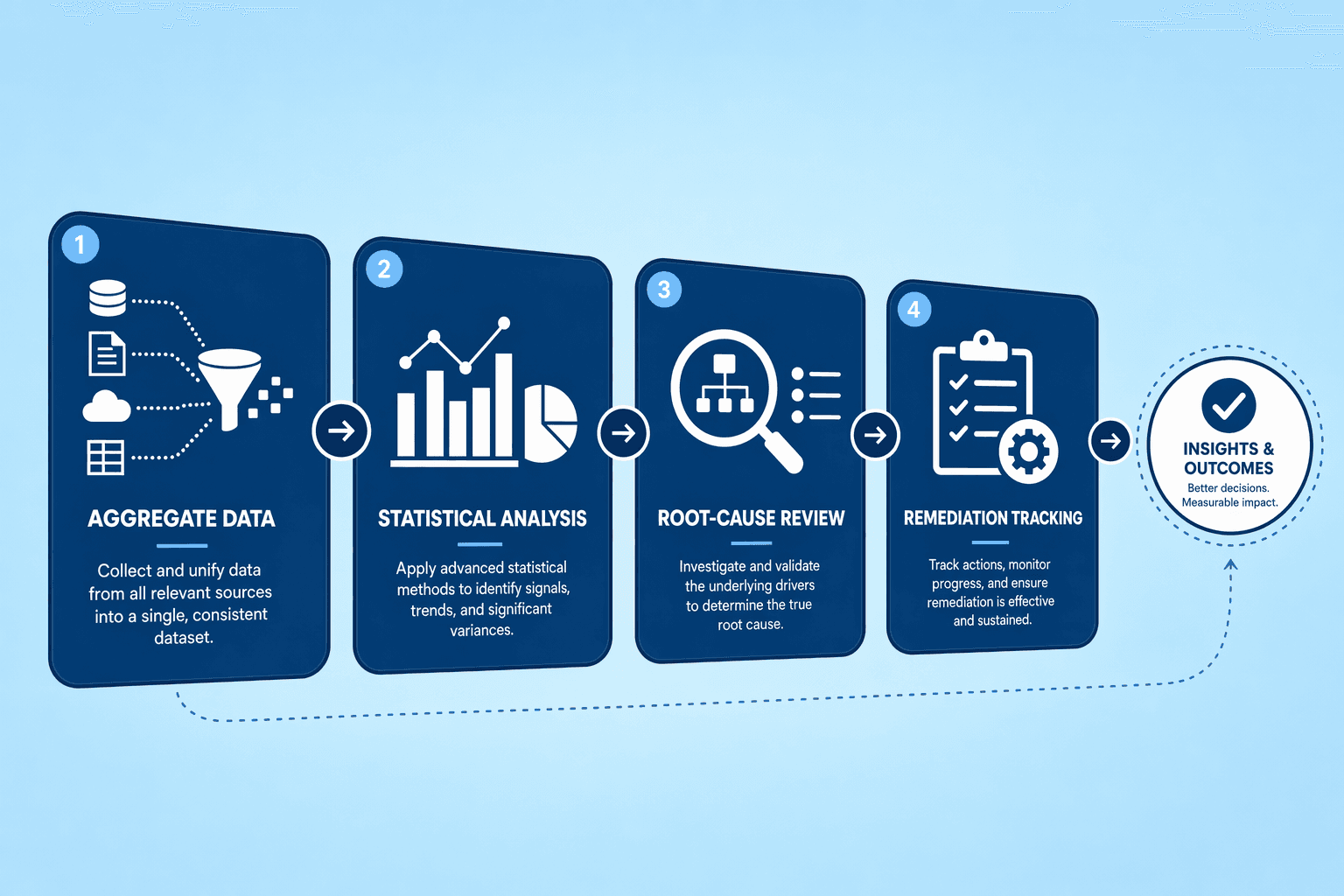
CompUp pulls compensation and demographic data directly from HRIS systems, then runs regression models automatically to isolate pay gaps that cannot be explained by legitimate factors such as tenure, performance ratings, or location. The platform identifies disparities across gender, race, and role classifications without manual data exports, and surfaces actionable-threshold alerts when gaps exceed policy-defined limits.
Once gaps are detected, CompUp's dashboards visualize disparity patterns by department, level, and hire cohort, helping HR teams trace whether inequities stem from merit cycles, promotion decisions, or offer-acceptance patterns. Remediation workflows then track salary adjustments through approval chains, logging who authorized which increases and whether adjustments closed the identified gaps.
Rather than treating pay equity as a one-time project, CompUp schedules recurring audits on a configurable cadence, annually, biannually, or triggered by M&A events or reorganizations. The platform generates compliance reports formatted for EU Pay Transparency Directive filings, US state-law disclosures, and OFCCP audit trails, ensuring organizations maintain audit readiness year-round.
One-time consulting engagements deliver thorough remediation plans but require re-engagement for ongoing monitoring; platforms like CompUp automate continuous audits and surface pay-gap trends in real time, but require upfront HRIS integration and training. As pay transparency laws expand globally, EU Directive 2023, US state-level mandates, emerging Asia-Pacific regulations, organizations that have already built systematic pay equity workflows will adapt faster than those treating compliance as a last-minute scramble. The competitive advantage of proactive equity is durability, not just legal defensibility. Run your first automated pay equity audit with CompUp, connect your HRIS, surface regression-based disparity analysis, and track remediation progress in a single dashboard.
Apply a three-tier framework: unexplained gaps ≥5% require immediate remediation through salary adjustments or band revisions, 2-4.9% gaps warrant investigation and monitoring, and gaps <2% typically reflect statistical noise. This threshold approach balances legal risk with operational feasibility.
Pay equity requires continuous monitoring, not a one-time effort. Run annual audits as a baseline, increase to biannual for high-growth or post-M&A organizations, and conduct ad-hoc reviews after reorganizations or major market shifts. Market changes, promotions, and new hires introduce pay drift over time.
Regression models are the gold standard when you have ≥100 employees across multiple roles, levels, and locations, they control for legitimate pay factors and isolate unexplained gaps. Use cohort comparisons for populations <50 employees per group or when job families are highly standardized with minimal pay variation.
Running separate analyses for 'women' and 'people of color' misses compounded disadvantages. Use interaction terms in regression models (e.g., a 'female AND non-white' variable) or stratified cohort analyses to detect intersectional pay gaps that affect employees holding multiple marginalized identities simultaneously.
Adjust individual salaries when unexplained gaps ≥5% affect specific employees due to historical underpayment. Revise entire salary bands when systematic compression or range misalignment affects whole cohorts, for example, when all mid-level engineers are underpaid relative to external market benchmarks.
Use a four-part template: reaffirm your equity commitment, explain the remediation timeline, offer confidentiality protections, and clarify that adjustments are proactive rather than complaint-driven. Transparency builds trust when employees understand the process was designed to prevent inequities, not simply react to grievances.
Merit increases can create disparities when performance evaluations rely on subjective rating scales or suffer from manager bias. The solution is not abandoning merit systems but auditing performance-rating distributions by demographic group and calibrating manager decisions to ensure consistency across protected classes.
Community Manager (Marketing)
As a Community Manager, I’m passionate about fostering collaboration and knowledge sharing among professionals in compensation management and total rewards. I develop engaging content that simplifies complex topics, empowering others to excel and aim to drive collective growth through insight and connection.
Revolutionizing Pay Strategies: Don't Miss Our Latest Blogs on Compensation Benchmarking