

Federal employee compensation is a complex system designed to attract, retain, and motivate a skilled workforce. Understanding how federal government pay bands function is essential for effective human resource management. Pay bands provide a structured approach to salary determination, offering both flexibility and clarity.
This system moves beyond rigid grade steps, enabling organizations to align pay with experience, performance, and market trends.
Federal employee compensation is a comprehensive blend of salary, benefits, incentives, and workplace perks. Together, these elements form a comprehensive total rewards package designed to attract, motivate, and retain a skilled and diverse workforce across the federal government.
The various components of a federal employee compensation package are:
At the core of the compensation package is the base salary, determined by federal pay scales like the General Schedule (GS), Senior Executive Service (SES), or other pay band systems.
Base pay reflects the employee’s grade, step, and geographic location through locality pay adjustments. This structured salary framework ensures consistent, fair pay aligned with job responsibilities and experience.
Locality pay supplements base salary to account for the higher cost of living in specific regions. For example, employees working in metropolitan areas such as New York or San Francisco receive higher locality pay than those in rural areas. These adjustments ensure salaries remain competitive relative to local private-sector wages.
Many federal agencies offer performance-based bonuses and special incentives to reward outstanding contributions or critical skills. These may include recruitment bonuses, retention incentives, or awards for exceptional service. Such rewards help recognize and retain top talent, particularly in hard-to-fill or high-demand positions.
Suggested Read: Understanding What the 75th Percentile Means in Salary Compensation
The federal benefits package is one of the most comprehensive in the U.S. workforce, covering health, retirement, and work-life balance:
Beyond financial compensation as part of the federal government's pay bands structure, federal employees benefit from:
Understanding the full federal compensation package allows HR professionals to communicate value effectively to employees and candidates. Now that we have explored the basics of federal employee compensation, let’s look deeper into federal pay scales and how they determine salaries and benefits across government positions.
Suggested Watch: Federal Employee Salary Breakdown: Understanding Locality Pay in 2025
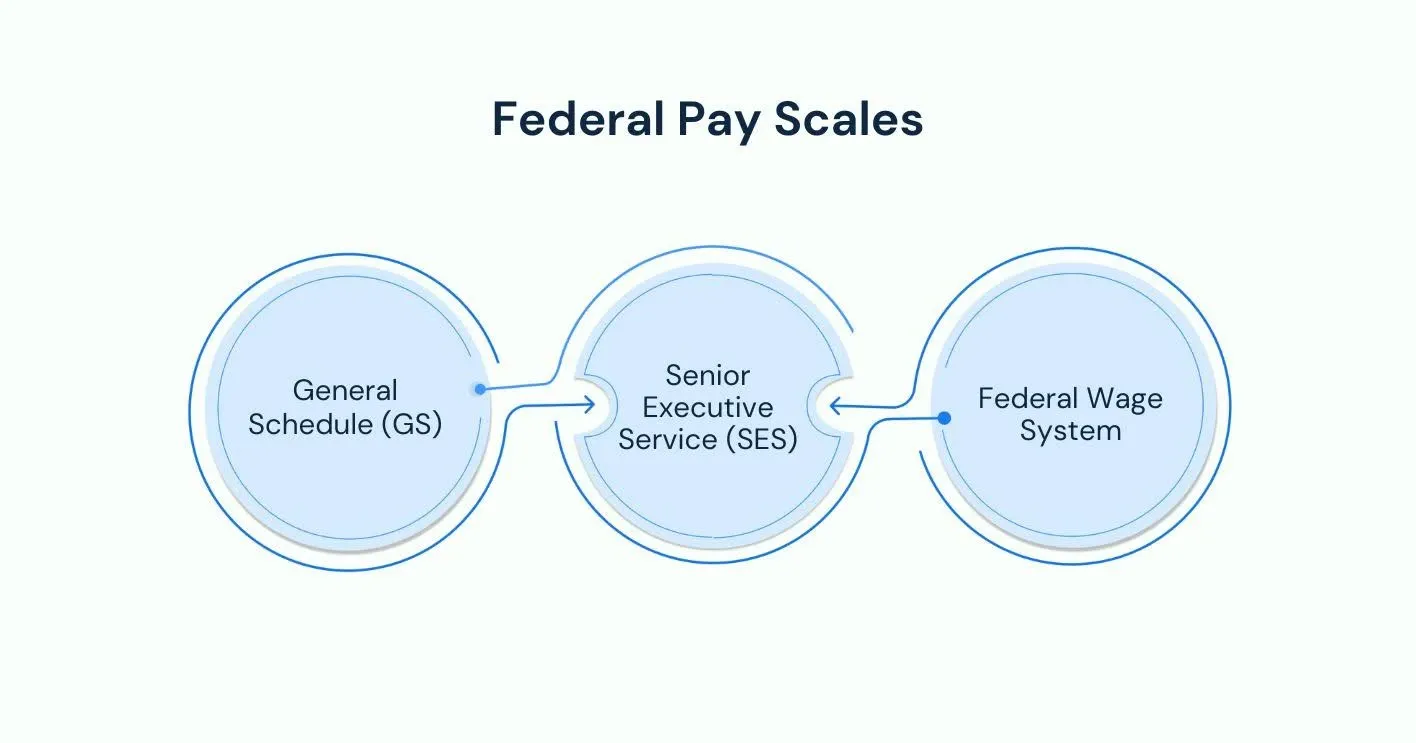
Federal pay scales structure compensation across diverse government roles, ensuring equity and clarity. Systems such as the General Schedule, Senior Executive Service, and Federal Wage System address varying job categories, striking a balance between standardization and flexibility to meet the unique needs of the workforce.
The General Schedule (GS) is the most widely used pay scale within the federal government, covering the majority of white-collar employees. It provides a standardized framework that organizes jobs into 15 grades, from entry-level positions at GS-1 up to senior roles at GS-15.
Each grade has ten steps, which represent incremental salary increases based on performance and length of service. The GS system is designed to ensure consistency and fairness across federal agencies while allowing for career progression. It also incorporates locality pay adjustments to account for regional cost-of-living differences, ensuring salaries remain competitive nationwide.
The Senior Executive Service (SES) pay scale is tailored for high-level federal leaders and executives who manage programs and policy implementation. Unlike the GS system, the SES pay structure is more flexible and performance-based, with fewer salary grades but a wider pay range.
SES members are not subject to the traditional step increases; instead, their pay is tied closely to performance evaluations and agency budgets. This system aims to attract and retain top managerial talent by providing competitive compensation that reflects their significant responsibilities and impact.
The Federal Wage System (FWS) is designed specifically for blue-collar workers, including trades, laborers, and maintenance staff. Unlike the GS and SES systems, the FWS uses wage surveys and collective bargaining to establish pay rates that align with local private sector wages for similar work.
The system includes multiple pay grades and steps, and it emphasizes geographic adjustments to ensure fairness across different labor markets. The FWS helps maintain parity between federal and private-sector blue-collar jobs, supporting recruitment and retention in these essential roles.
Now, let's explore the structure and purpose of pay bands, which help standardize compensation and ensure fairness across different roles and levels within an organization.
Suggested Read: Top PayScale Alternatives and Competitors in 2025

From the Community: Read about the link between pay bands and GS scales in this thread.
Determining pay within federal pay bands involves balancing multiple factors to reward employees fairly while aligning with organizational goals. Pay bands allow managers flexibility to place employees within broader salary ranges based on experience, performance, and market data.
Key factors influencing pay placement include:
Determining pay within bands requires strategic judgment informed by data, ensuring fair and competitive compensation. Understanding the structure of pay bands is crucial, but managing them effectively is just as important. Let’s now discuss strategies for optimizing pay band management.
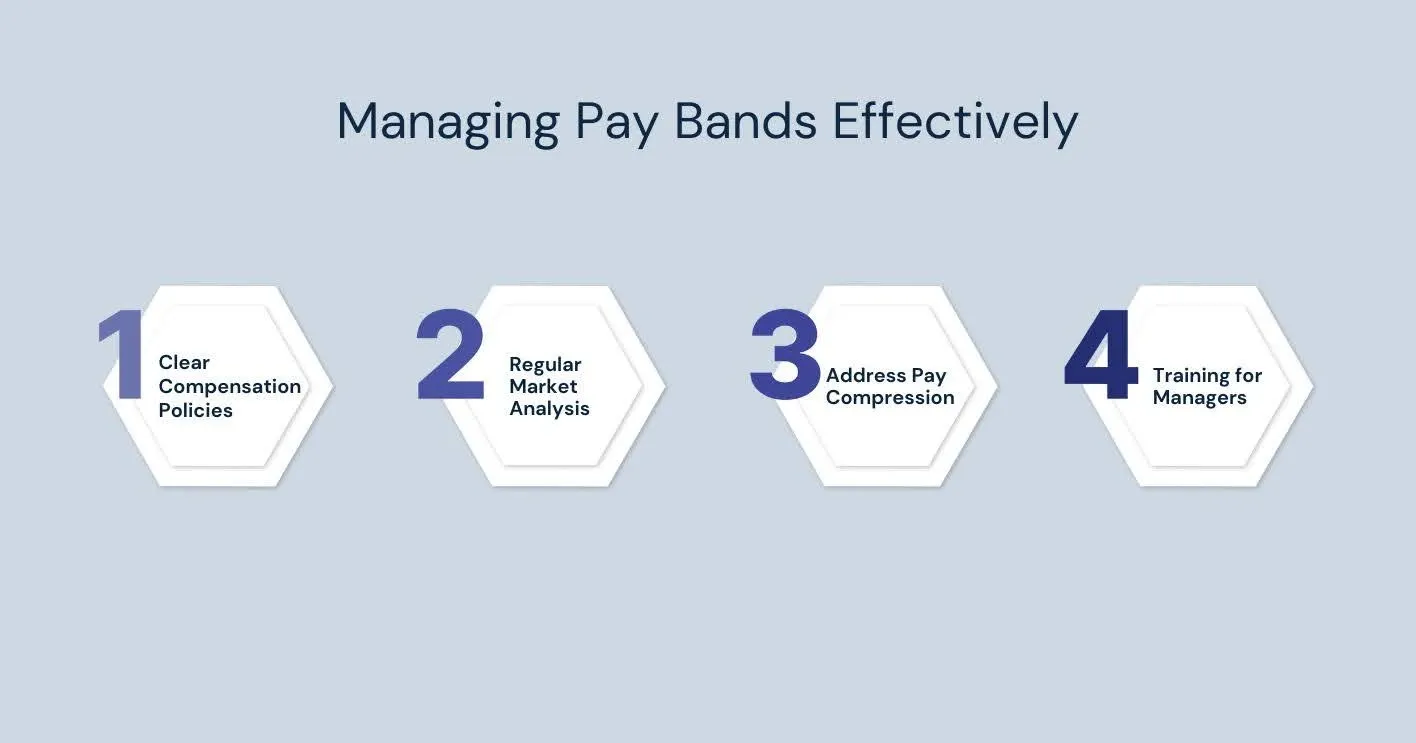
Effectively managing pay bands is essential for maintaining fairness, transparency, and employee motivation within federal organizations. Pay bands offer flexibility but require strategic oversight to avoid issues like pay compression or inconsistent compensation.
By implementing clear policies and technology, HR managers can optimize pay band administration to align with organizational goals and employee expectations. These are a few strategies for effective pay band management:
Effective management of pay bands requires clear policies, ongoing market review, and open communication.
With a solid understanding of federal compensation structures, let’s see how CompUp improves the management of these systems, making it easier for organizations to handle federal pay and benefits.
Suggested Read: Steps to Create a Fair and Equitable Compensation System
Federal employee compensation involves navigating a complex web of pay scales, locality adjustments, merit increases, and compliance requirements. Managing all these components manually or across disconnected systems can lead to errors, delays, and a lack of transparency. This is where CompUp offers a transformative solution for federal HR teams.
CompUp is a comprehensive, full-stack compensation management platform designed to centralize and simplify the entire compensation process. It integrates pay bands, salary ranges, and budget controls into a single, intuitive dashboard, enabling HR managers and supervisors to make informed decisions quickly and confidently.
Key features of CompUp are:
Real-time analytics and customizable reports provide deep insights into pay equity, diversity, and employee engagement metrics.
CompUp allows federal agencies to create fair, transparent, and effective compensation programs by automating routine tasks and providing valuable insights. This fantastic enhancement elevates employee satisfaction and paves the way for workforce retention.
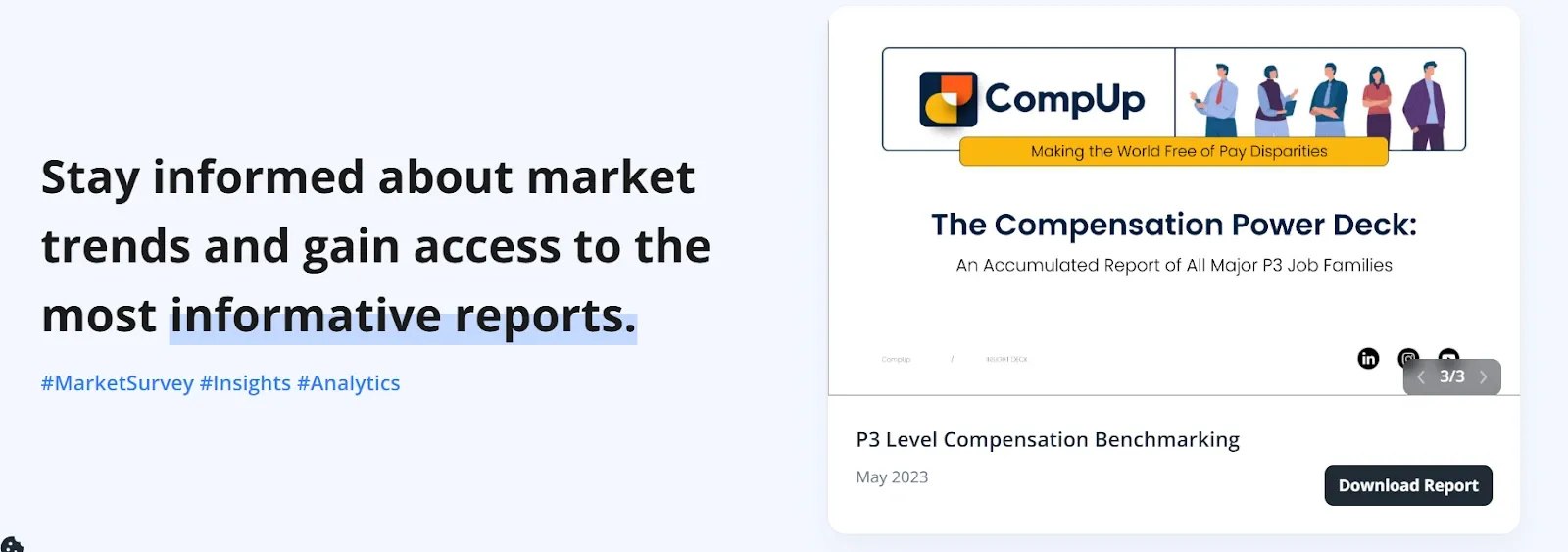
Federal pay scales provide a structured approach to compensation, ensuring fairness and consistency across various government roles. However, managing these scales effectively can be complex without the right tools. To simplify this process, CompUp offers advanced reporting that can simplify federal compensation management.
Federal government pay bands can be a complex challenge that requires precision, transparency, and strategic insight. HR teams face numerous hurdles in ensuring equitable and competitive pay. This is where technology becomes essential.
CompUp stands out as a powerful ally in this journey. Its all-in-one compensation management platform simplifies every step of the process. This includes centralizing pay data and simulating budgets, automating approval workflows, and generating real-time analytics.
Experience firsthand how CompUp optimizes pay band administration and budget planning. Schedule a demo today to see how CompUp can simplify your federal compensation management and enhance pay transparency.
1. How do federal pay bands work?
Federal pay bands group several job grades into broader salary ranges. They offer flexibility for setting pay based on experience, skills, and performance within the band, allowing agencies to reward employees fairly while managing budgets and promoting career growth.
2. How do you read a federal pay scale?
A federal pay scale lists grades and steps, each with a corresponding salary amount. Grades indicate job level; steps reflect incremental pay increases based on tenure or performance. Locality adjustments add regional cost-of-living supplements to base pay, affecting total compensation.
3. Is GS-7 a good salary?
GS-7 salary is considered entry to mid-level in federal roles, offering a competitive wage depending on location and experience. With locality pay, it can provide a solid income for professionals starting their federal careers or with limited experience.
4. What are the disadvantages of salary bands?
Salary bands can lead to pay compression, making it harder to differentiate salaries for employees with varying skills or experience. They may also create ambiguity in pay decisions without clear guidelines and require careful management to avoid inconsistency.

Co-founder & CEO, CompUp
Anurag Dixit, founder of CompUp, is a seasoned expert in all things compensation and total rewards. With a deep understanding of the current compensation trends, his vision is to help companies create fair, transparent, and effective compensation strategies.
Revolutionizing Pay Strategies: Don't Miss Our Latest Blogs on Compensation Benchmarking